
Introduction
Every generation stands on the shoulders of those who came before it. History proves that societies flourish when leaders intentionally prepare successors. Nations decline when leadership development is neglected. This truth is even more significant in the Kingdom of God.
Throughout Scripture, God never intended His work to end with one generation. Instead, He continually raised men and women who would carry His purposes forward. Abraham prepared Isaac. Moses trained Joshua. Elijah mentored Elisha. Jesus discipled the Twelve. Paul invested deeply in Timothy and Titus.
Leadership is never accidental. Great leaders are developed through intentional discipleship, godly character, faithful mentoring, and consistent spiritual growth. Today, the Church faces one of its greatest challenges: preparing the next generation to lead with biblical convictions in a rapidly changing world. Yet God's method has never changed. The future belongs to leaders whose hearts belong to God.
Why Leadership Development Matters
Leadership is influence. Every person influences someone, whether positively or negatively. The question is not whether people are leading; the question is where they are leading others.
"Where there is no vision, the people perish..." — Proverbs 29:18 (KJV)
Without leadership, families lose direction, churches lose purpose, businesses lose excellence, communities lose hope, and nations lose righteousness. The next generation desperately needs leaders who are spiritually mature, emotionally healthy, intellectually equipped, and morally courageous.
Jesus spent more time preparing future leaders than preaching to crowds. He invested three years into twelve ordinary men who transformed the world after His resurrection. The greatest investment any ministry can make is people. Buildings age, programs change, technology becomes outdated — but leaders multiply impact for generations.
God's Pattern for Raising Leaders
God's leadership school rarely begins on a platform. It usually begins in obscurity. Joseph served before he ruled. David shepherded sheep before leading Israel. Moses spent forty years in the wilderness before confronting Pharaoh. Joshua served Moses for decades before becoming Israel's leader. Even Jesus spent approximately thirty years preparing for a ministry that lasted only about three years.
Preparation always precedes promotion. God develops leaders through faithfulness, obedience, humility, testing, service, waiting, and spiritual maturity. Modern culture often celebrates instant success; God values long-term formation. Before God entrusts public influence, He first develops private character.
"He that is faithful in that which is least is faithful also in much..." — Luke 16:10 (KJV)
Leadership Begins with Character
Skill may open doors. Character keeps them open. The greatest leadership failures recorded in Scripture were rarely caused by lack of ability — they were caused by failures of character. King Saul possessed charisma but lacked obedience. Samson possessed strength but lacked self-control. Solomon possessed wisdom but neglected spiritual devotion later in life.
"...for man looketh on the outward appearance, but the LORD looketh on the heart." — 1 Samuel 16:7 (KJV)
Character includes honesty, humility, integrity, purity, compassion, self-control, courage, and faithfulness. These qualities cannot be downloaded — they are developed daily through walking with God. Young leaders should be taught that gifting may attract attention, but integrity earns trust. Trust is the true currency of leadership.
The Importance of Vision
One of the greatest differences between an ordinary person and an extraordinary leader is vision. Vision is the God-given ability to see beyond the present and embrace the future that God desires. Vision gives purpose to preparation. It transforms routine into calling and hardship into opportunity.
Throughout Scripture, God always revealed His vision before assigning responsibility. Noah saw an ark before the rain came. Abraham saw a nation before Isaac was born. Joseph saw greatness before he entered the prison. Moses saw deliverance before confronting Pharaoh. Nehemiah saw restored walls before laying the first stone.
A biblical vision glorifies God rather than self, blesses people instead of exploiting them, requires faith beyond human ability, inspires perseverance through difficulties, and leaves a legacy for future generations. Young leaders should seek God's direction through prayer, Scripture, and wise counsel rather than chasing popularity or personal ambition.
"For I know the thoughts that I think toward you, saith the LORD... to give you an expected end." — Jeremiah 29:11 (KJV)
Developing Spiritual Discipline
Public leadership is built upon private devotion. Many gifted leaders fail because they neglect their relationship with God. Talent may open doors, but spiritual discipline sustains influence over a lifetime. Jesus consistently withdrew to pray, even during the busiest seasons of His ministry (Luke 5:16). If the Son of God prioritized prayer, every emerging leader should do the same.
Essential spiritual disciplines include daily prayer, consistent Bible study, worship, fasting, and fellowship. Prayer develops dependence upon God. God's Word shapes the mind and renews the heart (Joshua 1:8). Worship cultivates humility and reverence. Fasting strengthens spiritual sensitivity and self-control. Fellowship provides encouragement, correction, and accountability (Hebrews 10:25).
Teaching Integrity and Faithfulness
Leadership without integrity eventually collapses. Integrity means being the same person in private as in public. Psalm 15 describes the one who may dwell in God's presence as "he that walketh uprightly, and worketh righteousness, and speaketh the truth in his heart."
Practical ways to develop integrity: keep promises, speak truthfully, admit mistakes, be financially honest, treat people fairly, refuse shortcuts, and honor commitments. Faithfulness in small responsibilities prepares leaders for greater assignments.
The Role of Mentorship
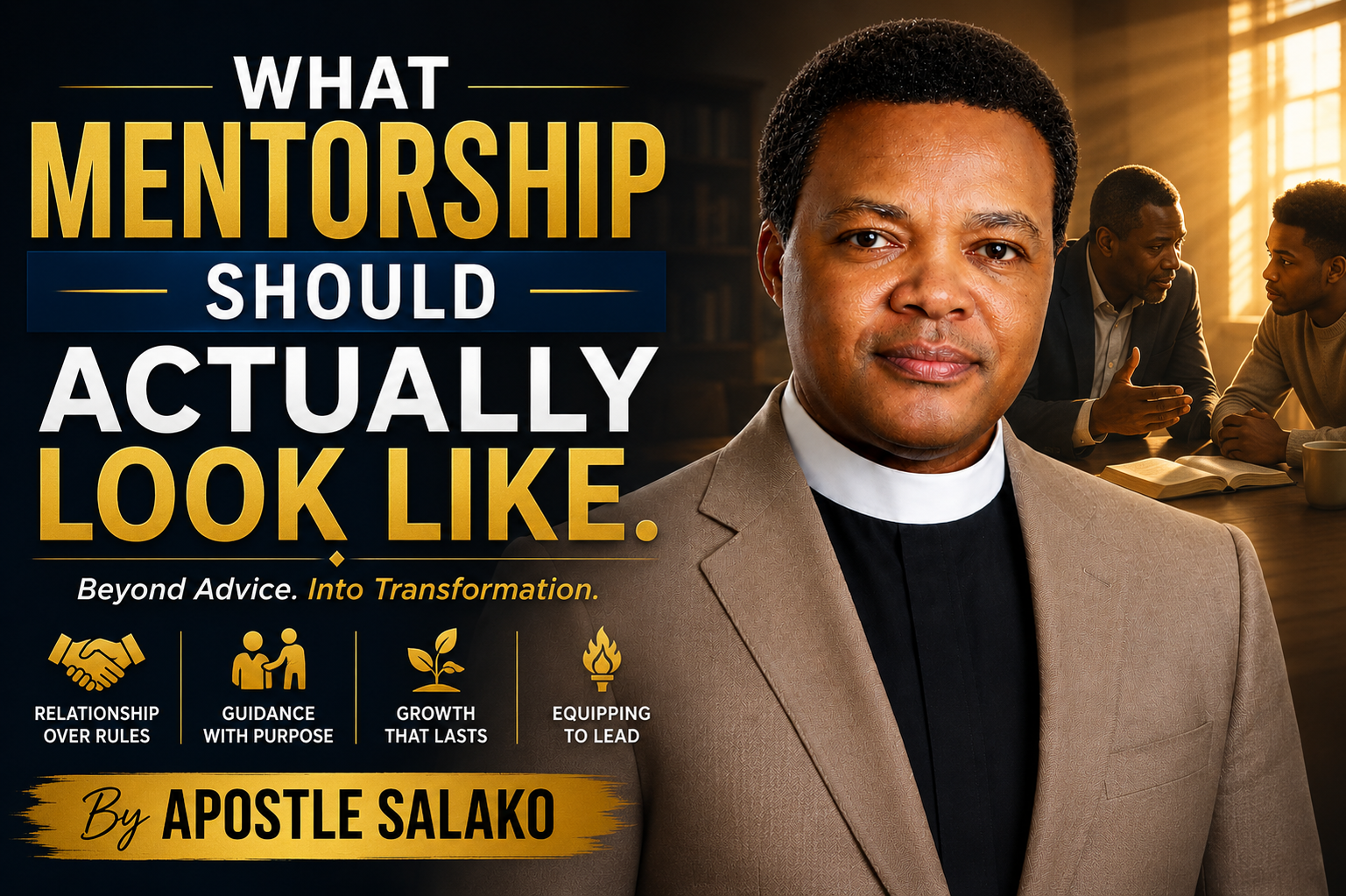
Leadership flourishes through intentional relationships. No biblical leader achieved lasting impact entirely alone. God consistently used mentors to shape future leaders — Moses and Joshua, Elijah and Elisha, Naomi and Ruth, Barnabas and Paul, Paul and Timothy, Jesus and the Twelve.
A godly mentor models Christlike character, speaks truth with love, encourages growth, corrects when necessary, prays consistently, celebrates the success of others, and equips rather than controls.
"And the things that thou hast heard of me among many witnesses, the same commit thou to faithful men, who shall be able to teach others also." — 2 Timothy 2:2 (KJV)
Mentorship is effective only when the learner is teachable. A teachable spirit welcomes correction, seeks wisdom, asks questions, and remains humble regardless of experience or achievement.
Parents as Leadership Builders
Long before a child enters a classroom or a church sanctuary, the home becomes the first place where leadership is formed. Parents are not merely caregivers; they are God's appointed trainers of the next generation (Deuteronomy 6:6–7). Leadership begins by example — children are more likely to imitate what they see than obey what they hear.
Seven ways parents build future leaders: (1) teach responsibility early; (2) encourage wise decision-making guided by Scripture; (3) build emotional resilience so failure becomes an opportunity for growth; (4) develop a servant's heart (Mark 10:45); (5) celebrate character more than achievement; (6) teach financial stewardship (Proverbs 3:9); and (7) pray consistently over your children, as Job did (Job 1:5).
The Church's Responsibility
The local church is more than a place of worship — it is a community where leaders are identified, equipped, and commissioned (Ephesians 4:11–12). Churches should intentionally recognize individuals who demonstrate spiritual hunger, faithfulness, humility, teachability, compassion, reliability, and a desire to serve. Potential often appears long before position.
A healthy church provides clear pathways for growth: children's ministry, youth ministry, worship teams, evangelism outreaches, prayer teams, hospitality, media, Bible study leadership, and community service. Entertainment attracts crowds, but discipleship develops leaders.
Training Leaders Through Service
God's Kingdom reverses the world's understanding of greatness. Jesus taught that greatness is found in humble service.
"But he that is greatest among you shall be your servant." — Matthew 23:11 (KJV)
Joseph served in Potiphar's house and prison. Joshua served Moses. Elisha served Elijah. David served Saul. Timothy served alongside Paul. Service develops humility, patience, and compassion — qualities essential for lasting leadership. When service becomes a lifestyle, leadership becomes influence rather than control.
Identifying and Developing Spiritual Gifts
God equips every believer with unique gifts to serve His Kingdom (Romans 12:6). Scripture highlights gifts such as teaching, encouragement, leadership, mercy, giving, hospitality, evangelism, administration, service, and exhortation. Leaders can help young people discover their gifts by observing natural strengths, providing opportunities to serve, offering constructive feedback, encouraging prayer for discernment, and affirming evidence of God's work.
Building Confidence Without Pride
Young leaders need confidence, but biblical confidence differs from pride. Pride exalts self; confidence trusts God's enabling grace (Philippians 4:13). Scripture warns that "Pride goeth before destruction" (Proverbs 16:18). Leaders remain humble by giving God the glory, welcoming correction, serving others, remaining teachable, and practicing gratitude (James 4:6).
Preparing Young Leaders for Real-World Challenges
Today's generation faces digital distractions, social media influence, moral relativism, peer pressure, anxiety, identity confusion, financial uncertainty, and cultural opposition to biblical truth. Rather than isolating young believers from these realities, mature leaders should prepare them to respond with biblical wisdom, courage, and compassion. Jesus prayed in John 17 not that His disciples would be taken out of the world, but that they would be kept from evil while living faithfully within it.
Leadership Lessons from Biblical Examples
Moses — A leader formed through humility. Before leading Israel for forty years, Moses spent forty years tending sheep. God prepares leaders in private before promoting them publicly. Despite leading millions, Moses remained teachable and learned to delegate (Exodus 18).
Joshua — Courage to continue the mission. God repeatedly said, "Be strong and of a good courage... for the LORD thy God is with thee" (Joshua 1:9). Every generation has its own assignment; God's presence is the source of confidence.
David — Developing a heart for God. While others overlooked him, God saw his heart (1 Samuel 16:7). David's leadership began in hidden places — worship in solitude, responsibility through shepherding, courage against lions and bears, faith against Goliath. His fall with Bathsheba warns that yesterday's victory does not guarantee tomorrow's.
Esther — Leadership through courage. God strategically positioned her "for such a time as this" (Esther 4:14). Influence should be used for God's purposes, and courage often requires sacrifice.
Daniel — Standing firm in an ungodly culture. "Daniel purposed in his heart that he would not defile himself" (Daniel 1:8). Convictions must be settled before the test arrives.
Nehemiah — Visionary leadership. He prayed, planned, and acted. Vision begins with compassion; prayer precedes planning; great leaders solve problems; opposition often accompanies progress.
Paul — Developing leaders who multiply. Paul's greatest legacy was people — Timothy, Titus, Silas, Luke, and many others. Teach faithful people, equip them, release them, and repeat (2 Timothy 2:2).
Timothy — Young leaders can make a difference. "Let no man despise thy youth" (1 Timothy 4:12). Paul urged him to lead through speech, conduct, love, faith, and purity.
Jesus Christ — the perfect leadership model. Unlike earthly rulers who sought power, Jesus demonstrated servant leadership (Philippians 2:5–8; John 13). He loved people, taught truth, served others, empowered disciples, confronted hypocrisy, and remained obedient to the Father.
"Even as the Son of man came not to be ministered unto, but to minister, and to give his life a ransom for many." — Matthew 20:28 (KJV)
Building a Leadership Culture
Developing individual leaders is important, but creating a culture that consistently raises leaders has a far greater impact. Healthy leadership cultures share five marks: leadership is intentional; failure is treated as a learning opportunity; accountability is normal; multiplication is celebrated over positional authority; and prayer is central. Programs alone cannot produce spiritual leaders — only the Holy Spirit transforms lives.
Common Mistakes to Avoid in Leadership Development
Avoid promoting talent above character. Do not neglect mentorship. Do not expect instant maturity — leadership is a lifelong journey. Do not fail to delegate; leaders who do everything themselves limit both their effectiveness and the growth of others. And never ignore prayer — no strategy can replace dependence on God.
Frequently Asked Questions
What does the Bible say about raising future leaders? Scripture consistently emphasizes passing truth, wisdom, and responsibility from one generation to the next through discipleship and mentorship — Moses and Joshua, Elijah and Elisha, Jesus and His disciples, Paul and Timothy.
At what age should leadership training begin? In childhood. Though leadership positions may come later, qualities such as honesty, responsibility, humility, and service can be cultivated early. "Train up a child in the way he should go" (Proverbs 22:6).
Can every Christian become a leader? Every believer is called to influence others for Christ, though not everyone holds the same office. Leadership in God's Kingdom is measured by faithfulness, service, and obedience — not title.
What qualities should young Christian leaders develop? A growing relationship with God, integrity, humility, faithfulness, courage, teachability, wisdom, compassion, servant-heartedness, and self-control.
Why is mentorship so important? It accelerates spiritual growth through wisdom, accountability, encouragement, and practical guidance. God frequently shapes emerging leaders through intentional relationships with mature believers.
A 30-Day Leadership Development Plan
Week 1 — Strengthen your relationship with God: read a chapter of Proverbs each day, spend at least 30 minutes in prayer, memorize one verse daily, and journal lessons God teaches you.
Week 2 — Build godly character: evaluate whether you are dependable, keep your promises, speak truthfully, walk humbly, and forgive quickly. Choose one area to improve intentionally.
Week 3 — Serve others: volunteer in your local church, encourage the discouraged, visit the lonely, help a neighbor without recognition, and participate in outreach.
Week 4 — Develop leadership skills: read a Christian leadership book, listen to biblical teaching, ask a mature believer to mentor you, lead a small Bible study if appropriate, and identify one younger believer to encourage and disciple.
Key Takeaways
Leadership is influence rooted in Christlike character. God prepares leaders through faithfulness in small things. Vision gives direction, but character sustains influence. Spiritual disciplines are the foundation of effective leadership. Mentorship is God's strategy for multiplying leaders. Parents and churches share the responsibility of leadership development. Service is the pathway to greatness in God's Kingdom. Every believer has unique gifts. Young leaders can make a significant impact when they submit to God's calling. The ultimate model of leadership is Jesus Christ.
Final Thoughts
The future of the Church, our communities, and our nations depends on the leaders we raise today. Leadership is not merely about occupying positions of authority; it is about influencing others toward God's purposes with humility, integrity, and unwavering faith. Parents must disciple their children. Churches must identify and mentor emerging leaders. Experienced believers must invest in younger Christians. The world does not simply need more leaders — it needs more godly leaders whose lives reflect the heart of Christ.
A Call to Salvation
Leadership in God's Kingdom begins with a personal relationship with Jesus Christ. Before anyone can effectively lead others spiritually, they must first surrender their own life to the Lord.
"That if thou shalt confess with thy mouth the Lord Jesus, and shalt believe in thine heart that God hath raised him from the dead, thou shalt be saved." — Romans 10:9 (KJV)
If you have not yet placed your faith in Jesus Christ, today is the day to receive His grace. Turn from sin, believe in His death and resurrection, and commit your life to following Him.
A Prayer for the Next Generation of Leaders
Heavenly Father, thank You for Your faithfulness to every generation. We pray for children, teenagers, young adults, and emerging leaders around the world. Fill them with Your Holy Spirit. Give them wisdom beyond their years, courage to stand for truth, and humility to serve others with love. Raise up leaders of integrity who will not compromise their faith for popularity or personal gain. Bless parents, pastors, teachers, and mentors with discernment as they invest in the lives You have entrusted to their care. Above all, may every leader reflect the character of Jesus Christ and bring glory to Your name. In the mighty name of Jesus Christ we pray. Amen.
Conclusion
The greatest legacy any believer can leave is not wealth, possessions, or recognition — it is a generation equipped to love God, serve faithfully, and lead with integrity. May we embrace the responsibility to raise the next generation of leaders with prayer, intentionality, and unwavering commitment to the Word of God.
"And the things that thou hast heard of me among many witnesses, the same commit thou to faithful men, who shall be able to teach others also." — 2 Timothy 2:2 (KJV)
Article written by Apostle Salako Adedamola.
Apostle Adedamola Salako
Founder of Apostle Salako Studios — pastor, recording artist, and teacher on faith, music, and stewardship.
Frequently Asked Questions
QWhat does the Bible say about raising future leaders?
Scripture consistently emphasizes passing truth, wisdom, and responsibility from one generation to the next through discipleship and mentorship — Moses and Joshua, Elijah and Elisha, Jesus and His disciples, Paul and Timothy.
QAt what age should leadership training begin?
In childhood. Though positions may come later, qualities like honesty, responsibility, humility, and service can be cultivated early. Proverbs 22:6 says, 'Train up a child in the way he should go: and when he is old, he will not depart from it.'
QCan every Christian become a leader?
Every believer is called to influence others for Christ, though not everyone holds the same office. Leadership in God's Kingdom is measured by faithfulness, service, and obedience — not title.
QWhat qualities should young Christian leaders develop?
A growing relationship with God, integrity, humility, faithfulness, courage, teachability, wisdom, compassion, servant-heartedness, and self-control.
QWhy is mentorship so important?
Mentorship accelerates spiritual growth through wisdom, accountability, encouragement, and practical guidance. God frequently shapes emerging leaders through intentional relationships with mature believers.
Enjoyed this article?
Get the next one straight to your inbox. One thoughtful email a week.
Comments (0)
Comments are stored locally in your browser. For published responses, email us via the Contact page.