
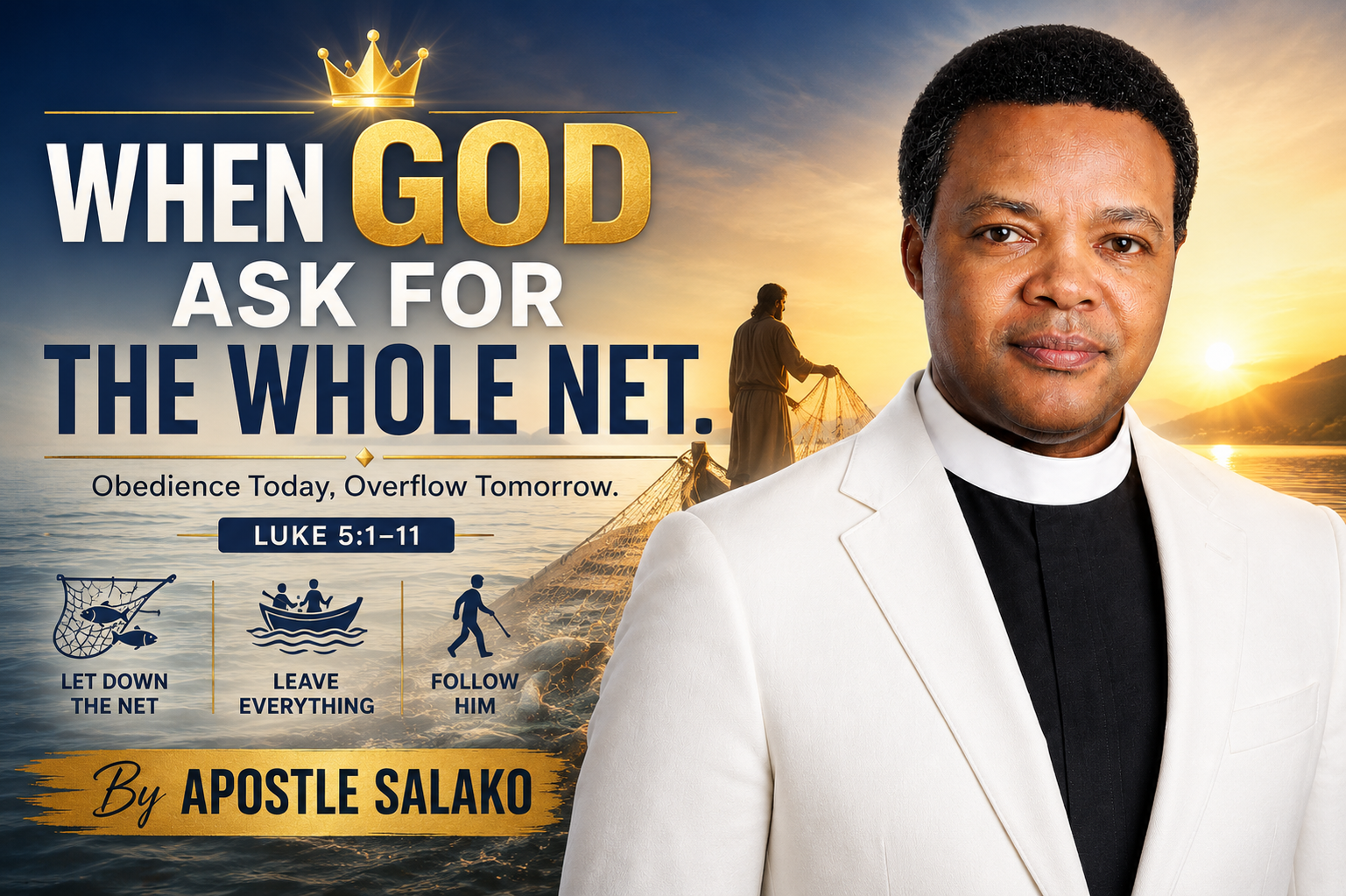
Introduction
One of the greatest misconceptions among believers is that God merely wants to bless them materially. While God indeed delights in blessing His children, His ultimate objective has never been earthly prosperity alone. His greatest desire is to possess the heart of His people.
Many Christians are willing to give God a portion of their lives. They offer Him their Sunday mornings, occasional prayers, a fraction of their income, or moments of convenience. Yet they withhold their ambitions, careers, relationships, dreams, and deepest affections.
However, throughout Scripture, God consistently calls His people to complete surrender.
The story of Simon Peter in Luke 5:1–11 beautifully illustrates this truth. At first glance, it appears to be a miracle about an extraordinary catch of fish. But upon closer examination, it reveals something far deeper.
Jesus was never after Peter's fish. He was after Peter. The miraculous catch was not the destination; it was merely the invitation.
God blessed Peter so that Peter would discover that the greatest blessing was not the fish in the net but the Master standing in the boat. Many believers celebrate the miracle while missing the message. The fish fed Peter's family — but surrender transformed Peter into an apostle.
Whenever God asks for “the whole net,” He is inviting us into a life far greater than we could ever build for ourselves.
The Background of the Miracle
Luke introduces us to Simon Peter at a point of deep frustration. He had worked throughout the entire night — a time when experienced fishermen expected the best catches. Instead, he had nothing.
“Master, we have toiled all the night, and have taken nothing: nevertheless at thy word I will let down the net.” — Luke 5:5 (KJV)
Peter possessed professional experience, skill, hard work, commitment, a boat, and nets. Yet none of these produced success that night. This is one of God's recurring lessons throughout Scripture: human effort can never substitute for divine favour.
“Except the LORD build the house, they labour in vain that build it: except the LORD keep the city, the watchman waketh but in vain.” — Psalm 127:1 (KJV)
Many believers today resemble Peter before the miracle. They are exhausted. Working harder. Praying less. Trusting experience more than God's voice. Accumulating knowledge but lacking divine direction.
God often allows seasons of emptiness — not to destroy us — but to prepare us to recognize that our sufficiency comes from Him alone. Sometimes an empty net becomes the classroom where faith is developed.
Jesus Borrowed Peter's Boat Before He Blessed Peter's Boat
“And he entered into one of the ships, which was Simon's, and prayed him that he would thrust out a little from the land. And he sat down, and taught the people out of the ship.” — Luke 5:3 (KJV)
Before Jesus filled Peter's nets, He first borrowed Peter's boat. This is a profound spiritual principle: God often asks us to surrender something small before entrusting us with something great.
Peter surrendered his boat. The boat represented his livelihood, his business, his workplace, his investment, and his security. Notice that Jesus did not immediately perform a miracle. First, Peter had to trust Him.
Many believers want the blessing without the surrender. They ask, “Lord, bless my business,” but refuse to let Christ become Lord over the business. They ask, “Lord, bless my marriage,” but never invite Him to govern the relationship. They ask, “Lord, bless my ministry,” yet insist on leading it according to personal ambition instead of biblical obedience.
The Kingdom of God operates differently. What belongs to Christ is what Christ blesses.
Obedience Beyond Logic
“Launch out into the deep, and let down your nets for a draught.” — Luke 5:4 (KJV)
To experienced fishermen, this command appeared unreasonable. Peter understood fishing. Jesus was known publicly as a carpenter and teacher. From a human perspective, Peter had more expertise. Yet faith requires submission even when God's instruction challenges human reasoning.
Peter's response remains one of the greatest declarations of obedience recorded in Scripture: “Nevertheless at thy word I will let down the net.” Notice the word: nevertheless. It bridges human understanding and divine intervention.
“Nevertheless” means: my experience disagrees, my emotions disagree, my calculations disagree, my circumstances disagree — but Your Word carries greater authority than all of them.
Every major miracle in Scripture begins where “nevertheless” replaces “impossible.” Abraham believed nevertheless. Noah built nevertheless. Joshua marched nevertheless. Mary conceived nevertheless. Peter obeyed nevertheless.
Faith does not deny reality. Faith simply chooses to exalt God's Word above reality.
The Miracle Was Bigger Than Peter
“And when they had this done, they inclosed a great multitude of fishes: and their net brake.” — Luke 5:6 (KJV)
The blessing became so overwhelming that Peter had to call others. Scripture says, “And they beckoned unto their partners... and they came, and filled both the ships, so that they began to sink” (Luke 5:7 KJV).
This demonstrates another Kingdom principle: God's blessings are rarely intended to terminate on one individual. Kingdom blessings overflow.
Abraham was blessed so that all nations would be blessed through him. Joseph prospered so that Egypt would survive famine. Esther was positioned to preserve an entire nation. David was anointed to shepherd Israel.
Likewise, every gift, opportunity, platform, resource, and financial increase entrusted to believers is ultimately designed to advance God's Kingdom and bless others. If our blessings stop with us, we have misunderstood stewardship. God blesses rivers, not reservoirs. He blesses channels, not dead ends.
Peter discovered that the miracle was never merely about filling his boat. It was about preparing him to become a blessing to many.
The Turning Point: Peter Saw More Than Fish
After witnessing the miraculous catch, Peter did something unexpected. Instead of celebrating the abundance, he fell before Jesus.
“When Simon Peter saw it, he fell down at Jesus' knees, saying, Depart from me; for I am a sinful man, O Lord.” — Luke 5:8 (KJV)
This response reveals that the greatest miracle was not the fish. It was revelation. Peter suddenly recognized that he was standing before someone infinitely greater than a miracle worker. He encountered the holiness of Christ.
True encounters with God produce humility before they produce celebration. Isaiah cried, “Woe is me” (Isaiah 6:5). Job declared, “I abhor myself” (Job 42:6). John fell “as dead” before the glorified Christ (Revelation 1:17).
Likewise, Peter's abundance exposed his inadequacy — not because God intended to shame him, but because divine holiness reveals the true condition of the human heart. That is where transformation begins. God often uses blessings not merely to satisfy our needs but to reveal our need for Him.
The Miracle Was Never the Mission
The climax of Luke 5 is not found in the breaking nets or the sinking boats. While many readers stop at the miracle of abundance, Jesus had a much greater purpose in mind. The miracle was simply the doorway to discipleship.
Jesus did not perform the miracle so Peter could become the richest fisherman in Galilee. He performed the miracle to reveal His divine authority and to call Peter into a higher purpose.
“And Jesus said unto Simon, Fear not; from henceforth thou shalt catch men.” — Luke 5:10 (KJV)
Notice the words, “from henceforth.” Those two words mark the beginning of a completely new season. Peter's identity was changing. His priorities were changing. His purpose was changing. His source of fulfillment was changing.
The One who had just filled Peter's nets was now asking Peter to leave them behind. This is one of the paradoxes of the Kingdom of God: God sometimes places blessings in our hands only to reveal that He desires our hearts more than our possessions.
When God Asks for the Whole Net
God did not literally ask Peter to hand over his fishing nets. He asked for something much deeper. The “whole net” symbolizes everything that defined Peter's old life: his profession, his financial security, his reputation, his skills, his ambitions, his comfort zone, his identity, and his future plans.
For years, Peter had trusted his nets to provide for him. They represented everything he knew. But now Jesus was saying, in effect, “Peter, will you trust Me more than what has sustained you until now?”
Every believer will eventually face this question. God may not ask everyone to leave a fishing business, but He will ask each of us to surrender whatever competes with His Lordship. For some, the “net” is a career. For others, it is wealth. For some, it is personal ambition. For others, it is pride, relationships, reputation, or hidden sin.
Whatever occupies first place in our hearts is the very thing God will lovingly ask us to place on the altar.
God Never Competes for Second Place
“Thou shalt love the LORD thy God with all thine heart, and with all thy soul, and with all thy might.” — Deuteronomy 6:5 (KJV)
Jesus reaffirmed this command in Matthew 22:37: “Thou shalt love the Lord thy God with all thy heart, and with all thy soul, and with all thy mind.” Notice the repeated word: all. God does not ask for partial allegiance. He asks for complete surrender.
Half-hearted discipleship has never been the standard of the Kingdom. Many believers are comfortable giving Christ a portion of their lives while reserving certain areas under their own control.
They say, “Lord, You can have my Sundays — but not my business decisions.” “Lord, You can have my worship — but not my finances.” “Lord, You can have my prayers — but not my relationships.” Yet Jesus never called anyone to follow Him halfway.
Peter Left the Greatest Catch of His Life
Perhaps the most astonishing detail in Luke's account is often overlooked. The greatest financial breakthrough Peter had ever experienced was lying in those boats. His nets were full. His boats were overflowing. His partners were rejoicing.
“And when they had brought their ships to land, they forsook all, and followed him.” — Luke 5:11 (KJV)
Think carefully about this moment. Peter did not leave Jesus before the blessing. He left the blessing for Jesus. This demonstrates the true test of spiritual maturity.
Many people will follow Christ because He blesses them. Few will continue following Christ when He asks them to surrender the very blessings He has given. Peter understood something many Christians still struggle to learn: the Giver is infinitely greater than the gift.
The Danger of Loving the Blessing More Than the Blesser
One of Satan's subtle strategies is to shift our affection from God to God's gifts. Blessings can become distractions when they replace the One who gave them.
Israel desired the Promised Land but often forgot the God who brought them there. King Solomon received extraordinary wisdom and wealth, yet later allowed prosperity to draw his heart away from wholehearted devotion. The rich young ruler desired eternal life, but when Jesus exposed his attachment to wealth, he walked away sorrowful.
“Sell whatsoever thou hast, and give to the poor... and come, take up the cross, and follow me.” — Mark 10:21 (KJV)
The issue was never money. The issue was mastery. Whatever we cannot surrender has become our master. As Jesus taught, “For where your treasure is, there will your heart be also” (Matthew 6:21 KJV). God is not against blessing His children. He is against anything that replaces Him in their affections.
Why God Sometimes Increases Before He Asks
It may seem surprising that Jesus chose to bless Peter before calling him. Yet this pattern appears throughout Scripture. God blessed Abraham before making him the father of many nations. God elevated Joseph before using him to preserve countless lives. God anointed David long before he ascended the throne.
God often gives us a glimpse of His goodness before inviting us into deeper surrender. Why? Because His blessings reveal His character. When we discover that God is faithful, generous, and trustworthy, surrender becomes an act of confidence rather than fear.
Peter could leave the fish because he had met the Lord of the fish. He could leave the boat because he had encountered the One who rules both sea and land. He no longer depended on nets. He depended on Christ.
Every Disciple Has a “Whole Net” Moment
Every believer eventually encounters a defining moment when God asks for complete trust. For Abraham, it was Isaac. For Moses, it was Pharaoh's palace. For Elisha, it was his oxen.
“Then he arose, and went after Elijah, and ministered unto him.” — 1 Kings 19:21 (KJV)
Before following Elijah, Elisha slaughtered his oxen and burned his farming equipment. He removed every possibility of returning to his former life. Likewise, Peter stepped away from the greatest business opportunity of his career because he had discovered a greater calling.
God's highest purpose for your life may require leaving behind what once seemed indispensable. The Kingdom advances when ordinary people surrender extraordinary attachments.
The Cost of Following Christ
“If any man will come after me, let him deny himself, and take up his cross daily, and follow me.” — Luke 9:23 (KJV)
Following Christ involves more than adding religious activities to our schedules. It requires the surrender of self. The cross is not merely a symbol of suffering. It is a symbol of death to self-rule.
When Christ becomes Lord, our ambitions are submitted to His will. Our resources become His resources. Our time becomes His time. Our gifts become instruments for His glory. This is what it means when God asks for the whole net. He is not impoverishing us. He is liberating us from anything that keeps us from fully belonging to Him.
A Question for Every Believer
As you reflect on Peter's story, ask yourself these questions before God: What “net” have I been holding more tightly than Christ? Is there anything I would refuse if Jesus asked me to surrender it? Have God's blessings become more precious to me than God's presence? Am I following Jesus only because of what He gives, or because of who He is? If Christ called me into a deeper level of obedience today, would I respond as Peter did?
The answers to these questions often reveal the true condition of our hearts. The miracle in Luke 5 is not merely about abundant provision. It is about wholehearted devotion.
The greatest catch Peter ever made was not fish. It was the moment he was caught by the grace of Jesus Christ.
Article written by Apostle Salako Adedamola.
Apostle Adedamola Salako
Founder of Apostle Salako Studios — pastor, recording artist, and teacher on faith, music, and stewardship.
Frequently Asked Questions
QWhat does “the whole net” mean spiritually?
It represents everything that defines your old life — profession, security, reputation, ambitions, comfort zone. God asks for the whole net because He wants your whole heart, not just a portion of your life.
QWhy did Jesus bless Peter before calling him?
God often reveals His goodness before inviting deeper surrender. When we discover He is faithful and generous, surrender becomes an act of confidence rather than fear.
QHow do I know what my “net” is?
Whatever occupies first place in your affections, whatever you cannot imagine surrendering, and whatever competes with Christ's Lordship in your decisions — that is your net.
Enjoyed this article?
Get the next one straight to your inbox. One thoughtful email a week.
Comments (0)
Comments are stored locally in your browser. For published responses, email us via the Contact page.
You may also like
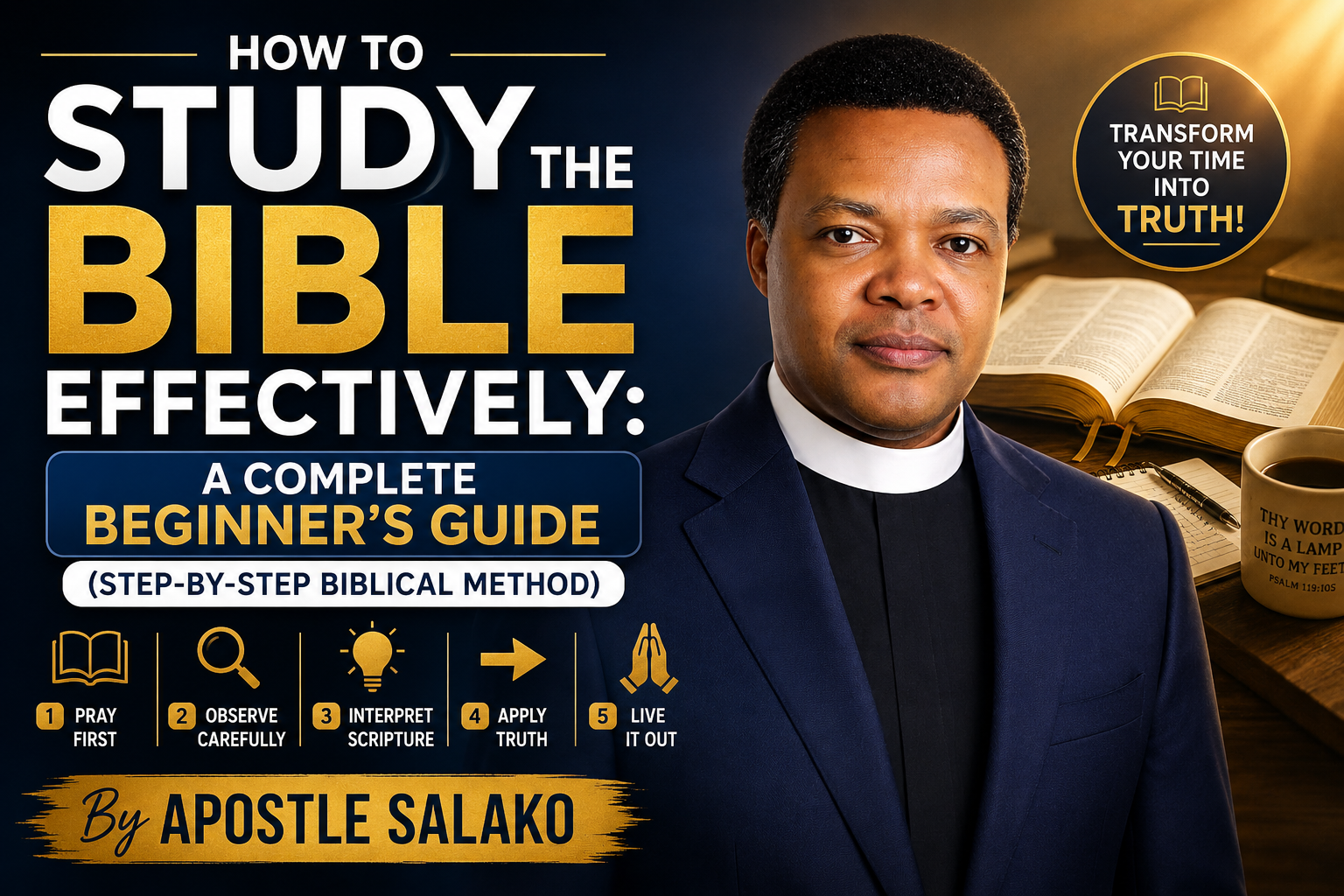
How to Study the Bible Effectively: A Complete Beginner's Guide (Step-by-Step Biblical Method)
A practical, biblical roadmap for studying Scripture — preparation, tools, the 12-step and Inductive methods, interpretation, and a 30-day plan.
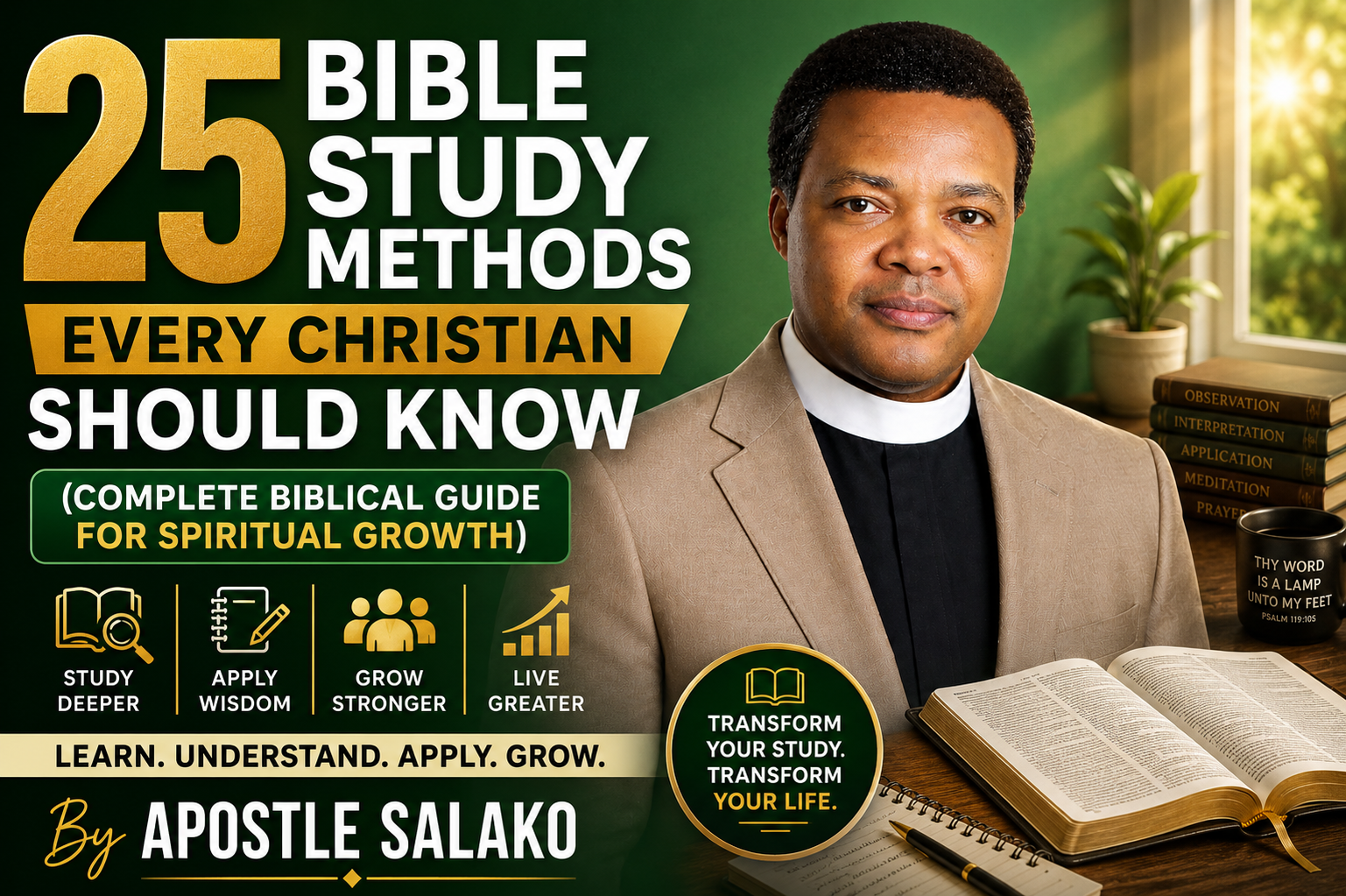
25 Bible Study Methods Every Christian Should Know (Complete Biblical Guide for Spiritual Growth)
Discover 25 proven Bible study methods every Christian should know. Learn how to understand Scripture correctly, grow spiritually, and deepen your walk with Christ using practical, biblical techniques.
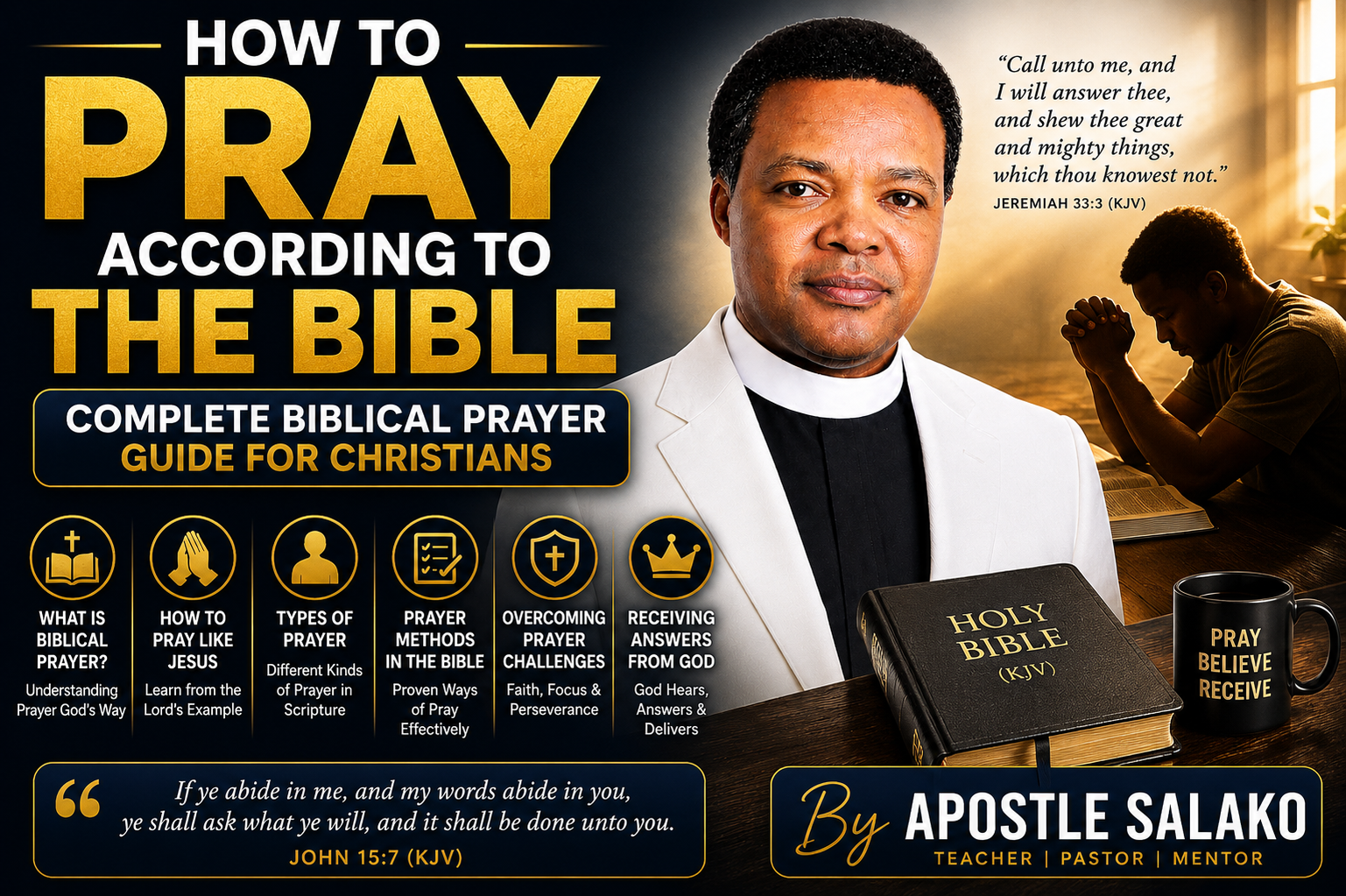
How to Pray According to the Bible (Complete Biblical Prayer Guide for Christians)
Learn how to pray according to the Bible with this complete Christian guide — Jesus' teaching on prayer, biblical principles, powerful examples, and practical steps to deepen your walk with God.