
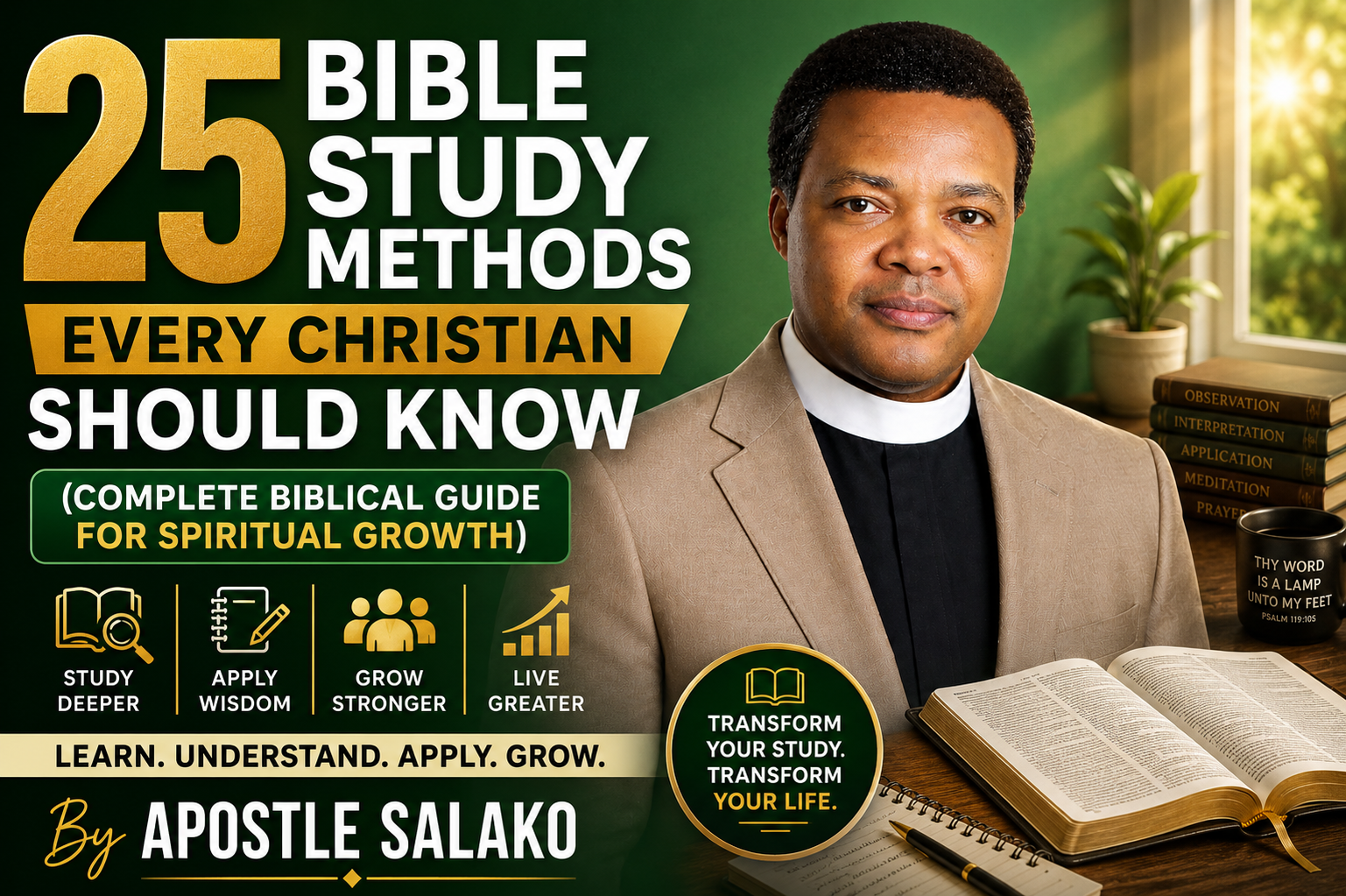
Introduction
The Bible is unlike any other book ever written. It is the inspired Word of God, breathed by the Holy Ghost and preserved for every generation. Through its pages, God reveals His character, His purposes, His plan of redemption, and His will for mankind.
Paul reminded Timothy:
"All scripture is given by inspiration of God, and is profitable for doctrine, for reproof, for correction, for instruction in righteousness:" — 2 Timothy 3:16 (KJV)
Yet many believers struggle to understand Scripture because they rely on only one way of reading the Bible. Some simply read a chapter each day without deeper reflection. Others search for encouraging verses but never study the broader context. As a result, they miss the richness, depth, and transforming power of God's Word.
Bible study is more than reading — it is an intentional pursuit of God's truth. Different passages call for different approaches. A narrative may benefit from a historical study, while a doctrinal passage may require verse-by-verse examination. Learning multiple Bible study methods equips Christians to interpret Scripture faithfully and apply it wisely.
In this comprehensive guide, you will discover twenty-five practical Bible study methods that can strengthen your understanding of God's Word, deepen your spiritual maturity, and enrich your daily walk with Christ.
Why Bible Study Matters
The Bible is God's primary means of revealing Himself to His people. Through Scripture, believers learn who God is, what He has done through Jesus Christ, and how they are to live in obedience to Him.
"Man shall not live by bread alone, but by every word that proceedeth out of the mouth of God." — Matthew 4:4 (KJV)
Consistent Bible study helps believers know God more intimately, grow in spiritual maturity, resist temptation, develop biblical wisdom, strengthen their faith, discern truth from error, equip themselves for ministry, and build confidence in sharing the Gospel.
"Thy word have I hid in mine heart, that I might not sin against thee." — Psalm 119:11 (KJV)
Bible study is not merely an intellectual exercise. It is an act of worship that transforms the mind and renews the heart.
Preparing Your Heart Before Bible Study
Before exploring any study method, prepare yourself spiritually. Pray for understanding and ask the Holy Spirit to illuminate the Scriptures.
"Open thou mine eyes, that I may behold wondrous things out of thy law." — Psalm 119:18 (KJV)
Approach the Word with humility, ready to be corrected, instructed, and transformed rather than simply seeking information. Remove distractions by choosing a quiet place where you can focus without interruption. Keep a Bible study journal to record observations, questions, prayers, cross-references, and practical applications.
Finally, apply what you learn. James reminds believers that hearing the Word alone is not enough.
"But be ye doers of the word, and not hearers only, deceiving your own selves." — James 1:22 (KJV)
Method #1 — The Chapter Study Method
The Chapter Study Method focuses on examining one chapter of the Bible in depth rather than reading several chapters quickly. It is one of the best approaches for developing a clear understanding of the flow, structure, and central message of a passage.
To practice it, read the chapter several times, identify the main theme, divide it into natural sections, note repeated words and ideas, highlight commands, promises, warnings, and examples, and record practical lessons for daily living. For example, in John 15, notice how often Jesus speaks about abiding, fruitfulness, love, obedience, and prayer — these repeated themes reveal the central message of remaining in Christ for spiritual fruitfulness.
This method improves comprehension, reveals literary structure, encourages meditation, and makes personal application easier.
Method #2 — The Book Study Method
Instead of examining a single chapter, this method explores an entire book of the Bible to understand its purpose, historical setting, audience, and theological themes. Identify the author, determine the original audience, learn the historical context, outline the book, observe recurring themes, summarize each chapter, identify key verses, and apply the message to modern Christian living.
When studying the Book of Philippians, you will quickly notice recurring themes such as joy, Christ-centered living, humility, partnership in the Gospel, and contentment. Studying the entire book provides a richer understanding than reading isolated verses.
Method #3 — The Verse-by-Verse Method
This method examines Scripture one verse at a time, paying careful attention to every word, phrase, and grammatical connection. It is especially valuable for teaching and preaching because it helps prevent verses from being taken out of context.
Read the surrounding passage, examine the immediate context, define important words, compare with related Scriptures, identify the doctrinal truth, and apply the verse personally. Consider Romans 8:1 — a verse-by-verse study would explore the meaning of "therefore," connect it to Romans 7, explain "no condemnation," define what it means to be "in Christ Jesus," and examine the contrast between walking after the flesh and after the Spirit.
Method #4 — The Character Study Method
The Character Study Method focuses on learning from the lives of individuals in the Bible. Their faith, failures, obedience, and experiences provide practical lessons for believers today. Choose a Bible character, read every passage mentioning them, observe their background and calling, identify strengths and weaknesses, note key decisions and their consequences, and apply the lessons to your own life.
A study of Joseph (Genesis 37–50) reveals lessons on integrity under pressure, faithfulness during adversity, forgiveness, patience, God's providence, and leadership. Studying Peter shows how God's grace transforms an impulsive disciple into a bold apostle.
Method #5 — The Word Study Method
The Word Study Method examines significant words found in Scripture to understand their meaning and usage throughout the Bible. Select a key biblical word — such as faith, grace, holiness, redemption, covenant, or love — find every occurrence using a concordance, study each occurrence in context, compare how the word is used across books, and summarize its biblical meaning.
Studying the word "grace," for instance, traces God's favor in the Old Testament, its revelation in Christ in the Gospels, and its centrality in Paul's epistles as the basis of salvation, Christian living, and spiritual service.
Method #6 — The Topical Bible Study Method
The Topical Bible Study Method focuses on what the entire Bible teaches about one specific subject. Rather than studying one passage or one book, this method gathers Scriptures from throughout the Bible to develop a comprehensive biblical understanding of a topic. It is one of the most useful methods for personal growth, discipleship, counseling, sermon preparation, and answering doctrinal questions.
Choose a topic — faith, prayer, forgiveness, holiness, grace, the Holy Spirit, salvation, marriage, stewardship, evangelism, heaven, or spiritual warfare. Gather every relevant Scripture, read each passage in its context, organize the verses into logical categories, and compare Old Testament and New Testament teachings. When studying faith, comparing Hebrews 11, Romans 10:17, Mark 11:22–24, James 2:14–26, and Ephesians 2:8–9 reveals that biblical faith involves hearing God's Word, trusting His promises, obeying His commands, and producing works that demonstrate genuine belief.
Method #7 — The Devotional Bible Study Method
This method emphasizes personal fellowship with God. The primary goal is not merely to gain information but to experience transformation through Scripture. The guiding question is: "What is God saying to me today?"
Pray, read a passage slowly, observe what stands out, ask what it reveals about God, consider how it applies to your life, write a prayer in response, and put the lesson into practice. Reading Psalm 23, ask yourself what it teaches about God's character, what promises He makes, what fears you should surrender, and what action you should take today.
"If ye continue in my word, then are ye my disciples indeed;" — John 8:31 (KJV)
Method #8 — The Inductive Bible Study Method
The Inductive Bible Study Method is one of the most respected approaches to serious Bible study because it allows Scripture to speak for itself before consulting outside opinions. It follows three simple but powerful stages: observation, interpretation, and application.
Observation asks what the passage says: who is speaking, who is listening, what happens, where and when it occurs, why it is written, and what words are repeated. Interpretation asks what the text meant to the original audience, the author's main point, and how the passage fits within its larger context. Application asks what you should believe, change, obey, trust, avoid, and follow.
"But be ye doers of the word, and not hearers only…" — James 1:22 (KJV)
Method #9 — The Expository Bible Study Method
The Expository Method explains Scripture according to its original meaning, historical setting, literary context, and grammatical structure. Rather than selecting favorite verses, expository study works systematically through an entire passage, allowing the Bible to determine the message. This is the method used by many faithful pastors in verse-by-verse preaching.
"Study to shew thyself approved unto God... rightly dividing the word of truth." — 2 Timothy 2:15 (KJV)
Study Ephesians 2:1–10 and notice how Paul develops his argument: humanity's condition before salvation, God's mercy and grace, salvation by grace through faith, the believer's new identity, and good works prepared by God.
Method #10 — The Historical Background Method
The Bible was written across different cultures, nations, languages, and historical periods. Understanding these settings often clarifies passages that might otherwise seem confusing. Ask what political events were taking place, what customs existed, what geographical features influenced the story, what religious practices surrounded Israel, and what challenges faced the original readers.
Jesus' parable of the Good Samaritan becomes even more meaningful when one understands the hostility between Jews and Samaritans during that period. Bible dictionaries, atlases, historical commentaries, maps, timelines, and archaeological studies all support this approach.
Method #11 — The Biographical Timeline Method
The Biographical Timeline Method studies the life of a Bible character in chronological order. While the Character Study Method examines a person's qualities, this approach traces the individual's spiritual journey over time, highlighting how God shaped their life through different seasons.
"Being confident of this very thing, that he which hath begun a good work in you will perform it until the day of Jesus Christ:" — Philippians 1:6 (KJV)
David's life unfolds through key stages — shepherd boy, anointed by Samuel, defeating Goliath, serving in Saul's court, fleeing from Saul, becoming king of Judah and then over all Israel, his sin with Bathsheba, sincere repentance, family trials, and preparing Solomon for the temple. Each stage teaches lessons about faith, humility, leadership, repentance, and God's covenant faithfulness.
Method #12 — The Cross-Reference Method
Scripture interprets Scripture. The Cross-Reference Method compares related passages throughout the Bible to gain a fuller understanding of a subject, doctrine, or event. Because the Bible has one divine Author, different books often illuminate one another. Allow clearer passages to help explain more difficult ones.
Studying John 3:16 alongside Romans 5:8, Ephesians 2:8–9, Titus 3:5, and 1 John 4:9–10 provides a richer understanding of God's love, grace, and the gift of salvation through Jesus Christ.
Method #13 — The Theme Study Method
The Theme Study Method traces a recurring biblical theme throughout Scripture. Unlike a topical study, which may focus on a broad subject, a theme study follows a theological thread that unfolds progressively from Genesis to Revelation. Themes worth exploring include the Kingdom of God, covenant, redemption, sacrifice, holiness, light and darkness, the presence of God, the temple, the shepherd, and the bride of Christ.
A study of the Lamb theme includes the Passover lamb (Exodus 12), the sacrificial system (Leviticus), Isaiah's prophecy of the suffering servant (Isaiah 53), John the Baptist's declaration "Behold the Lamb of God" (John 1:29), and Christ as the Lamb slain (Revelation 5). This progression reveals how the Old Testament points to Jesus Christ as the ultimate sacrifice for sin.
Method #14 — The Promise Study Method
The Bible contains thousands of promises from God. The Promise Study Method focuses on identifying, understanding, and applying these promises faithfully. Not every promise applies directly to every believer in the same way, so context is essential. Some promises were given to specific individuals or to Israel, while others are universal for all who belong to Christ.
Identify a promise, read its context, determine to whom it was given, note any conditions, compare with related Scriptures, and pray in faith. Examples include God's presence (Hebrews 13:5), wisdom (James 1:5), peace (Isaiah 26:3), forgiveness (1 John 1:9), eternal life (John 3:16), and strength (Isaiah 41:10).
"Fear thou not; for I am with thee: be not dismayed; for I am thy God: I will strengthen thee; yea, I will help thee…" — Isaiah 41:10 (KJV)
Method #15 — The Prophecy Study Method
Nearly one-third of the Bible contains prophetic material. The Prophecy Study Method examines God's revealed plans concerning Israel, the nations, the Messiah, the Church, and future events. Prophecy is not given merely to satisfy curiosity about the future but to encourage holy living, strengthen hope, and affirm God's sovereignty.
"We have also a more sure word of prophecy; whereunto ye do well that ye take heed…" — 2 Peter 1:19 (KJV)
Interpret passages in their literary and historical context, distinguish between fulfilled and unfulfilled prophecy, compare prophetic passages across Scripture, avoid sensational speculation, and keep Christ at the center. Comparing Daniel 7, Matthew 24, 1 Thessalonians 4:13–18, and Revelation 19–22 provides a broader picture of God's redemptive purposes and the believer's future hope.
Method #16 — The Bible Journaling Method
The Bible Journaling Method combines careful observation with written reflection. Instead of merely reading a passage, you intentionally record what God is teaching you. Writing slows the mind, improves retention, and creates a lasting record of your spiritual journey.
"And the LORD answered me, and said, Write the vision, and make it plain upon tables, that he may run that readeth it." — Habakkuk 2:2 (KJV)
For each Bible passage, record the date, Scripture reference, key observations, what the passage reveals about God and about humanity, promises to claim, commands to obey, sins to avoid, personal application, and a prayer response.
Method #17 — The Scripture Memorization Method
God designed His Word not only to be read but also to dwell richly within His people. Memorizing Scripture equips believers to recall God's truth in every circumstance — during temptation, prayer, worship, ministry, and daily decision-making.
"Thy word have I hid in mine heart, that I might not sin against thee." — Psalm 119:11 (KJV)
Select one verse each week, read it aloud several times, write it by hand, repeat it throughout the day, review previously memorized verses regularly, use the verse in prayer and conversation, and apply it in practical situations. Suggested starting verses include Joshua 1:8, Psalm 23:1, Proverbs 3:5–6, Matthew 6:33, John 3:16, Romans 8:28, Philippians 4:6–7, 2 Timothy 3:16–17, Hebrews 11:6, and 1 John 1:9.
Method #18 — The Meditation Method
Biblical meditation differs from emptying the mind. Instead, it involves filling the mind with God's truth, reflecting deeply on His Word, and allowing it to shape one's thoughts, attitudes, and actions.
"This book of the law shall not depart out of thy mouth; but thou shalt meditate therein day and night…" — Joshua 1:8 (KJV)
Read a passage slowly, repeat key phrases aloud, consider what it teaches about God, reflect on how it applies to your life, turn the passage into prayer, and ask how you can obey it today. Meditating on Philippians 4:6–7, ask what causes you anxiety, what God commands you to do, what promise He gives, and how you can practice this truth today.
Method #19 — The Comparative Translation Method
Although this article uses the King James Version for Scripture quotations, comparing faithful English translations during personal study can help clarify wording, sentence structure, and expressions without changing the underlying message. This is particularly useful for understanding difficult passages or archaic language.
Read the passage in the KJV, compare it with other reliable translations, note differences in wording, study the original context, and consult a Bible dictionary or commentary if needed. The goal is not to choose the easiest wording but to understand the inspired message accurately.
Method #20 — The Question-and-Answer Method
Jesus frequently taught by asking questions. Asking thoughtful questions while studying Scripture encourages careful observation and deeper understanding. Rather than reading passively, this method trains you to engage actively with the biblical text.
Ask observation questions (who, what, when, where, why, how), interpretation questions (the author's main point, what the passage reveals about God and humanity, how it points to Christ, how it fits into the larger story of Scripture), and application questions (what to believe, stop, begin, trust, heed, and how it should affect your relationships and witness). Studying Mark 4:35–41, ask why the disciples were afraid, why Jesus rebuked both the wind and the disciples, what this reveals about Christ's authority, and how believers should respond when facing life's storms.
Method #21 — The Chapter Mapping Method
The Chapter Mapping Method provides a visual overview of a chapter by breaking it into logical sections. It helps you see the flow of thought, identify major themes, and understand how each section contributes to the chapter's overall message. This method is particularly useful for teachers, preachers, and students preparing Bible lessons.
Read the chapter several times, divide it into natural paragraphs, assign a short heading to each section, identify the central theme, note repeated words, commands, and promises, and summarize the chapter in one or two sentences. For Romans 12, sections cover living sacrifices and renewed minds (1–2), humility and spiritual gifts (3–8), genuine Christian love (9–13), and responding to enemies with grace (14–21) — a chapter teaching believers to live transformed lives marked by worship, humility, love, service, and Christlike conduct.
Method #22 — The Doctrine Study Method
Doctrine refers to the teachings of Scripture. The Doctrine Study Method examines what the Bible teaches about a particular theological truth by gathering and comparing relevant passages. Sound doctrine protects believers from error and establishes them in the faith.
"Till I come, give attendance to reading, to exhortation, to doctrine." — 1 Timothy 4:13 (KJV)
Important doctrines to study include the doctrine of God, the Trinity, the person and work of Christ, the Holy Spirit, salvation, grace, justification, sanctification, the Church, the Kingdom of God, angels, Satan and demons, spiritual gifts, the resurrection, and eternal judgment. Choose one doctrine, collect key Scriptures, read each passage in context, compare related verses, organize your findings, write a biblical summary, and apply the doctrine to Christian living.
Method #23 — The Prayer-Based Bible Study Method
Bible study and prayer are inseparable. God speaks to us through His Word, and we respond to Him in prayer. This method transforms Bible study into a conversation with God.
"Open thou mine eyes, that I may behold wondrous things out of thy law." — Psalm 119:18 (KJV)
Before reading, pray for wisdom, humility, illumination, and a teachable heart. During reading, pause to thank God for His truth, ask questions, seek understanding, and confess sin as the Spirit convicts. After reading, respond by praising God, confessing areas of disobedience, praying Scripture back to God, and asking for strength to obey.
Method #24 — The Christ-Centered Bible Study Method
Jesus Christ is the central figure of the entire Bible. From Genesis to Revelation, Scripture points to His person, work, kingdom, and redemptive mission.
"And beginning at Moses and all the prophets, he expounded unto them in all the scriptures the things concerning himself." — Luke 24:27 (KJV)
For every passage ask what it reveals about Christ, whether it contains a prophecy about Him, whether it foreshadows His ministry, how it points to the Gospel, what it teaches about His character, and how you should follow Him more faithfully. The Passover lamb in Exodus 12 points forward to Christ, the perfect sacrifice for sin. The shepherd imagery throughout the Old Testament finds its fulfillment in Jesus, the Good Shepherd who lays down His life for the sheep (John 10).
Method #25 — The Teach-to-Learn Method
One of the most effective ways to master Scripture is to teach it to others. Explaining biblical truth requires careful study, thoughtful organization, and clear application. Teaching can occur through family devotions, small groups, Sunday school, one-to-one discipleship, Bible study groups, Christian writing, online teaching, and mentoring younger believers.
"And the things that thou hast heard of me among many witnesses, the same commit thou to faithful men, who shall be able to teach others also." — 2 Timothy 2:2 (KJV)
Study a passage thoroughly, create a simple outline, explain the main idea in clear language, support your teaching with Scripture, include practical applications, and invite questions and discussion. Teaching reinforces your own understanding, develops communication skills, encourages faithful discipleship, and multiplies biblical knowledge within the church.
Common Bible Study Mistakes to Avoid
Even sincere believers can develop habits that hinder fruitful Bible study. Guard against reading without prayer, ignoring context, rushing through the text, depending on commentaries before studying the passage yourself, neglecting application, building doctrine on isolated verses, and studying only favorite passages. Read the whole counsel of God to gain a balanced understanding.
Recommended Bible Study Tools
While the Bible itself is the believer's primary authority, the following resources can aid careful study: a reliable study Bible, a Bible concordance, a Bible dictionary, a Bible atlas, a topical Bible, cross-reference tools, a notebook or digital journal, highlighters, trusted biblical commentaries, and original-language word study resources. Remember that these tools support Scripture — they never replace it.
Integrating These Methods into Your Daily Devotions
Not every Bible study session must use the same approach. Varying your methods keeps your study fresh and well-rounded. A simple weekly rotation might include Chapter Study on Monday, Word Study on Tuesday, Character Study on Wednesday, Inductive Study on Thursday, Topical Study on Friday, meditation and memorization on Saturday, and expository review of the Sunday sermon passage. Over time, rotating these methods will help you gain a balanced understanding of Scripture while avoiding routine or superficial reading.
Final Encouragement
The goal of Bible study is not merely to accumulate knowledge but to know God more deeply and become more like Christ. As you explore these twenty-five methods, remember that spiritual growth is a lifelong journey. Some passages will challenge you, others will comfort you, and many will call you to greater faith and obedience.
"These were more noble than those in Thessalonica, in that they received the word with all readiness of mind, and searched the scriptures daily, whether those things were so." — Acts 17:11 (KJV)
May the example of the Bereans inspire you to search the Scriptures diligently, testing every teaching by the Word of God and delighting in the truth He has revealed.
A Prayer for Bible Students
Heavenly Father, thank You for the priceless gift of Your Holy Word. Thank You for revealing Yourself through the Scriptures and for preserving Your truth for every generation. Grant us hearts that hunger for Your Word, minds that understand it rightly, and lives that obey it faithfully. Fill us with the wisdom of the Holy Spirit so that we may rightly divide the Word of truth and grow into the likeness of Jesus Christ. Help us not to be hearers only, but doers of Your Word. May our study produce deeper faith, stronger love, greater holiness, and boldness in proclaiming the Gospel. Use us to disciple others, strengthen Your Church, and bring glory to Your name. In Jesus' name we pray. Amen.
Conclusion
The twenty-five Bible study methods presented in this guide are not competing approaches but complementary tools. Different passages and different seasons of life may call for different methods. As you practice them consistently, you will gain a richer understanding of God's Word, grow in spiritual maturity, and become better equipped to serve Christ and His Church. Whether you are reading devotionally, studying doctrinally, tracing biblical themes, or preparing to teach others, let every study session lead you to worship, obedience, and a deeper love for the Lord Jesus Christ.
"Study to shew thyself approved unto God, a workman that needeth not to be ashamed, rightly dividing the word of truth." — 2 Timothy 2:15 (KJV)
Article written by Apostle Salako Adedamola.
Apostle Adedamola Salako
Founder of Apostle Salako Studios — pastor, recording artist, and teacher on faith, music, and stewardship.
Frequently Asked Questions
QWhich Bible study method is best for beginners?
The Chapter Study Method, Devotional Method, and Inductive Bible Study Method are excellent starting points. They are easy to learn and help build consistent study habits.
QHow long should I study the Bible each day?
Consistency matters more than duration. Even 20–30 minutes of focused, prayerful study each day can produce lasting spiritual growth.
QDo I need expensive study resources?
No. A faithful Bible, a notebook, prayer, and a teachable heart are enough to begin. Additional resources can be added as your study deepens.
QShould I read the entire Bible before studying specific topics?
Both approaches are valuable. Reading through the whole Bible gives you the big picture, while topical and doctrinal studies deepen your understanding of specific truths.
QHow can I remember what I study?
Combine reading with journaling, memorization, meditation, and teaching others. These habits reinforce learning and encourage practical application.
Enjoyed this article?
Get the next one straight to your inbox. One thoughtful email a week.
Comments (0)
Comments are stored locally in your browser. For published responses, email us via the Contact page.
You may also like
How to Study the Bible Effectively: A Complete Beginner's Guide (Step-by-Step Biblical Method)
A practical, biblical roadmap for studying Scripture — preparation, tools, the 12-step and Inductive methods, interpretation, and a 30-day plan.
How to Interpret Scripture Correctly Without Taking Verses Out of Context (Complete Biblical Guide)
Learn sound biblical interpretation — context, hermeneutics, and Christ-centered principles for handling God's Word faithfully.
When God Asks for the Whole Net
Why Jesus is not looking for your fish — He is looking for your heart.