
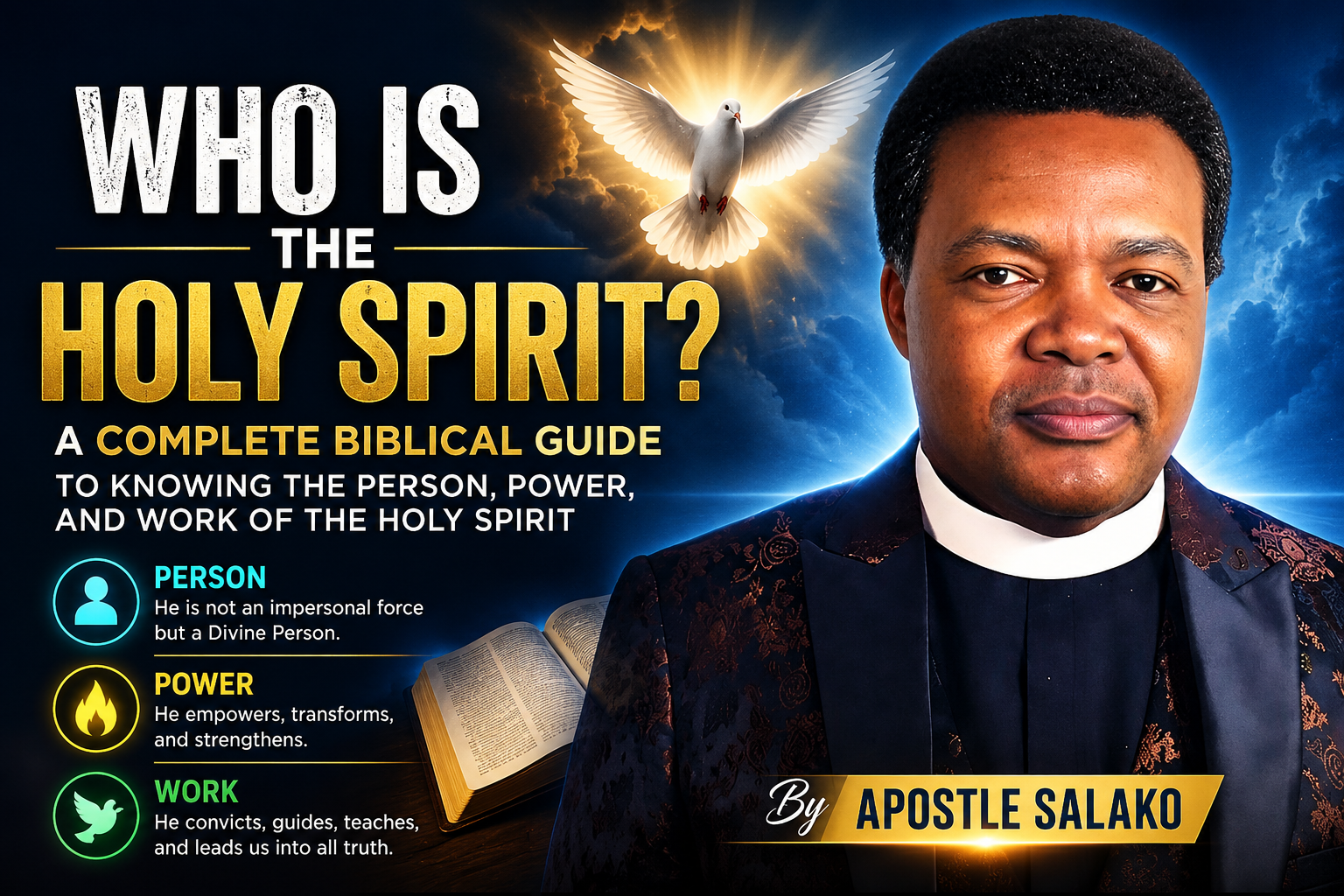
Introduction: Why Understanding the Holy Spirit Matters
The Holy Spirit is one of the most important yet often misunderstood subjects in Christianity.
Many believers understand God the Father and Jesus Christ the Son, but struggle to understand the Holy Spirit. Some see Him only as a power, a feeling, an emotional experience, or a mysterious influence. However, the Bible reveals something much deeper:
The Holy Spirit is not merely a force we receive; He is a divine Person we know.
The Christian life was never designed to be lived by human strength alone. God did not save us and then leave us to struggle through life by our own ability. He gave believers the Holy Spirit as a Helper, Teacher, Comforter, Advocate, and Source of spiritual power.
Jesus clearly explained the importance of the Holy Spirit before His departure from earth:
Nevertheless I tell you the truth; It is expedient for you that I go away: for if I go not away, the Comforter will not come unto you; but if I depart, I will send him unto you. — John 16:7 (KJV)
Jesus considered the coming of the Holy Spirit so important that He told His disciples it was better for Him to leave physically so that the Holy Spirit could come and dwell within believers.
This reveals a powerful truth:
The Christian life without understanding the Holy Spirit is incomplete.
The Holy Spirit is the One who transforms hearts, reveals Christ, empowers ministry, produces spiritual maturity, gives gifts, provides direction, and helps believers fulfill God's purpose.
Without the Holy Spirit:
• Prayer becomes a religious activity. • Bible study becomes only intellectual knowledge. • Ministry becomes human effort. • Worship becomes empty tradition. • Christian living becomes difficult and frustrating.
But when a believer understands and cooperates with the Holy Spirit:
• Faith becomes stronger. • Spiritual understanding increases. • God’s presence becomes more real. • Character is transformed. • Spiritual gifts become activated. • Purpose becomes clearer.
The Holy Spirit is not a subject merely to study; He is a Person to know.
Who Is the Holy Spirit?
The simplest biblical answer is:
The Holy Spirit is God’s Spirit, the third Person of the Trinity, who lives and works within believers to reveal God’s presence, accomplish His purposes, and empower His people.
The Bible introduces the Holy Spirit from the very beginning.
Genesis opens with these words:
And the Spirit of God moved upon the face of the waters. — Genesis 1:2 (KJV)
Before humanity existed, before nations were formed, and before the church was established, the Holy Spirit was already present.
The Holy Spirit is eternal. He is not a created being. He was not introduced in the New Testament; rather, He has always existed with the Father and the Son.
The Bible reveals that the Holy Spirit possesses the characteristics of God:
1. The Holy Spirit Is Eternal
Hebrews describes Him as:
How much more shall the blood of Christ, who through the eternal Spirit offered himself without spot to God... — Hebrews 9:14 (KJV)
Only God possesses eternity. The Holy Spirit is eternal because He is divine.
2. The Holy Spirit Is Omnipresent
The Psalmist asked:
Whither shall I go from thy spirit? or whither shall I flee from thy presence? — Psalm 139:7 (KJV)
David understood that there was nowhere he could escape from God's Spirit.
The Holy Spirit is not limited by geography. He can minister to millions of believers across the world simultaneously.
3. The Holy Spirit Knows All Things
Paul wrote:
For the Spirit searcheth all things, yea, the deep things of God. — 1 Corinthians 2:10 (KJV)
The Holy Spirit possesses divine knowledge.
He understands:
• The heart of God. • The mysteries of Scripture. • The needs of humanity. • The plans and purposes of God.
4. The Holy Spirit Has Divine Power
When the angel announced the birth of Jesus, he said:
The Holy Ghost shall come upon thee, and the power of the Highest shall overshadow thee... — Luke 1:35 (KJV)
The Holy Spirit carries the power of God.
The Holy Spirit Is a Person, Not an Impersonal Force
One of the greatest misunderstandings about the Holy Spirit is believing that He is simply an energy or force.
Some people speak about the Holy Spirit like electricity:
The Holy Spirit moved.
The Holy Spirit came.
The Holy Spirit is powerful.
While these statements can describe His activity, they do not fully reveal His identity.
The Bible teaches that the Holy Spirit has personality.
A force cannot:
• Speak. • Teach. • Love. • Be grieved. • Make decisions. • Comfort. • Guide.
But the Holy Spirit does all these things.
The Holy Spirit Speaks
In Acts 13, the Holy Spirit communicated clearly:
As they ministered to the Lord, and fasted, the Holy Ghost said, Separate me Barnabas and Saul for the work whereunto I have called them. — Acts 13:2 (KJV)
The Holy Spirit said:
• Separate Barnabas and Saul. • I have called them.
A force cannot speak or call people into ministry.
A Person can.
The Holy Spirit Teaches
Jesus said:
But the Comforter, which is the Holy Ghost, whom the Father will send in my name, he shall teach you all things... — John 14:26 (KJV)
Teaching requires intelligence and relationship.
The Holy Spirit does not merely transfer information; He gives revelation.
The Holy Spirit Can Be Grieved
Paul warned believers:
And grieve not the holy Spirit of God, whereby ye are sealed unto the day of redemption. — Ephesians 4:30 (KJV)
You cannot grieve an object.
You cannot grieve electricity.
You cannot grieve a force.
Grief is an emotional response experienced by a person.
This shows that the Holy Spirit has feelings and desires.
The Holy Spirit Helps Believers
Romans says:
Likewise the Spirit also helpeth our infirmities... — Romans 8:26 (KJV)
The Holy Spirit is not distant from human struggles. He actively assists believers.
When you are weak, He strengthens you.
When you are confused, He guides you.
When you cannot pray, He helps you.
Part 2: The Holy Spirit in the Trinity, His Names and Titles, His Role in Creation, and His Work Throughout the Bible
The Holy Spirit in the Trinity
One of the most important truths about understanding the Holy Spirit is recognizing His place in the Trinity.
The Bible teaches that there is one God who exists eternally as three distinct Persons:
• God the Father • God the Son (Jesus Christ) • God the Holy Spirit
This doctrine is known as the Trinity.
The word "Trinity" does not appear in the Bible, but the truth of the Trinity is revealed throughout Scripture.
The Bible teaches:
Hear, O Israel: The LORD our God is one LORD. — Deuteronomy 6:4 (KJV)
There is only one true God.
However, Scripture also reveals the Father, Son, and Holy Spirit as distinct Persons who share the same divine nature.
The Father, Son, and Holy Spirit Together
One of the clearest examples of the Trinity appears during the baptism of Jesus Christ.
Matthew records:
And Jesus, when he was baptized, went up straightway out of the water: and, lo, the heavens were opened unto him, and he saw the Spirit of God descending like a dove, and lighting upon him: And lo a voice from heaven, saying, This is my beloved Son, in whom I am well pleased. — Matthew 3:16–17 (KJV)
Notice the three Persons revealed:
1. Jesus Christ was standing in the water.
2. The Holy Spirit descended like a dove.
3. The Father spoke from heaven.
They were not three names for one Person. They were three distinct Persons acting together.
The Great Commission Reveals the Trinity
Before ascending into heaven, Jesus commanded His disciples:
Go ye therefore, and teach all nations, baptizing them in the name of the Father, and of the Son, and of the Holy Ghost. — Matthew 28:19 (KJV)
Jesus placed the Father, Son, and Holy Spirit together under one divine name.
He did not say:
Baptize them in the name of the Father, Son, and a spiritual power.
He said:
The Father, the Son, and the Holy Ghost.
The Holy Spirit belongs in the same divine relationship as the Father and the Son.
The Holy Spirit Is God
The Holy Spirit is not a lesser being or a lower level of divinity.
He is fully God.
One powerful example is found in the story of Ananias and Sapphira.
Peter confronted Ananias:
Why hath Satan filled thine heart to lie to the Holy Ghost... — Acts 5:3 (KJV)
Then Peter continued:
Thou hast not lied unto men, but unto God. — Acts 5:4 (KJV)
Peter equated lying to the Holy Spirit with lying to God.
This demonstrates the divine nature of the Holy Spirit.
The Names and Titles of the Holy Spirit
The names and titles of the Holy Spirit reveal His character, nature, and ministry.
Each title teaches us something about who He is and what He does.
1. The Holy Spirit
This is His primary name throughout Scripture.
The word "Holy" reveals His nature.
He is completely pure, separated from sin, and perfectly righteous.
The word "Spirit" comes from the Hebrew word Ruach and the Greek word Pneuma, meaning:
• Breath • Wind • Spirit
This does not mean He is merely invisible energy. Rather, it describes His spiritual nature and activity.
Jesus said:
God is a Spirit: and they that worship him must worship him in spirit and in truth. — John 4:24 (KJV)
2. The Comforter
Jesus repeatedly called the Holy Spirit the Comforter.
And I will pray the Father, and he shall give you another Comforter, that he may abide with you for ever. — John 14:16 (KJV)
The Greek word translated "Comforter" is Parakletos, meaning:
• Helper • Advocate • Counselor • One called alongside to assist
The Holy Spirit does not abandon believers during difficulties.
He strengthens us in trials.
He encourages us in weakness.
He reminds us of God's promises.
3. The Spirit of Truth
Jesus said:
Howbeit when he, the Spirit of truth, is come, he will guide you into all truth... — John 16:13 (KJV)
The Holy Spirit reveals truth.
In a world filled with deception, confusion, and false teaching, believers need the guidance of the Spirit of Truth.
He helps us:
• Understand Scripture. • Recognize error. • Discern God's will. • Walk according to God's ways.
4. The Spirit of Grace
Hebrews describes the Holy Spirit as:
the Spirit of grace — Hebrews 10:29 (KJV)
Grace is God's undeserved favor and empowerment.
The Holy Spirit helps believers receive and experience God's grace.
He empowers us to overcome sin and live a life pleasing to God.
5. The Spirit of Adoption
Paul writes:
For ye have not received the spirit of bondage again to fear; but ye have received the Spirit of adoption, whereby we cry, Abba, Father. — Romans 8:15 (KJV)
The Holy Spirit confirms our relationship with God.
Through Him, believers know they are:
• Accepted by God. • Loved by God. • Children of God. • Heirs of God's promises.
6. The Spirit of Wisdom and Understanding
The prophet Isaiah described the Spirit of God resting upon the Messiah:
And the spirit of the LORD shall rest upon him, the spirit of wisdom and understanding... — Isaiah 11:2 (KJV)
The Holy Spirit gives supernatural wisdom beyond human ability.
This wisdom helps believers make decisions according to God's purpose.
The Holy Spirit in Creation
The Holy Spirit was active in creation.
Many people mistakenly believe that the Holy Spirit only appeared after Pentecost. However, Scripture reveals that He has always been working throughout history.
Genesis begins:
And the Spirit of God moved upon the face of the waters. — Genesis 1:2 (KJV)
The Holy Spirit was present at creation.
The Spirit Gives Life
Job declared:
The Spirit of God hath made me, and the breath of the Almighty hath given me life. — Job 33:4 (KJV)
Life itself comes from God.
The Holy Spirit is the giver of life.
The Spirit Sustains Creation
Psalm 104 says:
Thou sendest forth thy spirit, they are created: and thou renewest the face of the earth. — Psalm 104:30 (KJV)
The Holy Spirit is involved not only in creating life but also sustaining and renewing creation.
The Holy Spirit in the Old Testament
The Holy Spirit was active throughout the Old Testament.
However, there is an important difference between the Old Testament experience and the New Testament experience.
In the Old Testament, the Holy Spirit often came upon people for specific assignments.
In the New Testament, after Pentecost, the Holy Spirit comes to indwell believers permanently.
The Spirit Empowered Leaders
Moses
God placed His Spirit upon Moses and the elders of Israel.
And the LORD came down in a cloud, and spake unto him, and took of the spirit that was upon him, and gave it unto the seventy elders... — Numbers 11:25 (KJV)
The Spirit empowered leadership.
Joshua
Joshua was recognized as a man filled with the Spirit:
And Joshua the son of Nun was full of the spirit of wisdom... — Deuteronomy 34:9 (KJV)
The Holy Spirit equipped Joshua to lead Israel into God's promises.
Samson
The Spirit gave Samson supernatural strength:
And the Spirit of the LORD came mightily upon him... — Judges 14:6 (KJV)
Samson's strength was not natural ability; it came from divine empowerment.
David
David experienced the Holy Spirit's presence.
After his sin with Bathsheba, David prayed:
Cast me not away from thy presence; and take not thy holy spirit from me. — Psalm 51:11 (KJV)
David understood that his greatest treasure was not his crown, wealth, or influence, but God's Spirit.
Prophecy of the Coming Outpouring of the Spirit
The Old Testament looked forward to a greater work of the Holy Spirit.
The prophet Joel declared:
And it shall come to pass afterward, that I will pour out my spirit upon all flesh... — Joel 2:28 (KJV)
This prophecy was fulfilled through the coming of the Holy Spirit at Pentecost.
The promise was no longer limited to prophets, priests, and kings.
God would pour His Spirit upon:
• Sons and daughters. • Young and old. • Servants and handmaids.
The Holy Spirit would become available to all who believe
Part 3: The Holy Spirit in the Life and Ministry of Jesus Christ, The Birth of the Church, and The Work of the Holy Spirit in Every Believer
The Holy Spirit in the Life and Ministry of Jesus Christ
One of the greatest revelations in Scripture is that Jesus Christ, although fully God, carried out His earthly ministry through the power and enablement of the Holy Spirit.
The ministry of Jesus was not based on human strength, human wisdom, or natural ability. He operated under the anointing of the Holy Spirit.
This teaches believers an important spiritual principle:
If Jesus depended on the Holy Spirit for His earthly ministry, every believer needs the Holy Spirit to fulfill God's purpose.
The Holy Spirit and the Birth of Jesus
The Holy Spirit was involved from the very beginning of Jesus' earthly life.
When the angel Gabriel announced the birth of Christ to Mary, he said:
The Holy Ghost shall come upon thee, and the power of the Highest shall overshadow thee: therefore also that holy thing which shall be born of thee shall be called the Son of God. — Luke 1:35 (KJV)
The virgin birth of Jesus was a supernatural work of the Holy Spirit.
Jesus was not created by human effort. His coming into the world was the fulfillment of God's eternal plan.
The Holy Spirit at the Baptism of Jesus
Before Jesus began His public ministry, He was baptized by John the Baptist.
The Bible records:
And the Holy Ghost descended in a bodily shape like a dove upon him, and a voice came from heaven, which said, Thou art my beloved Son; in thee I am well pleased. — Luke 3:22 (KJV)
At this moment:
• The Son was baptized. • The Spirit descended. • The Father spoke.
This was a powerful revelation of the Trinity.
The Holy Spirit publicly identified Jesus as the Messiah and empowered Him for ministry.
Jesus Was Led by the Holy Spirit
After His baptism, Jesus entered the wilderness.
Luke records:
And Jesus being full of the Holy Ghost returned from Jordan, and was led by the Spirit into the wilderness. — Luke 4:1 (KJV)
Notice two important truths:
1. Jesus Was Filled With the Spirit
He was not empty spiritually.
He carried the fullness of God's presence.
2. Jesus Was Led by the Spirit
The Holy Spirit directed His steps.
A Spirit-filled life is not only about receiving power; it is also about receiving divine direction.
Jesus Ministered Through the Power of the Spirit
Jesus announced His mission by quoting Isaiah:
The Spirit of the Lord is upon me, because he hath anointed me to preach the gospel to the poor... — Luke 4:18 (KJV)
Jesus identified the source of His earthly ministry:
The Spirit of the Lord was upon Him.
The Holy Spirit empowered Him to:
• Preach the Gospel. • Heal the sick. • Deliver the oppressed. • Bring hope to broken people. • Demonstrate God's kingdom.
Jesus Cast Out Demons Through the Spirit
Jesus explained:
But if I cast out devils by the Spirit of God, then the kingdom of God is come unto you. — Matthew 12:28 (KJV)
The victory of Jesus over demonic powers was accomplished through the authority of the Holy Spirit.
This reveals that spiritual battles cannot be won through human ability alone.
Jesus Promised the Coming of the Holy Spirit
Before His death, Jesus prepared His disciples for the coming ministry of the Holy Spirit.
He told them:
And I will pray the Father, and he shall give you another Comforter, that he may abide with you for ever. — John 14:16 (KJV)
Jesus promised:
• The Holy Spirit would come. • The Holy Spirit would remain. • The Holy Spirit would help believers.
The disciples were about to experience a new dimension of God's presence.
The Holy Spirit and the Birth of the Church
The Church was not established through human organization, political influence, or human strategy.
The Church was born through the power of the Holy Spirit.
The book of Acts begins with the promise of the Spirit.
Jesus commanded His disciples:
And, being assembled together with them, commanded them that they should not depart from Jerusalem, but wait for the promise of the Father... — Acts 1:4 (KJV)
The disciples had witnessed the resurrection of Jesus, but Jesus instructed them to wait.
Why?
Because they needed spiritual power before beginning their mission.
The Promise of Power
Jesus continued:
But ye shall receive power, after that the Holy Ghost is come upon you: and ye shall be witnesses unto me... — Acts 1:8 (KJV)
The purpose of the Holy Spirit was not merely personal blessing.
The Spirit was given for:
• Witnessing. • Evangelism. • Kingdom advancement. • Effective ministry.
The Holy Spirit empowers believers to represent Christ to the world.
The Day of Pentecost
The promise was fulfilled on the Day of Pentecost.
Acts records:
And when the day of Pentecost was fully come, they were all with one accord in one place. — Acts 2:1 (KJV)
Then:
And they were all filled with the Holy Ghost, and began to speak with other tongues, as the Spirit gave them utterance. — Acts 2:4 (KJV)
This moment marked the beginning of a new era.
The Holy Spirit was no longer only coming upon selected individuals.
He came to dwell within the body of believers.
The Transformation After Pentecost
Before Pentecost:
• Peter denied Jesus. • The disciples were fearful. • They hid from persecution.
After Pentecost:
• Peter preached boldly. • Thousands came to Christ. • The disciples performed miracles. • The Gospel spread throughout nations.
What changed?
The Holy Spirit empowered ordinary people to accomplish extraordinary things.
The Holy Spirit Builds the Church
The Church grows through the work of the Holy Spirit.
Paul wrote:
For by one Spirit are we all baptized into one body... — 1 Corinthians 12:13 (KJV)
The Holy Spirit creates unity among believers.
Although believers come from different:
• Nations. • Cultures. • Backgrounds. • Personal experiences.
The Spirit makes them one in Christ.
The Work of the Holy Spirit in the Believer
The Holy Spirit has many ministries in the life of a believer.
He is not only present during church services or spiritual experiences.
He works daily in every area of Christian life.
1. The Holy Spirit Convicts of Sin
Jesus said:
And when he is come, he will reprove the world of sin, and of righteousness, and of judgment. — John 16:8 (KJV)
The Holy Spirit reveals our need for God.
Conviction is not condemnation.
Condemnation pushes people away from God.
Conviction draws people toward repentance and restoration.
When the Holy Spirit convicts:
• He exposes wrong attitudes. • He reveals hidden sins. • He calls us back to righteousness.
2. The Holy Spirit Regenerates Believers
The Holy Spirit gives new spiritual life.
Jesus told Nicodemus:
Except a man be born of water and of the Spirit, he cannot enter into the kingdom of God. — John 3:5 (KJV)
Salvation is not simply changing behavior.
It is receiving a new nature through the work of the Spirit.
The Holy Spirit transforms people from the inside.
3. The Holy Spirit Dwells Within Believers
Paul wrote:
Know ye not that ye are the temple of God, and that the Spirit of God dwelleth in you? — 1 Corinthians 3:16 (KJV)
Under the Old Covenant, God's presence was associated with the temple.
Under the New Covenant, God's presence lives within His people.
Every genuine believer has the privilege of becoming a dwelling place of the Holy Spirit.
4. The Holy Spirit Seals Believers
Paul explains:
In whom ye also trusted, after that ye heard the word of truth, the gospel of your salvation: in whom also after that ye believed, ye were sealed with that holy Spirit of promise. — Ephesians 1:13 (KJV)
A seal represents:
• Ownership. • Security. • Authenticity. • Promise.
The Holy Spirit is God's mark upon believers.
5. The Holy Spirit Gives Spiritual Understanding
Human intelligence alone cannot fully understand spiritual truth.
Paul wrote:
But God hath revealed them unto us by his Spirit: for the Spirit searcheth all things, yea, the deep things of God. — 1 Corinthians 2:10 (KJV)
The Holy Spirit illuminates Scripture.
He helps believers understand:
• God's character. • God's promises. • God's purposes. • God's instructions.
6. The Holy Spirit Helps Us Pray
One of the greatest gifts of the Holy Spirit is His help in prayer.
Paul wrote:
Likewise the Spirit also helpeth our infirmities: for we know not what we should pray for as we ought... — Romans 8:26 (KJV)
There are moments when:
• Words fail us. • Understanding is limited. • Emotions overwhelm us.
The Holy Spirit strengthens our prayer life and helps us communicate with God.
7. The Holy Spirit Produces Spiritual Transformation
Christian maturity is not achieved through human effort alone.
The Holy Spirit changes us from within.
Paul wrote:
But we all, with open face beholding as in a glass the glory of the Lord, are changed into the same image from glory to glory, even as by the Spirit of the Lord. — 2 Corinthians 3:18 (KJV)
The goal of the Spirit's work is to make believers more like Christ.
Part 4: The Holy Spirit as Teacher and Guide, Spiritual Power, Gifts of the Spirit, Fruit of the Spirit, and Developing a Daily Relationship With the Holy Spirit
The Holy Spirit as Teacher and Guide
One of the most important ministries of the Holy Spirit is His ability to teach and guide believers into the will of God.
Christianity is not merely about knowing information about God; it is about having a living relationship with God. The Holy Spirit makes this relationship possible by revealing God's truth and leading believers in God's ways.
Jesus promised His disciples:
But the Comforter, which is the Holy Ghost, whom the Father will send in my name, he shall teach you all things, and bring all things to your remembrance, whatsoever I have said unto you. — John 14:26 (KJV)
The Holy Spirit is the divine Teacher.
He does not replace Scripture; rather, He helps believers understand and apply Scripture correctly.
The Holy Spirit Reveals Spiritual Truth
Human reasoning has limitations.
A person can study theology, history, and philosophy, yet still miss the spiritual realities of God without the Holy Spirit's illumination.
Paul wrote:
But the natural man receiveth not the things of the Spirit of God: for they are foolishness unto him... — 1 Corinthians 2:14 (KJV)
Spiritual understanding requires spiritual revelation.
The Holy Spirit helps believers see:
• The meaning behind God's Word. • The beauty of Christ. • The seriousness of sin. • The greatness of God's promises. • The purpose of God's plans.
The Holy Spirit Brings Remembrance
Jesus told His disciples that the Holy Spirit would bring His words back to their remembrance.
This was especially important for the apostles because they would later preach and write the New Testament.
The Holy Spirit helps believers remember:
• Scriptures they have studied. • Truths they have learned. • God's promises during difficult seasons. • Wisdom needed in specific situations.
Many believers have experienced moments when a Scripture suddenly comes alive during prayer, worship, or a difficult situation. This is one of the ministries of the Holy Spirit.
The Holy Spirit Guides Believers
Jesus said:
Howbeit when he, the Spirit of truth, is come, he will guide you into all truth... — John 16:13 (KJV)
The Holy Spirit provides divine direction.
He guides believers concerning:
• Decisions. • Relationships. • Ministry assignments. • Personal growth. • Spiritual battles. • God's purpose.
A Spirit-led believer learns to depend on God's wisdom rather than human understanding alone.
How Does the Holy Spirit Guide Us?
The Holy Spirit guides through several biblical ways:
1. Through the Word of God
The Holy Spirit will never lead a believer contrary to Scripture.
God's Word provides the foundation for spiritual guidance.
The Spirit gives understanding of what God has already revealed.
2. Through Inner Witness
Paul wrote:
The Spirit itself beareth witness with our spirit, that we are the children of God. — Romans 8:16 (KJV)
The Holy Spirit can give believers an inward assurance and conviction.
This does not mean every feeling is from God. Believers must test every impression through Scripture.
3. Through Wisdom and Discernment
James wrote:
If any of you lack wisdom, let him ask of God... — James 1:5 (KJV)
The Holy Spirit gives wisdom for practical decisions.
4. Through Spiritual Counsel
God often uses mature believers, pastors, teachers, and spiritual leaders to provide guidance.
The Holy Spirit works through the body of Christ.
The Holy Spirit and Spiritual Power
The Holy Spirit is the source of supernatural power for believers.
Jesus did not command His disciples to begin ministry immediately after His resurrection. He instructed them to wait until they received power from above.
But ye shall receive power, after that the Holy Ghost is come upon you... — Acts 1:8 (KJV)
The Greek word translated "power" is dunamis, meaning:
• Ability. • Strength. • Capacity. • Supernatural empowerment.
The Holy Spirit gives believers the ability to do what human strength cannot accomplish.
Spiritual Power Is For Kingdom Purpose
The purpose of spiritual power is not personal pride or recognition.
The Holy Spirit empowers believers to serve God and bless others.
Jesus demonstrated this principle.
His power was used to:
• Heal the sick. • Deliver the oppressed. • Teach truth. • Show compassion. • Advance God's kingdom.
The same Spirit empowers believers today to represent Christ.
The Holy Spirit Gives Boldness
Before Pentecost, Peter was afraid.
He denied Jesus three times.
However, after receiving the Holy Spirit, Peter stood before thousands and boldly proclaimed Christ.
Acts records:
Then Peter, filled with the Holy Ghost, said unto them... — Acts 4:8 (KJV)
The Holy Spirit transformed fear into courage.
Many believers struggle with fear of:
• Rejection. • Failure. • Opposition. • Public speaking.
But the Spirit gives supernatural boldness to fulfill God's assignment.
The Holy Spirit Empowers Evangelism
The Great Commission requires supernatural help.
Jesus said:
Go ye into all the world, and preach the gospel to every creature. — Mark 16:15 (KJV)
This mission is impossible through human ability alone.
The Holy Spirit empowers believers to:
• Share their testimony. • Preach the Gospel. • Demonstrate God's love. • Reach different cultures and nations.
The Gifts of the Holy Spirit
The Holy Spirit gives spiritual gifts to believers for the purpose of serving others and strengthening the Church.
Paul wrote:
But the manifestation of the Spirit is given to every man to profit withal. — 1 Corinthians 12:7 (KJV)
Spiritual gifts are not given for personal status.
They are given for service.
Categories of Spiritual Gifts
1. Gifts of Revelation
These gifts reveal supernatural knowledge and understanding.
Word of Wisdom
The supernatural ability to receive divine insight concerning situations.
Word of Knowledge
The supernatural revelation of information that could not be known naturally.
Discerning of Spirits
The ability to recognize the source behind spiritual activity.
2. Gifts of Power
These gifts demonstrate God's supernatural ability.
Faith
A supernatural confidence in God's ability and promises.
Gifts of Healing
God's power working through believers to bring healing.
Working of Miracles
Supernatural acts that demonstrate God's authority.
3. Gifts of Inspiration
These gifts communicate God's message.
Prophecy
Speaking under the inspiration of the Holy Spirit to strengthen, encourage, and comfort believers.
Paul wrote:
But he that prophesieth speaketh unto men to edification, and exhortation, and comfort. — 1 Corinthians 14:3 (KJV)
Divers Kinds of Tongues
Supernatural communication by the Spirit.
Interpretation of Tongues
The ability to interpret a message given through tongues.
The Purpose of Spiritual Gifts
Spiritual gifts are given to:
• Strengthen the Church. • Encourage believers. • Advance God's kingdom. • Demonstrate God's love. • Equip believers for ministry.
They are not signs of spiritual superiority.
A person with gifts but without love is spiritually immature.
Paul emphasized:
And though I have the gift of prophecy, and understand all mysteries, and all knowledge... and have not charity, I am nothing. — 1 Corinthians 13:2 (KJV)
Character must accompany gifting.
The Fruit of the Holy Spirit
While gifts reveal what the Spirit does through us, fruit reveals what the Spirit produces in us.
A believer can operate in spiritual gifts but still need character transformation.
The Holy Spirit's goal is to make us like Christ.
Paul wrote:
But the fruit of the Spirit is love, joy, peace, longsuffering, gentleness, goodness, faith, meekness, temperance... — Galatians 5:22–23 (KJV)
Understanding the Nine Dimensions of Spiritual Fruit
1. Love
Love is the foundation of Christian character.
God does not want believers only to perform religious activities; He wants them to reflect His love.
2. Joy
Joy is a spiritual strength that remains even during difficult circumstances.
It is not dependent on external conditions.
3. Peace
The Holy Spirit gives inner stability in the middle of life's storms.
Jesus promised:
Peace I leave with you, my peace I give unto you... — John 14:27 (KJV)
4. Longsuffering
This means patience and endurance.
The Holy Spirit helps believers respond with grace instead of anger.
5. Gentleness
Gentleness reflects the character of Christ in how we treat others.
6. Goodness
The Spirit produces moral excellence and a desire to do what pleases God.
7. Faith
Faith includes trustworthiness and confidence in God.
8. Meekness
Meekness is not weakness.
It is strength under control.
9. Temperance
Temperance means self-control.
The Holy Spirit helps believers overcome sinful desires and live disciplined lives.
Gifts and Fruit Must Work Together
A mature believer needs both:
Spiritual gifts + Spiritual fruit
Gifts without character can damage people.
Character without spiritual gifts can limit effectiveness.
God desires believers who are:
• Powerful in ministry. • Humble in character. • Loving in relationships. • Faithful in service.
Developing a Daily Relationship With the Holy Spirit
The Holy Spirit is not someone we only encounter during special moments.
He desires daily fellowship with believers.
Paul wrote:
The grace of the Lord Jesus Christ, and the love of God, and the communion of the Holy Ghost, be with you all. — 2 Corinthians 13:14 (KJV)
The word "communion" means fellowship, partnership, and relationship.
Ways to Grow in Fellowship With the Holy Spirit
1. Spend Time in Prayer
Prayer creates sensitivity to God's presence.
A believer who rarely prays will struggle to recognize the Spirit's leading.
2. Study God's Word
The Holy Spirit works through Scripture.
A person who ignores God's Word will easily confuse personal feelings with divine guidance.
3. Worship God
Worship creates an atmosphere where believers become aware of God's presence.
4. Obey the Holy Spirit
Spiritual sensitivity grows through obedience.
When God speaks, respond.
Delayed obedience often reduces spiritual sensitivity.
5. Maintain a Clean Heart
Sin affects fellowship with God.
David prayed:
Create in me a clean heart, O God; and renew a right spirit within me. — Psalm 51:10 (KJV)
A surrendered heart creates room for the Holy Spirit's work.
Common Misunderstandings, Walking Daily in the Spirit, Frequently Asked Questions, and Conclusion
The Difference Between Having the Holy Spirit and Being Filled With the Holy Spirit
One of the most important truths every believer must understand is the difference between receiving the Holy Spirit and being continually filled with the Holy Spirit.
Every genuine believer receives the Holy Spirit at salvation.
Paul wrote:
Now if any man have not the Spirit of Christ, he is none of his. — Romans 8:9 (KJV)
The presence of the Holy Spirit is evidence that a person belongs to Christ.
However, Scripture also commands believers to continually be filled with the Spirit.
Paul wrote:
And be not drunk with wine, wherein is excess; but be filled with the Spirit. — Ephesians 5:18 (KJV)
The phrase "be filled" carries the idea of continuous action.
It means:
• Continue yielding to the Spirit. • Continue depending on God's power. • Continue allowing Him to influence your thoughts, words, and actions.
Receiving the Holy Spirit at Salvation
When a person repents and places faith in Jesus Christ, the Holy Spirit comes to dwell within that believer.
The Holy Spirit:
• Regenerates the heart. • Gives new spiritual life. • Makes believers children of God. • Seals believers for eternity.
This is the beginning of the Christian journey.
Being Filled With the Holy Spirit
Being filled with the Spirit refers to allowing the Holy Spirit to have greater influence and control over our lives.
A Spirit-filled believer is someone who:
• Surrenders daily to God. • Walks in obedience. • Depends on divine strength. • Displays Christ-like character. • Operates in spiritual power.
The question is not only:
Do I have the Holy Spirit?
The deeper question is:
Does the Holy Spirit have all of me?
Signs of a Spirit-Filled Life
A Spirit-filled believer demonstrates spiritual evidence.
1. A Growing Love for God
The Holy Spirit creates hunger for God.
A person filled with the Spirit desires:
• Prayer. • Worship. • God's Word. • Fellowship with believers.
2. Transformation of Character
The Spirit produces Christ-like qualities.
A Spirit-filled person becomes:
• More patient. • More forgiving. • More humble. • More loving. • More obedient.
3. Spiritual Boldness
The Holy Spirit gives courage to represent Christ.
Acts 4:31 says:
And they were all filled with the Holy Ghost, and they spake the word of God with boldness. — Acts 4:31 (KJV)
Boldness is one evidence of spiritual empowerment.
4. Greater Sensitivity to God
A Spirit-filled believer becomes more aware of:
• God's voice. • God's correction. • God's direction. • God's presence.
Common Misunderstandings About the Holy Spirit
Many believers struggle with confusion concerning the Holy Spirit because of incorrect teachings or incomplete understanding.
Let us examine some common misunderstandings.
Misunderstanding 1: The Holy Spirit Is Only an Emotion
Some people believe the Holy Spirit is only a feeling experienced during worship.
While the Holy Spirit can produce deep emotions, He is not merely an emotional experience.
The Holy Spirit is:
• God. • A divine Person. • A Teacher. • A Helper. • A Guide.
Emotions may accompany His presence, but His work goes far deeper than feelings.
Misunderstanding 2: The Holy Spirit Is Only for Certain People
Some believe the Holy Spirit is only for pastors, prophets, or ministers.
However, Joel prophesied:
And it shall come to pass afterward, that I will pour out my spirit upon all flesh... — Joel 2:28 (KJV)
The promise includes:
• Sons. • Daughters. • Young people. • Older people. • Servants.
The Holy Spirit is available to every believer.
Misunderstanding 3: Spiritual Gifts Are the Same as Spiritual Maturity
A person may have spiritual gifts and still lack spiritual maturity.
The church in Corinth operated in many spiritual gifts, yet Paul corrected them because of:
• Division. • Pride. • Immaturity.
Gifts show God's ability working through someone.
Fruit shows God's character developing within someone.
Both are important.
Misunderstanding 4: The Holy Spirit Will Force Himself Upon People
The Holy Spirit is powerful, but He does not operate by controlling people against their will.
He invites cooperation.
Paul wrote:
And grieve not the holy Spirit of God... — Ephesians 4:30 (KJV)
The fact that the Spirit can be grieved shows that believers can resist His work.
God desires partnership, not forced obedience.
Misunderstanding 5: The Holy Spirit Replaces the Bible
Some people claim:
I do not need Scripture; the Spirit guides me.
This is dangerous.
The Holy Spirit inspired Scripture.
Peter wrote:
Holy men of God spake as they were moved by the Holy Ghost. — 2 Peter 1:21 (KJV)
The same Spirit who inspired the Bible will never contradict the Bible.
The Spirit and the Word always agree.
How to Walk Daily in the Spirit
The Christian life is not meant to be lived by human strength.
Paul wrote:
This I say then, Walk in the Spirit, and ye shall not fulfil the lust of the flesh. — Galatians 5:16 (KJV)
Walking in the Spirit means living under the influence and direction of the Holy Spirit.
1. Surrender Your Will to God
The Holy Spirit works most freely in a surrendered heart.
Jesus demonstrated complete surrender when He prayed:
Not my will, but thine, be done. — Luke 22:42 (KJV)
A surrendered believer says:
Lord, guide my decisions.
Lord, change my heart.
Lord, use my life for Your glory.
2. Renew Your Mind With God's Word
The Spirit transforms believers through truth.
Paul wrote:
And be renewed in the spirit of your mind. — Ephesians 4:23 (KJV)
A renewed mind produces a transformed life.
3. Practice Spiritual Disciplines
A Spirit-led life requires spiritual habits.
Important disciplines include:
Prayer
Prayer keeps communication with God open.
Bible Study
Scripture provides spiritual direction.
Fasting
Fasting strengthens spiritual sensitivity.
Worship
Worship keeps the heart focused on God.
Fellowship
God designed believers to grow together.
4. Obey Promptly
Spiritual growth requires obedience.
When the Holy Spirit convicts, instructs, or redirects, respond quickly.
Delayed obedience often becomes disobedience.
5. Develop Spiritual Discernment
The world contains many voices:
• Cultural voices. • Personal desires. • Human opinions. • Spiritual deception.
The Holy Spirit helps believers discern what aligns with God's will.
John wrote:
Beloved, believe not every spirit, but try the spirits whether they are of God... — 1 John 4:1 (KJV)
Frequently Asked Questions About the Holy Spirit
1. Who Is the Holy Spirit?
The Holy Spirit is the third Person of the Trinity, fully God, who lives and works within believers to reveal Christ, empower spiritual life, and accomplish God's purposes.
2. Is the Holy Spirit a Person or a Force?
The Holy Spirit is a Person.
He speaks, teaches, guides, comforts, loves, and can be grieved.
3. When Do Believers Receive the Holy Spirit?
Believers receive the Holy Spirit when they genuinely come to faith in Jesus Christ.
The Holy Spirit begins His work of regeneration and transformation immediately.
4. What Does the Holy Spirit Do?
The Holy Spirit:
• Convicts of sin. • Gives new life. • Teaches truth. • Guides believers. • Provides spiritual power. • Gives spiritual gifts. • Produces spiritual fruit.
5. How Can I Hear the Voice of the Holy Spirit?
You can become more sensitive to the Holy Spirit through:
• Prayer. • Scripture study. • Obedience. • Worship. • Spiritual maturity.
The Holy Spirit's voice will always agree with God's Word.
6. What Does It Mean to Be Baptized With the Holy Spirit?
Holy Spirit baptism refers to a deeper experience of empowerment for spiritual service and witness.
Jesus promised:
Ye shall be baptized with the Holy Ghost not many days hence. — Acts 1:5 (KJV)
The purpose is spiritual empowerment.
7. Can a Believer Lose the Holy Spirit?
The Bible teaches that the Holy Spirit seals believers.
However, believers can grieve the Spirit through persistent disobedience and sin.
The answer is not to run from God but to return through repentance and restoration.
Conclusion: Living a Spirit-Filled Life
The Holy Spirit is one of the greatest gifts God has given to humanity.
He is not merely a doctrine to study.
He is not merely a spiritual experience.
He is not simply a source of supernatural power.
He is God's presence living within His people.
The Holy Spirit reveals Jesus Christ.
The Holy Spirit transforms lives.
The Holy Spirit empowers believers.
The Holy Spirit guides God's children into purpose.
A believer who understands the Holy Spirit understands how to live the Christian life with divine help.
God never intended His children to walk alone.
The same Spirit who:
• Moved upon the waters in creation. • Empowered prophets in the Old Testament. • Anointed Jesus Christ for ministry. • Established the early Church. • Transformed ordinary disciples into bold witnesses.
Is the same Spirit who works in believers today.
The invitation of God is not merely to know about the Holy Spirit but to walk with Him daily.
Open your heart to His guidance.
Submit to His leadership.
Grow in fellowship with Him.
Allow Him to produce His fruit in your life and empower you to fulfill God's purpose.
The Christian life becomes victorious when lived through the power and presence of the Holy Spirit.
Apostle Adedamola Salako
Founder of Apostle Salako Studios — pastor, recording artist, and teacher on faith, music, and stewardship.
Frequently Asked Questions
QWho is the Holy Spirit?
The Holy Spirit is the third Person of the Trinity, fully God, who lives and works within believers to reveal Christ, empower spiritual living, and accomplish God's purposes.
QIs the Holy Spirit a Person or a force?
The Holy Spirit is a Person. He speaks, teaches, guides, comforts, loves, and can be grieved (Acts 13:2; John 14:26; Ephesians 4:30).
QWhen do believers receive the Holy Spirit?
Believers receive the Holy Spirit when they genuinely come to faith in Jesus Christ. His work of regeneration and transformation begins immediately (Romans 8:9).
QWhat does it mean to be baptized with the Holy Spirit?
Holy Spirit baptism refers to a deeper experience of empowerment for spiritual service and witness, as Jesus promised in Acts 1:5.
QCan a believer lose the Holy Spirit?
Scripture teaches the Holy Spirit seals believers (Ephesians 4:30). Believers can grieve Him through persistent disobedience, and the remedy is repentance and restoration.
Enjoyed this article?
Get the next one straight to your inbox. One thoughtful email a week.
Comments (0)
Comments are stored locally in your browser. For published responses, email us via the Contact page.
You may also like
21 Biblical Habits That Transform Your Life: Daily Practices Every Christian Should Develop (KJV Guide)
Discover 21 Scripture-based habits — from prayer and obedience to generosity and perseverance — that shape Christlike character and transform daily life.
Walking with God Every Day: The Complete Biblical Guide to Daily Christian Living (2026)
Discover how to walk with God every day through prayer, Bible study, obedience, faith, worship, and the Holy Spirit. A complete biblical guide by Apostle Salako Adedamola.
The Baptism of the Holy Spirit Explained: Meaning, Power, Evidence, and Biblical Truth
Discover the biblical meaning of the Baptism of the Holy Spirit, why Jesus promised it, its purpose, evidence, and how believers can experience the power of the Holy Spirit according to Scripture.