
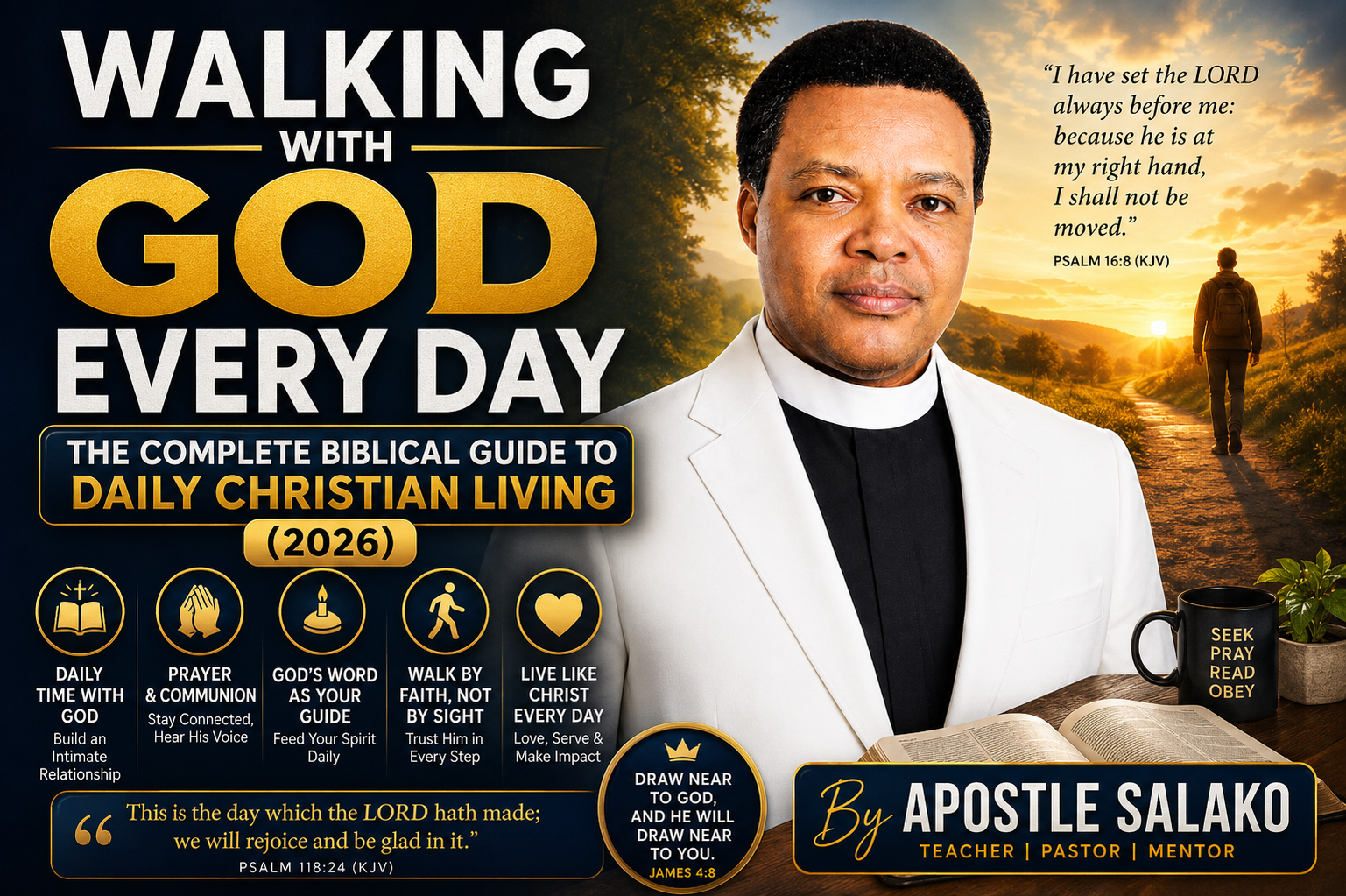
"Can two walk together, except they be agreed?" — Amos 3:3 (KJV)
Walking with God is one of the greatest privileges given to every believer. Christianity is far more than attending church services, observing religious traditions, or possessing biblical knowledge. At its heart, Christianity is a living relationship with the Creator — a daily walk marked by intimacy, obedience, faith, and continual dependence upon Him.
Throughout Scripture, God consistently reveals His desire to dwell among His people. From Adam and Eve in the Garden of Eden to the promise of God's eternal presence in the New Jerusalem, the Bible presents one central theme: God desires fellowship with humanity.
Many Christians sincerely love God but struggle to maintain a consistent relationship with Him amid life's demands. Yet Scripture assures believers that walking with God is not reserved for pastors, missionaries, or spiritual giants. It is the calling of every child of God.
What Does It Mean to Walk with God?
Walking with God describes an ongoing, personal relationship characterized by continual fellowship, trust, obedience, and communion with Him. In Scripture, "walking" symbolizes one's manner of life — allowing every area of life to come under His lordship.
Walking with God includes loving Him wholeheartedly, trusting Him completely, obeying His commands, following His guidance, living according to His Word, depending on His grace daily, and growing continually in Christlikeness. It is not about perfection; it is about direction — mature believers still face struggles, but their lives increasingly reflect God's character because they continually return to Him in repentance and faith.
The Hebrew concept of walking conveys the idea of conducting one's life according to God's covenant. It speaks of a steady, intentional lifestyle rather than isolated spiritual experiences — expressed through how we speak, think, treat people, spend money, use time, respond to trials, and pursue holiness.
Why God Wants Fellowship with His People
God created humanity for relationship. Genesis portrays Adam and Eve enjoying unhindered fellowship with God before sin entered the world. Sin disrupted that fellowship, but throughout Scripture, God initiates a plan of redemption to restore communion with His people.
"I am come that they might have life, and that they might have it more abundantly." — John 10:10 (KJV)
The Bible repeatedly demonstrates God's desire to dwell among His people — through the Garden of Eden, the Tabernacle, Solomon's Temple, Jesus Christ (God with us), the indwelling Holy Spirit, and the New Jerusalem. From Genesis to Revelation, God continually moves toward humanity with redeeming love.
"And this is life eternal, that they might know thee the only true God, and Jesus Christ, whom thou hast sent." — John 17:3 (KJV)
Knowing God is not merely intellectual knowledge but personal experience. Genuine Christianity involves growing in intimacy with the Lord through continual fellowship.
Biblical Examples of Walking with God
Enoch — "And Enoch walked with God: and he was not; for God took him" (Genesis 5:24). Enoch teaches that the greatest legacy a believer can leave is a life marked by faithful fellowship with God.
Noah walked with God in a generation characterized by violence and corruption (Genesis 6:9). Walking with God often requires standing apart from the culture. Intimacy with God enables believers to remain faithful even when surrounded by ungodliness.
Abraham trusted God when he did not know the destination, timing, or outcome. Walking with God requires faith, surrender, and obedience — believers today often receive God's guidance one step at a time.
David sinned grievously but consistently returned to God in repentance. The Psalms reveal a heart that longed for God's presence above all else. Walking with God does not mean never failing — it means continually seeking restoration through genuine repentance.
Paul exemplified unwavering devotion to Christ despite persecution, imprisonment, and suffering. External circumstances cannot prevent a believer from enjoying deep fellowship with God.
The Daily Habits of a Believer
Every meaningful relationship is strengthened through consistent communication and intentional time together. Jesus modeled this lifestyle — although He ministered to crowds, He consistently withdrew to spend time alone with the Father.
"And in the morning, rising up a great while before day, he went out, and departed into a solitary place, and there prayed." — Mark 1:35 (KJV)
A believer who walks closely with God cultivates habits such as daily prayer, consistent Bible study, worship, thanksgiving, meditation on Scripture, obedience, fellowship with other believers, service to others, evangelism, and regular self-examination. These habits are not a means of earning God's favor; they are practices that deepen our relationship with Him.
The Role of Prayer
Prayer is the heartbeat of the Christian life — ongoing fellowship with our Heavenly Father. Prayer allows believers to express love to God, receive His peace, seek His wisdom, confess sin, intercede for others, worship His majesty, and align their hearts with His will.
"Men ought always to pray, and not to faint." — Luke 18:1 (KJV)
Scripture presents several forms of prayer: worship focuses entirely on God's character; thanksgiving guards the believer against complaining (1 Thessalonians 5:18); confession restores intimacy (1 John 1:9); supplication brings every concern before God (Philippians 4:6); and intercession expands our hearts beyond personal concerns to family, church leaders, missionaries, authorities, the persecuted church, and the lost.
To build consistency: choose a regular time, eliminate distractions, use Scripture in prayer (Psalm 23, Psalm 91, Psalm 51, the Lord's Prayer), and listen as well as speak. Consistency matters more than the specific hour.
Studying the Word Every Day
Prayer is how we speak with God; Scripture is how God speaks to us. Without regular exposure to God's Word, believers cannot mature spiritually.
"All scripture is given by inspiration of God, and is profitable..." — 2 Timothy 3:16 (KJV)
God's Word reveals His character, corrects wrong thinking, provides wisdom, strengthens faith, convicts of sin, encourages perseverance, equips believers for ministry, and protects against false teaching.
Practical study methods: read systematically through books rather than isolated verses; ask what the passage teaches about God, about people, what to obey, what to believe, what to heed, and how to respond today; meditate on Scripture (Joshua 1:8); and memorize key verses beginning with one per week (Psalm 119:11).
Living by Faith
Walking with God requires faith — trusting God's character even when circumstances remain uncertain (Hebrews 11:6). Faith does not ignore reality; it recognizes that God's promises are more certain than visible circumstances.
Faith is demonstrated when believers trust God's timing, obey before understanding everything, continue praying when answers delay, remain joyful during trials, give generously despite uncertainty, forgive despite emotional pain, and share the Gospel despite fear.
Faith grows through hearing God's Word (Romans 10:17), remembering God's past faithfulness, walking in obedience, spending time with mature believers, experiencing answered prayer, and enduring trials with perseverance.
Walking in the Holy Spirit
The Christian life cannot be lived through human effort alone. Jesus promised, "He shall teach you all things" (John 14:26). The Holy Spirit convicts of sin, guides into truth, comforts believers, produces spiritual fruit, empowers ministry, gives spiritual gifts, helps believers pray, and strengthens inner character.
Galatians 5:22–23 describes the fruit of the Spirit: love, joy, peace, longsuffering, gentleness, goodness, faith, meekness, and temperance. These qualities cannot be manufactured through willpower alone — they grow naturally as believers remain connected to Christ.
Walking in the Spirit involves daily choices: obey promptings that align with Scripture, reject sinful desires, remain sensitive to conviction, depend upon God's strength, and submit every decision to Christ. The Spirit never leads contrary to God's Word; every impression should be tested against Scripture.
Obedience: The Foundation of Fellowship
Many people desire God's blessings, yet true fellowship with Him is built upon obedience. Salvation is received by grace through faith and not by works (Ephesians 2:8–9), but obedience is the natural response of a heart that genuinely loves God.
"If ye love me, keep my commandments." — John 14:15 (KJV)
Walking with God means submitting every area of life to His authority — family, career, finances, relationships, speech, thoughts, entertainment, time, ambitions, and ministry. Obedience demonstrates trust in God's wisdom, love for Christ, reverence for His holiness, faith in His promises, and humility before His authority.
"If ye be willing and obedient, ye shall eat the good of the land." — Isaiah 1:19 (KJV)
Developing Spiritual Disciplines
Worship extends beyond singing in church — it is a lifestyle of honoring God in every area of life (Romans 12:1). Cultivate worship by singing hymns and spiritual songs, thanking God throughout the day, reflecting on His attributes, serving others with humility, and living with integrity.
Fasting is the voluntary abstaining from food for a spiritual purpose. Jesus assumed His followers would fast — "When ye fast..." (Matthew 6:16). Fasting helps believers focus on God, deepen prayer, cultivate humility, strengthen self-control, and seek God's direction. It is not a means of manipulating God but of drawing nearer to Him.
Christian fellowship provides encouragement, accountability, spiritual growth, opportunities for service, mutual prayer, and biblical instruction (Hebrews 10:24–25). Surrounding yourself with mature believers strengthens your daily walk with God.
Walking in Holiness
God calls His people to holiness because He Himself is holy (1 Peter 1:16). Holiness means being set apart for God's purposes — rejecting sin and pursuing righteousness through the empowering work of the Holy Spirit. It affects thoughts, words, actions, attitudes, motives, relationships, entertainment choices, and business ethics.
Practical pursuit: read Scripture consistently, confess sin promptly, avoid environments that encourage temptation, cultivate godly friendships, fill your mind with biblical truth, pray for spiritual strength, and depend on the Holy Spirit daily. Holiness is a lifelong pursuit rather than a one-time achievement.
Overcoming Sin and Temptation
Every believer encounters temptation — even Jesus was tempted, yet remained without sin (Hebrews 4:15). Temptation itself is not sinful; yielding to it is. To resist: know God's Word (Matthew 4), pray continually (Matthew 26:41), flee temptation as Joseph did (Genesis 39), and rely on God's faithfulness — "God is faithful, who will not suffer you to be tempted above that ye are able" (1 Corinthians 10:13).
Walking in Love
Love is the defining characteristic of authentic Christianity. Jesus declared, "By this shall all men know that ye are my disciples, if ye have love one to another" (John 13:35). Biblical love is not merely emotion; it is a deliberate commitment to seek another's good — expressed through forgiveness, patience, kindness, generosity, compassion, humility, and service.
One of the greatest tests of spiritual maturity is loving those who mistreat us. Jesus instructed believers to bless those who curse them, pray for those who persecute them, forgive repeatedly, and overcome evil with good. Such love is impossible through human effort alone — it is the fruit of God's Spirit working within us.
Walking Through Trials
Walking closely with God does not guarantee an easy life. Faithful believers often endure illness, financial hardship, persecution, family struggles, loss, loneliness, and disappointment. Yet trials do not indicate God's absence — they often become opportunities for spiritual refinement.
"Count it all joy when ye fall into divers temptations." — James 1:2 (KJV)
God may use difficulties to strengthen faith, develop perseverance, reveal hidden sin, deepen dependence upon Him, prepare believers for greater service, and display His glory. Romans 8:28 reminds believers that God works all things together for good to those who love Him.
Hearing the Voice of God
Jesus said, "My sheep hear my voice, and I know them, and they follow me" (John 10:27). Hearing God's voice is not reserved for a select few — every believer can grow in spiritual discernment through prayer, Scripture, and obedience.
God commonly guides believers through His Word (the final authority for faith and practice), the Holy Spirit (who illuminates Scripture, convicts of sin, and gives peace), prayer, godly counsel (Proverbs 11:14), and providential circumstances. Every impression must be tested against Scripture — God will never lead His children to do anything contrary to what He has already revealed in the Bible.
Walking in God's Purpose
Every believer has been created with purpose. Walking with God is not merely about avoiding sin — it is also about faithfully fulfilling His calling.
"For we are his workmanship, created in Christ Jesus unto good works, which God hath before ordained that we should walk in them." — Ephesians 2:10 (KJV)
God's purpose includes growing in Christlikeness, glorifying God in daily life, serving others with humility, sharing the Gospel, using spiritual gifts to build up the Church, and living faithfully in every vocation and season. Ask: What opportunities has God already placed before me? What gifts has He entrusted to me? Where can I faithfully serve today? God often reveals long-term purposes through faithful obedience in present responsibilities.
Building a Lifestyle of Worship
Worship is not confined to Sunday gatherings. It is a daily response to God's greatness expressed through every aspect of life — thanking God throughout the day, singing praises privately and corporately, serving others with humility, living honestly and with integrity, giving generously, sharing the Gospel, and using talents to honor Christ. Whether at home, at work, or in ministry, believers worship God by living in a manner worthy of the Gospel.
Practical Daily Routine for Walking with God
Morning: begin the day with thanksgiving and praise, read a portion of Scripture, spend time in prayer, ask for wisdom and strength, memorize or meditate on one Bible verse, and commit the day's plans to the Lord.
Throughout the day: practice continual prayer, respond to challenges with biblical principles, look for opportunities to encourage others, guard your speech and attitudes, and pause to thank God.
Evening: reflect on the day, confess any known sin, thank God for His faithfulness, read another portion of Scripture, pray for family, church, community, and the nations, and rest with confidence in God's care. Consistency is more valuable than perfection — if you miss a day, return to the Lord without discouragement.
Common Obstacles to Walking with God
Busyness: a crowded schedule can crowd out time with God — prioritize what is eternal. Distractions: technology and notifications fragment attention — create quiet moments free from digital interruptions. Unconfessed sin: disrupts fellowship with God — prompt confession restores joy (1 John 1:9). Discouragement: remember God's promises, seek encouragement from fellow believers, and continue trusting His faithfulness. Spiritual pride: humility keeps believers dependent upon God's grace.
Frequently Asked Questions
How much time should I spend with God each day? There is no biblical rule specifying a certain number of minutes. What matters is consistency, sincerity, and a growing desire to know God.
What should I do if I miss a day? Do not allow guilt to keep you from returning to God (Lamentations 3:22–23). Resume your time with Him as soon as possible.
Can I walk with God if I still struggle with sin? Yes. Every believer continues to battle the flesh. Confess sin, depend on God's grace, and continue growing in obedience.
How do I know if I am growing spiritually? Look for increasing evidence of the fruit of the Spirit, greater love for God's Word, deeper dependence on Christ, growing humility, and a desire to serve others.
Is walking with God only for pastors and church leaders? No. Every follower of Jesus is called to walk with God daily, regardless of occupation, age, or stage of life.
Key Takeaways
Walking with God is a lifelong relationship, not merely a religious activity. Prayer and Bible study are essential for spiritual growth. Obedience strengthens fellowship with God. The Holy Spirit empowers believers to live faithfully. Holiness and love are evidence of spiritual maturity. Trials can deepen our trust in God's faithfulness. Consistency is more important than perfection. God invites every believer into daily fellowship with Him.
Conclusion
Walking with God every day is the greatest adventure and privilege of the Christian life. This walk is not defined by flawless performance but by faithful dependence. There will be seasons of joy and testing, moments of victory and repentance. Yet God's promise remains constant: He will never leave nor forsake His children.
"Trust in the LORD with all thine heart; and lean not unto thine own understanding. In all thy ways acknowledge him, and he shall direct thy paths." — Proverbs 3:5–6 (KJV)
"Draw nigh to God, and he will draw nigh to you." — James 4:8 (KJV)
Prayer for Daily Fellowship
Heavenly Father, thank You for inviting me into a personal relationship with You through Your Son, Jesus Christ. I desire to walk with You every day. Teach me to love Your Word, to delight in prayer, and to obey Your commands with a willing heart. Fill me with the Holy Spirit so that my thoughts, words, and actions reflect the character of Christ. Give me wisdom in difficult decisions, strength in trials, and courage to remain faithful. Guard me from temptation, pride, and complacency. May my life bring glory to Your name and point others to Jesus Christ. In Jesus' name I pray. Amen.
Article by Apostle Salako Adedamola.
Apostle Adedamola Salako
Founder of Apostle Salako Studios — pastor, recording artist, and teacher on faith, music, and stewardship.
Frequently Asked Questions
QHow much time should I spend with God each day?
Scripture does not prescribe a set duration. What matters is consistency, sincerity, and a growing desire to know God. Begin with a realistic routine and let it grow naturally.
QWhat should I do if I miss a day?
Do not allow guilt to keep you from returning. His mercies are new every morning (Lamentations 3:22–23). Simply resume your time with Him without delay.
QCan I walk with God if I still struggle with sin?
Yes. Every believer continues to battle the flesh. Confess sin promptly (1 John 1:9), depend on God's grace, and keep growing in obedience.
QHow do I know I'm growing spiritually?
Look for the fruit of the Spirit, greater love for Scripture, deeper dependence on Christ, growing humility, and a desire to serve others.
QIs walking with God only for pastors and leaders?
No. Every follower of Jesus is called to walk with God daily, regardless of occupation, age, or stage of life.
QHow do I hear God's voice?
God speaks primarily through Scripture, illuminated by the Holy Spirit, and confirmed through prayer and godly counsel. Every impression must be tested against His Word.
Enjoyed this article?
Get the next one straight to your inbox. One thoughtful email a week.
Comments (0)
Comments are stored locally in your browser. For published responses, email us via the Contact page.
You may also like
How to Pray According to the Bible (Complete Biblical Prayer Guide for Christians)
22 min read
21 Biblical Habits That Transform Your Life: Daily Practices Every Christian Should Develop (KJV Guide)
28 min read

Who Is the Holy Spirit? A Complete Biblical Guide to Knowing the Person, Power, and Work of the Holy Spirit
30 min read