
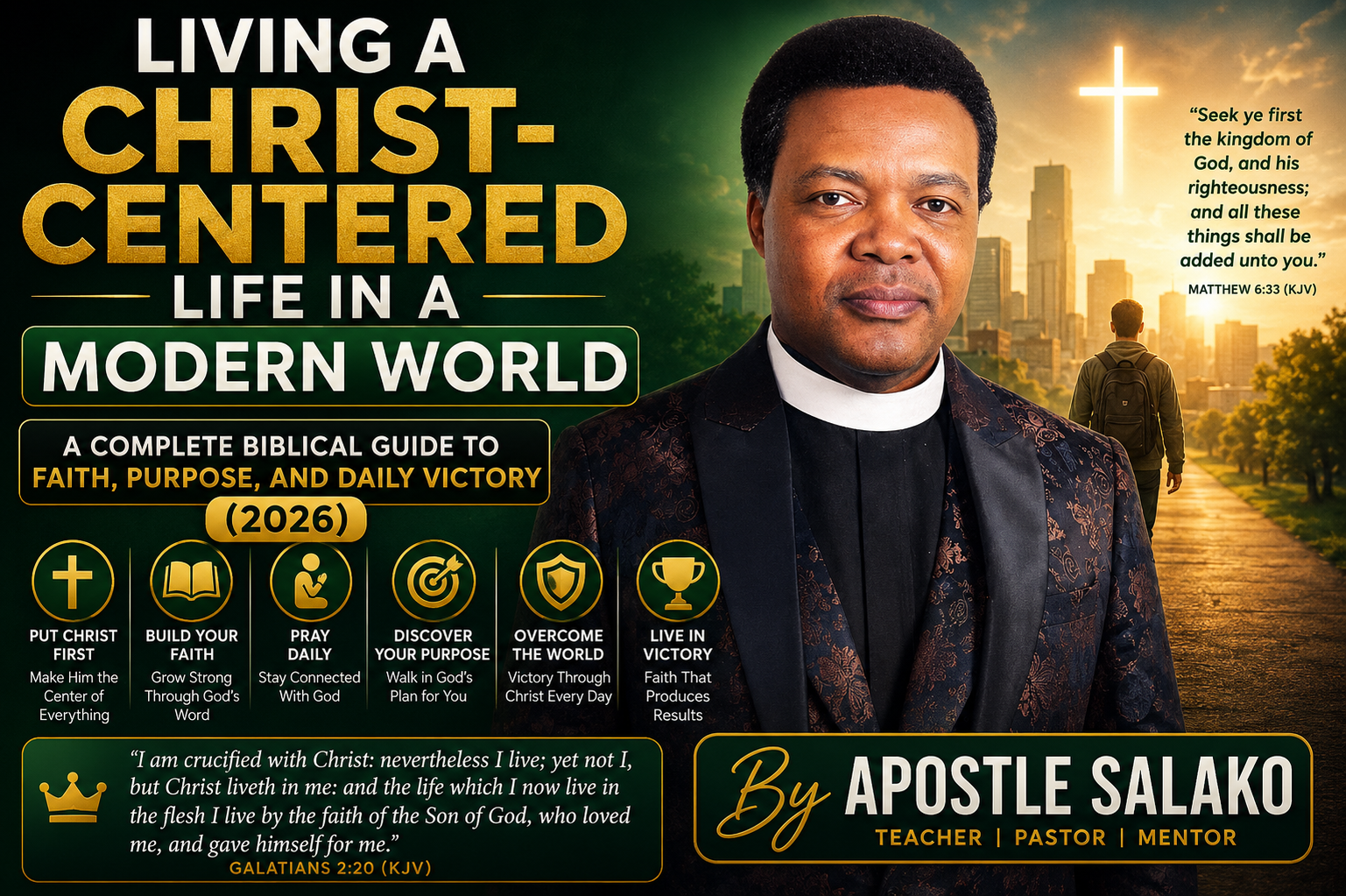
Introduction
Never before has the world offered so many opportunities — and so many distractions. Technology connects us instantly, yet many people feel spiritually disconnected. Social media allows us to know about everyone else's lives while neglecting our own relationship with God. Careers demand more time. Entertainment is available twenty-four hours a day. News cycles constantly produce anxiety, fear, and confusion.
In such an environment, many Christians sincerely desire to follow Jesus but struggle to keep Him at the center of their lives. The Bible reminds us that God's standard has never changed.
"Jesus Christ the same yesterday, and to day, and for ever." — Hebrews 13:8 (KJV)
Christ-centered living is not about withdrawing from society. It is about allowing Jesus Christ to influence every decision, every relationship, every ambition, and every aspect of daily life. A Christ-centered life is one where Jesus directs your priorities, Scripture shapes your thinking, prayer guides your decisions, love defines your relationships, holiness becomes your lifestyle, and the Holy Spirit empowers your daily walk.
Living this way does not mean perfection. Rather, it means continual surrender to Christ as Lord. Throughout this guide, we will explore practical biblical principles that will help you cultivate a vibrant relationship with God while faithfully navigating the complexities of modern life.
1. What Does It Mean to Live a Christ-Centered Life?
A Christ-centered life is one in which Jesus Christ occupies the highest place in your heart, mind, priorities, and actions. Instead of merely adding Christianity to an already busy schedule, Christ becomes the foundation upon which everything else is built. Many people want Jesus as Savior but hesitate to allow Him to be Lord. The Bible teaches both.
"And why call ye me, Lord, Lord, and do not the things which I say?" — Luke 6:46 (KJV)
Being Christ-centered means loving Jesus above everything else, trusting His Word above human opinion, following His commands, depending upon His grace daily, and seeking His glory instead of personal recognition. This affects every area of life — family, marriage, work, finances, friendships, ministry, education, entertainment, social media, and personal ambitions. Nothing is excluded.
"For to me to live is Christ..." — Philippians 1:21 (KJV)
Paul did not say Christ was merely part of his life. Christ was his life. That is the essence of biblical discipleship.
2. Why Christ Must Be the Center of Everything
Many people organize life around success, money, popularity, education, or personal achievement. These things are not inherently sinful. However, they become dangerous when they replace Christ as the controlling influence of our lives.
"Seek ye first the kingdom of God, and his righteousness..." — Matthew 6:33 (KJV)
God has never asked to become one priority among many. He demands first place. When Christ occupies first place, peace replaces anxiety, purpose replaces confusion, hope replaces despair, joy replaces emptiness, and eternal values replace temporary pleasures.
Without Christ at the center, even success can become meaningless. King Solomon experienced unimaginable wealth, wisdom, and influence, yet concluded, "Vanity of vanities; all is vanity" (Ecclesiastes 1:2). Only Christ gives life lasting significance.
Christ Is the Foundation
Imagine constructing a beautiful house on sand. It may appear impressive initially, but eventually storms reveal the weakness of its foundation. Jesus taught this principle in Matthew 7:24–27. A Christ-centered life survives financial hardship, family challenges, health crises, persecution, disappointment, temptation, and cultural pressure — not because life becomes easier, but because the foundation remains secure.
3. The Challenges of Following Christ in the Modern World
Today's believers face unique pressures that previous generations never encountered. Although human nature remains unchanged, technology has amplified distractions and temptations.
Information Overload
Thousands of voices — news, podcasts, videos, advertisements, social media, emails, notifications — compete for our attention every day. Without intentional discipline, these voices drown out God's voice. The psalmist wrote, "Be still, and know that I am God" (Psalm 46:10). Stillness has become increasingly rare, yet spiritual growth requires quiet moments before God.
Constant Comparison
Social media often encourages comparison rather than contentment. People compare ministries, careers, homes, marriages, vacations, financial success, and physical appearance. Comparison breeds envy, and envy destroys gratitude. Paul warned that those who measure themselves by themselves are not wise (2 Corinthians 10:12). God calls each believer to a unique assignment; faithfulness matters more than popularity.
Moral Confusion
Many biblical truths are openly questioned today. Issues surrounding marriage, sexuality, ethics, honesty, and truth are frequently redefined by culture. Yet Scripture reminds us, "Thy word is truth" (John 17:17). Christians must lovingly uphold biblical convictions while demonstrating compassion toward others. Truth and love must always walk together.
Materialism
Modern society often equates success with possessions. Jesus warned, "A man's life consisteth not in the abundance of the things which he possesseth" (Luke 12:15). A Christ-centered believer measures success differently. God values character, obedience, faithfulness, humility, love, and holiness — qualities that endure long after earthly wealth fades.
Busyness
One of Satan's most effective tools is not always sin — sometimes it is simply distraction. People become so occupied with good activities that they neglect the most important relationship: their fellowship with Christ. While Martha busied herself with many responsibilities, Mary sat at Jesus' feet. Jesus declared, "Mary hath chosen that good part" (Luke 10:42). Service is important, but communion with Christ must come first.
4. Biblical Foundations of Christ-Centered Living
A strong Christian life is built upon enduring biblical principles rather than shifting emotions. These foundational truths anchor believers through every season of life.
Christ Is Lord
The first foundation is recognizing Jesus not only as Savior but also as Lord. Salvation introduces us into God's family, but lordship shapes how we live each day. When Christ is Lord, we obey His commands even when difficult, trust His wisdom above our own understanding, surrender our plans to His will, and seek His approval above the praise of people.
"That in all things he might have the preeminence." — Colossians 1:18 (KJV)
Scripture Is the Final Authority
Modern culture often encourages people to define truth according to personal feelings or changing social norms. The believer, however, stands on the unchanging Word of God. "Thy word is a lamp unto my feet, and a light unto my path" (Psalm 119:105). When difficult decisions arise, ask: What does Scripture teach? Does this honor Christ? Will this strengthen my witness?
Dependence on the Holy Spirit
A Christ-centered life cannot be lived through human effort alone. Jesus promised the Holy Spirit to empower believers for holy living, witness, and spiritual growth. "Walk in the Spirit, and ye shall not fulfil the lust of the flesh" (Galatians 5:16). The Holy Spirit convicts, comforts, teaches, and produces Christlike character within us.
5. The Daily Habits of Spiritually Healthy Christians
A Christ-centered life is built one day at a time. Every decision, every conversation, and every act of obedience shapes our spiritual journey.
Begin Every Day with God
The first moments of your day often set the tone for everything that follows. Before checking your phone, reading the news, or responding to messages, spend time acknowledging God's presence. David declared, "My voice shalt thou hear in the morning, O LORD; in the morning will I direct my prayer unto thee" (Psalm 5:3). Thank God for the gift of a new day, read a portion of Scripture, pray for wisdom and strength, commit your plans to the Lord, and ask the Holy Spirit to guide your words and actions.
Practice Continuous Prayer
Prayer is not limited to scheduled devotional times. "Pray without ceasing" (1 Thessalonians 5:17). Continuous prayer means developing a lifestyle of conversation with God throughout the day — before meetings, during your commute, before decisions, while serving others, during moments of anxiety, and before going to bed.
Feed on God's Word Daily
Jesus said, "Man shall not live by bread alone, but by every word that proceedeth out of the mouth of God" (Matthew 4:4). Healthy Bible reading includes observation (What does the passage say?), interpretation (What does it mean?), application (How should I respond?), and prayer. Rather than reading quickly to complete a plan, meditate on God's Word until it shapes your thinking.
Cultivate Gratitude
Modern society often promotes dissatisfaction by encouraging constant comparison. Gratitude redirects our attention to God's faithfulness. "In every thing give thanks" (1 Thessalonians 5:18). Gratitude does not ignore life's difficulties; it recognizes that God's goodness remains constant even during hardship.
Live with Eternal Perspective
Christ-centered believers remember that this world is temporary. "For our conversation is in heaven" (Philippians 3:20). When eternity shapes our priorities, we value people above possessions, invest in God's Kingdom, endure trials with hope, and seek rewards that last forever.
6. Building an Unshakable Prayer Life
Prayer is the lifeline of every thriving Christian. Jesus Himself frequently withdrew to pray, demonstrating that communion with the Father was central to His earthly ministry (Luke 5:16). If the sinless Son of God prioritized prayer, how much more should His followers?
Prayer strengthens faith, brings peace, aligns our hearts with God's will, invites divine wisdom, provides spiritual strength against temptation, and deepens intimacy with God. Prayer is not primarily about changing God's mind; it is about allowing God to transform ours.
Developing a Consistent Prayer Routine
Consider setting aside dedicated times each day. Morning: praise, thanksgiving, and Scripture reading. Afternoon: guidance, strength, and wisdom. Evening: reflection, confession, and intercession. Consistency matters more than length.
Jesus' Model Prayer
In Matthew 6:9–13, Jesus provided a pattern: worship the Father, submit to His will, depend on Him daily, seek forgiveness, forgive others, ask for protection, and praise His sovereignty. This framework keeps our prayers balanced and God-centered.
7. Making God's Word Your Daily Foundation
Many believers own multiple Bibles yet spend little time studying them. God desires more than casual reading. Joshua was instructed, "This book of the law shall not depart out of thy mouth; but thou shalt meditate therein day and night" (Joshua 1:8). Meditation means thoughtfully reflecting on Scripture until it influences our attitudes and actions.
The Bible reveals God's character, exposes sin, builds faith, gives wisdom, corrects error, provides encouragement, and equips believers for service. Every spiritual revival begins with renewed attention to God's Word.
Effective Bible Study Habits
Read systematically — study entire books to understand context. Memorize Scripture: "Thy word have I hid in mine heart, that I might not sin against thee" (Psalm 119:11). Apply what you learn: "Be ye doers of the word, and not hearers only" (James 1:22). After every study, ask: What truth have I learned? What sin should I avoid? What promise should I trust? What command should I obey?
8. Living by Faith Instead of Feelings
Modern culture often teaches, "Follow your heart." Scripture teaches something very different: "The heart is deceitful above all things" (Jeremiah 17:9). Feelings change; God's truth never changes. Faith rests upon God's promises rather than changing emotions.
Faith means trusting God when circumstances are confusing, prayers seem unanswered, trials continue, doors remain closed, and the future is uncertain. Abraham obeyed before seeing the outcome. Noah built the ark before rain had ever fallen. Joshua marched around Jericho before the walls collapsed. Faith always acts upon God's Word.
Faith grows through hearing God's Word, remembering God's faithfulness, obedience, prayer, and fellowship with mature believers. "Faith cometh by hearing, and hearing by the word of God" (Romans 10:17).
9. Keeping Your Mind Focused on Christ
Our thoughts shape our lives. "For as he thinketh in his heart, so is he" (Proverbs 23:7). Modern life constantly competes for our attention. Without intentional discipline, our minds become filled with worry, fear, temptation, anger, and distraction.
Renew Your Mind Daily
"Be ye transformed by the renewing of your mind" (Romans 12:2). Renewing the mind happens when Scripture consistently replaces worldly thinking. Ask: Does this thought honor Christ? Is it true? Is it helpful? Is it biblical?
Guard What You Watch
"The light of the body is the eye" (Matthew 6:22). Entertainment influences beliefs more than many realize. Choose media that strengthens rather than weakens your walk with Christ.
Replace Worry with Prayer
"Be careful for nothing; but in every thing by prayer and supplication with thanksgiving let your requests be made known unto God" (Philippians 4:6–7). When anxious thoughts arise, pray immediately, recall God's promises, thank Him for His faithfulness, and trust Him with the outcome.
Think on What Is Excellent
"Whatsoever things are true... honest... just... pure... lovely... of good report... think on these things" (Philippians 4:8). Filling your mind with what is true and honorable leaves less room for fear, bitterness, and temptation.
10. Christ-Centered Relationships
Relationships reveal the condition of our hearts. Jesus taught that love is the defining mark of His followers: "By this shall all men know that ye are my disciples, if ye have love one to another" (John 13:35). Biblical love is a commitment to seek another person's good in obedience to God.
Every healthy relationship begins with a right relationship with God. Jesus said, "Thou shalt love the Lord thy God with all thy heart, and with all thy soul, and with all thy mind" (Matthew 22:37). When God occupies first place, we are better equipped to love others with patience, humility, and grace.
The standard for Christian relationships is Christ's example — choosing forgiveness over bitterness, speaking truth with kindness, showing compassion to those in need, serving rather than seeking recognition, and being quick to listen and slow to speak. "Be ye kind one to another, tenderhearted, forgiving one another, even as God for Christ's sake hath forgiven you" (Ephesians 4:32).
The people closest to us influence our character. "Evil communications corrupt good manners" (1 Corinthians 15:33). Seek friendships with people who encourage spiritual growth, love God's Word, practice integrity, offer wise counsel, and hold you accountable in love.
11. Christ-Centered Marriage and Family
The family is one of God's primary institutions for demonstrating His love and truth. Paul compares marriage to Christ's relationship with His Church: "Husbands, love your wives, even as Christ also loved the church" (Ephesians 5:25). Christlike love is sacrificial, faithful, patient, forgiving, and selfless. Wives are likewise called to respect and support their husbands as partners in God's design for the family (Ephesians 5:22–24), with both husband and wife equally bearing God's image and serving one another in love.
Parents are entrusted with the responsibility of discipling their children: "Train up a child in the way he should go" (Proverbs 22:6). Read the Bible together, pray as a family, attend church consistently, model Christian character, and discuss biblical truth in everyday situations. Children often imitate what parents live more than what they say.
A Christ-centered home values prayer, worship, hospitality, forgiveness, respect, and biblical instruction. The home should be a place where the presence of Christ is evident through both words and actions.
12. Serving God Through Your Career and Business
Many believers separate their work from their faith, but Scripture teaches that every legitimate vocation can glorify God. "Whatsoever ye do, do it heartily, as to the Lord" (Colossians 3:23). Whether you are a pastor, teacher, entrepreneur, student, engineer, healthcare worker, artisan, or public servant, your work becomes an act of worship when offered to God.
Christians should be known for honesty, reliability, diligence, integrity, humility, and professional excellence. Daniel distinguished himself in Babylon because of his excellent spirit (Daniel 6:3). Our work should point others to the God we serve.
Modern business often rewards shortcuts, but God's standard remains unchanged: "A false balance is abomination to the LORD: but a just weight is his delight" (Proverbs 11:1). A Christ-centered worker keeps promises, pays fairly, avoids deception, treats customers with respect, honors contracts, and refuses corruption. Integrity may sometimes appear costly, but it brings lasting credibility and God's approval.
Career success is valuable, but it is not the ultimate goal. Ask: Does my work honor Christ? Am I serving others through my vocation? Am I using my gifts faithfully? Is my career strengthening or weakening my relationship with God?
13. Financial Stewardship from a Biblical Perspective
Money is a tool entrusted to us by God. Scripture consistently teaches stewardship rather than ownership: "It is required in stewards, that a man be found faithful" (1 Corinthians 4:2). Faithful stewardship includes earning honestly, spending wisely, saving prudently, giving generously, avoiding unnecessary debt where possible, and planning responsibly for the future.
Consumer culture encourages endless accumulation. Paul teaches instead, "Godliness with contentment is great gain" (1 Timothy 6:6). Contentment is not complacency; it is confidence that God knows our needs and faithfully provides according to His wisdom.
Jesus taught, "It is more blessed to give than to receive" (Acts 20:35). Generosity reflects God's own character. A generous believer supports the work of the Gospel, the poor and vulnerable, missionaries, local churches, and community needs. Giving is an act of worship that acknowledges God as our Provider.
14. Living a Holy Life in a Culture of Compromise
The pressure to conform to worldly values is not new, but it is especially visible today. "But as he which hath called you is holy, so be ye holy in all manner of conversation" (1 Peter 1:15). Holiness means being set apart for God in every area of life.
Christians are called to engage society without adopting values that contradict Scripture. "Be not conformed to this world" (Romans 12:2). Instead of asking, "What is acceptable in today's culture?" ask, "What is pleasing to Christ?"
"Keep thy heart with all diligence; for out of it are the issues of life" (Proverbs 4:23). Guarding the heart involves being careful about what we watch, what we read, what we listen to, who influences us, and how we spend our time. Holiness begins internally before it becomes visible externally.
Holiness is not achieved through legalism or self-effort. It is the fruit of abiding in Christ. Jesus said, "Without me ye can do nothing" (John 15:5). As believers remain connected to Christ through prayer, Scripture, and obedience, the Holy Spirit produces lasting transformation.
15. Sharing the Gospel Naturally
Every Christian is called to be a witness. "Go ye therefore, and teach all nations" (Matthew 28:19). Evangelism is not reserved for pastors or missionaries — it is the joyful responsibility of every follower of Christ.
People often observe our lives before they listen to our words. A Christ-centered witness is honest, compassionate, humble, faithful, and consistent. Our conduct should support the message we proclaim.
Peter instructs believers, "Be ready always to give an answer to every man that asketh you a reason of the hope that is in you" (1 Peter 3:15). Prepare to explain why you trust Christ, how He has changed your life, what the Gospel teaches, and why salvation is found in Jesus alone. Speak with gentleness, respect, and confidence in God's Word.
Ask God each day to open doors for Gospel conversations — encouraging a colleague, praying with a neighbor, inviting someone to church, sharing a Bible verse, or explaining the message of salvation when someone asks about your faith. God often works through ordinary conversations to accomplish extraordinary purposes.
16. Overcoming Spiritual Battles
Every believer faces spiritual opposition. The Christian life is not a playground but a battleground. While our victory is secured through Christ, we must remain vigilant and rely on God's strength.
"For we wrestle not against flesh and blood, but against principalities, against powers, against the rulers of the darkness of this world, against spiritual wickedness in high places." — Ephesians 6:12 (KJV)
Put on the Whole Armor of God
In Ephesians 6:13–18, Paul describes the spiritual armor every believer should wear daily: the Belt of Truth, the Breastplate of Righteousness, the Shoes of the Gospel of Peace, the Shield of Faith, the Helmet of Salvation, the Sword of the Spirit (God's Word), and constant prayer. Like a soldier who prepares before entering battle, believers should begin each day equipped with God's truth and empowered by His Spirit.
Resist the Devil
"Submit yourselves therefore to God. Resist the devil, and he will flee from you" (James 4:7). Notice the order: submit to God first, then resist the devil. Victory begins with surrender to Christ.
Stay Spiritually Alert
"Be sober, be vigilant; because your adversary the devil, as a roaring lion, walketh about, seeking whom he may devour" (1 Peter 5:8). Spiritual alertness includes regular prayer, consistent Bible study, fellowship with mature believers, quick repentance when we sin, and discernment regarding false teaching.
17. Growing Through Trials and Suffering
No Christian is exempt from hardship. Following Christ does not eliminate suffering, but it gives suffering meaning and hope. Jesus said, "In the world ye shall have tribulation: but be of good cheer; I have overcome the world" (John 16:33).
God can use trials to strengthen faith, develop perseverance, refine character, deepen dependence on Him, prepare us for greater service, and display His faithfulness. James encourages believers, "Count it all joy when ye fall into divers temptations; knowing this, that the trying of your faith worketh patience" (James 1:2–3). Joy in trials does not mean enjoying pain — it means trusting that God is at work even in difficult seasons.
Jesus Himself endured suffering with perfect obedience. Hebrews 12:2 instructs believers to look unto Jesus, "the author and finisher of our faith." When trials come, remember God's promises, continue praying, stay connected to the church, refuse to isolate yourself, and trust God's timing. Your present suffering is not the end of your story.
18. A Practical Daily Routine for Christ-Centered Living
The Christian life is strengthened through consistent habits. The following routine is a practical example you can adapt to your schedule.
Morning
Thank God for a new day. Read a chapter of Scripture. Spend time in prayer. Memorize one Bible verse. Commit your plans to the Lord.
Throughout the Day
Pray briefly before major decisions. Speak with kindness and integrity. Look for opportunities to encourage others. Resist temptation by recalling Scripture. Thank God throughout the day.
Evening
Reflect on the day's victories and failures. Confess any known sin. Thank God for His faithfulness. Pray for family, church, community, and the nations. Read a Psalm or Gospel passage before resting.
Consistency, not perfection, is the goal. Small acts of faithfulness practiced daily produce lasting spiritual growth.
19. Frequently Asked Questions
Can I live a Christ-centered life while working a demanding job? Yes. Colossians 3:23 teaches that our work can glorify God when done with integrity and excellence. Invite Christ into your workplace through your attitude, character, and decisions.
How can I remain faithful when I feel spiritually dry? Continue practicing prayer, Bible reading, worship, and fellowship even when emotions fluctuate. Faith rests on God's promises rather than feelings.
What should I do when I fail? Confess your sin to God, receive His forgiveness through Christ, and continue walking in obedience. "If we confess our sins, he is faithful and just to forgive us our sins" (1 John 1:9).
How do I balance ambition with surrender to God's will? Work diligently and pursue excellence, but submit your ambitions to God's purposes. Pray for wisdom, seek biblical counsel, and remain willing to follow wherever the Lord leads.
Why is fellowship with other believers important? The Christian life was never meant to be lived alone. A Bible-believing church provides encouragement, accountability, worship, sound teaching, and opportunities to serve.
Key Takeaways
Christ must have first place in every area of life. Daily prayer deepens fellowship with God. Scripture is the believer's final authority. The Holy Spirit empowers holy living. Healthy relationships reflect Christ's love. Work and business can glorify God. Wise stewardship honors the Lord. Holiness is both a calling and a lifelong pursuit. Every believer is commissioned to share the Gospel. Trials can strengthen faith when approached with trust in God. Spiritual victory comes through dependence on Christ.
Final Encouragement
Living a Christ-centered life in today's world is not always easy, but it is always worthwhile. Culture changes. Technology advances. Philosophies rise and fall. Yet Jesus Christ remains the same yesterday, today, and forever. When Christ is at the center of your life, your identity is secure, your purpose becomes clear, your hope remains steadfast, your relationships are transformed, your work gains eternal significance, your trials become opportunities for growth, and your life points others to the Savior.
"For to me to live is Christ, and to die is gain." — Philippians 1:21 (KJV)
May this also become the testimony of your life.
Salvation Invitation
Perhaps you have read this article and realize that you have never truly surrendered your life to Jesus Christ. The Bible declares, "If thou shalt confess with thy mouth the Lord Jesus, and shalt believe in thine heart that God hath raised him from the dead, thou shalt be saved" (Romans 10:9). Salvation is a gift of God's grace, received through faith in Jesus Christ.
If you are ready to trust Christ, you can pray sincerely: "Lord Jesus, I acknowledge that I am a sinner in need of Your mercy. I believe that You died for my sins and rose again. I repent of my sins and surrender my life to You. Be my Savior and Lord. Fill me with Your Holy Spirit and help me follow You faithfully all the days of my life. In Jesus' name, Amen."
If you have prayed this prayer with genuine faith, begin reading the Bible daily, pray regularly, and become part of a Bible-believing church where you can grow as a disciple of Christ.
Closing Prayer
Heavenly Father, thank You for revealing Yourself through Your Son, Jesus Christ. Thank You for calling us to live lives that honor and glorify You. Help us to keep Christ at the center of our thoughts, decisions, relationships, work, and worship. Strengthen us through Your Holy Spirit to remain faithful in every season. Give us wisdom to resist temptation, courage to stand for truth, and compassion to love others as Christ has loved us. May our lives reflect Your grace so that many people will come to know Jesus through our words and actions. Keep us steadfast until the day we see our Lord face to face. We ask all these things in the precious name of Jesus Christ. Amen.
Article by Apostle Salako Adedamola.
Apostle Adedamola Salako
Founder of Apostle Salako Studios — pastor, recording artist, and teacher on faith, music, and stewardship.
Frequently Asked Questions
QCan I live a Christ-centered life while working a demanding job?
Yes. Colossians 3:23 teaches that any legitimate work glorifies God when done with integrity and excellence. Invite Christ into your workplace through your attitude, character, and decisions.
QHow can I remain faithful when I feel spiritually dry?
Continue practicing prayer, Bible reading, worship, and fellowship even when emotions fluctuate. Faith rests on God's promises rather than feelings, and dry seasons often produce the deepest roots.
QWhat should I do when I fail?
Confess your sin to God, receive His forgiveness through Christ, and continue walking in obedience. 1 John 1:9 assures us that He is faithful to forgive and cleanse the repentant believer.
QHow do I balance ambition with surrender to God's will?
Work diligently and pursue excellence, but submit every ambition to God's purposes. Pray for wisdom, seek biblical counsel, and remain willing to follow wherever the Lord leads.
QWhy is fellowship with other believers important?
The Christian life was never meant to be lived alone. A Bible-believing church provides encouragement, accountability, worship, sound teaching, and opportunities to serve.
Enjoyed this article?
Get the next one straight to your inbox. One thoughtful email a week.
Comments (0)
Comments are stored locally in your browser. For published responses, email us via the Contact page.
You may also like
How to Pray According to the Bible (Complete Biblical Prayer Guide for Christians)
22 min read
Walking with God Every Day: The Complete Biblical Guide to Daily Christian Living (2026)
24 min read
21 Biblical Habits That Transform Your Life: Daily Practices Every Christian Should Develop (KJV Guide)
28 min read