

Introduction: What Does It Mean to Please God?
Every human being lives for something.
Some people live for success. Others live for money, recognition, comfort, family, influence, career advancement, entertainment, or personal achievement. Some spend their lives trying to satisfy the expectations of other people.
But there is a higher question every Christian should eventually ask:
“Am I living a life that pleases God?”
This question reaches deeper than asking whether we attend church, read the Bible, sing Christian songs, or participate in religious activities.
God is concerned with the entire person.
He cares about our hearts, thoughts, motives, relationships, decisions, words, finances, priorities, private lives, public lives, and the way we respond when nobody is watching.
The apostle Paul expressed this desire beautifully when he prayed that believers would walk worthy of the Lord, be fruitful in good works, and grow in the knowledge of God.
“That ye might walk worthy of the Lord unto all pleasing, being fruitful in every good work, and increasing in the knowledge of God.”
— Colossians 1:10, KJV
The verse presents a powerful picture of Christian maturity. Pleasing God involves a way of walking, a pattern of fruitful living, and an increasing knowledge of God.
A God-pleasing life is therefore not merely about avoiding certain sins. It is about becoming increasingly aligned with God's character, God's Word, God's will, and God's purposes.
Paul also encouraged the Thessalonian believers to continue learning how to walk and please God and to do so “more and more.”
This means that Christian growth is progressive.
You do not wake up one morning having perfectly mastered everything.
You grow. You learn. You repent. You obey. You mature.
You become more sensitive to the Holy Spirit. You develop greater love for God and people. You become more disciplined.
You learn to surrender areas of your life that previously belonged to yourself.
Living a life that pleases God is therefore both a calling and a journey.
It begins with salvation and continues through faith, obedience, holiness, love, prayer, Scripture, service, humility, stewardship, and daily fellowship with God.
This article will examine what the Bible teaches about living such a life and how those biblical principles can be practiced in ordinary daily situations.
Why Should We Desire to Please God?
Before discussing how to please God, we must understand why it matters.
The first reason is simple: God created us for Himself. Our lives ultimately belong to Him.
Acts 17:28 reminds us:
“For in him we live, and move, and have our being.”
God is not an accessory to our lives. He is the source of our lives.
Therefore, Christianity is not simply about asking God to bless our plans. It is about surrendering our plans to God.
Jesus taught:
“But seek ye first the kingdom of God, and his righteousness; and all these things shall be added to you.”
— Matthew 6:33, KJV
The Christian life becomes properly ordered when God is first.
Pleasing God Is More Important Than Pleasing People
One of the greatest spiritual dangers is living primarily for human approval.
People can praise you today and criticize you tomorrow. Public opinion changes. Trends change. Cultural expectations change. But God's truth does not change.
Galatians 1:10 asks:
“For do I now persuade men, or God? or do I seek to please men?”
A believer must learn to distinguish between being respectful toward people and becoming controlled by people's opinions.
We should love people. We should serve people. We should honor people. But our ultimate standard must remain God's Word.
Pleasing God Gives Direction to Life
When your primary question becomes, “What will please God?” many decisions become clearer.
Before entering a relationship, ask: Will this relationship honor God?
Before making a financial decision: Can I make this decision with a clear conscience before God?
Before accepting an opportunity: Will this opportunity help or hinder my walk with Christ?
Before speaking: Are these words pleasing to God?
Before watching something: Does this feed my spirit or weaken my spiritual sensitivity?
Before responding to an offense: Would Jesus be honored by my response?
This approach transforms Christianity from a Sunday activity into a daily way of life.
Salvation Is the Foundation of a God-Pleasing Life
A life that pleases God begins with a right relationship with God.
Christianity is not fundamentally about becoming a morally impressive person through human effort. It begins with reconciliation to God through Jesus Christ.
Ephesians 2:8–9 teaches that salvation is by grace through faith and not the result of human boasting.
The gospel tells us that Jesus Christ died for our sins, was buried, and rose again. The believer responds through repentance and faith.
This is important because Christian behavior must flow from Christian identity.
We do not obey God merely to earn His love. We obey because we have received His grace and desire to honor Him.
Grace Does Not Make Holiness Unnecessary
Sometimes people misunderstand grace. They assume that because salvation is by grace, Christian conduct no longer matters.
The New Testament teaches the opposite. Grace trains believers to reject ungodliness and live godly lives.
Titus 2:11–12 says:
“For the grace of God that bringeth salvation hath appeared to all men, Teaching us that, denying ungodliness and worldly lusts, we should live soberly, righteously, and godly…”
Grace does not give us permission to remain unchanged. Grace gives us the power and opportunity to become changed.
The Christian life therefore begins with salvation and continues through transformation.
Faith Is Essential to Pleasing God
One of the clearest biblical statements about pleasing God is found in Hebrews 11:6:
“But without faith it is impossible to please him…”
Faith is foundational. A person cannot live a genuinely God-centered life while refusing to trust God.
Faith means believing God is who He says He is and responding to His Word accordingly.
Faith Is More Than Mental Agreement
Biblical faith is not merely saying, “I believe God exists.” Faith affects behavior.
If I believe God is faithful, I can trust Him during uncertainty.
If I believe God is holy, I will take holiness seriously.
If I believe God is my provider, I do not need to build my entire identity around material possessions.
If I believe God hears prayer, I will pray.
If I believe God's Word is true, I will obey it.
If I believe Christ is Lord, I will surrender my life to Him.
Faith produces action. James 2:17 teaches that faith without works is dead.
This does not mean human works purchase salvation. Rather, genuine faith produces visible evidence in the life of the believer.
Faith During Difficult Seasons
One of the strongest demonstrations of faith occurs when circumstances do not look favorable.
It is easy to praise God when everything is working. But faith says: “Even when I do not understand, I still trust God.”
Job demonstrated this attitude during profound suffering. David repeatedly trusted God while facing enemies. Abraham trusted God's promise even when fulfillment appeared impossible. The three Hebrew young men trusted God in the fiery furnace. Daniel continued praying despite opposition.
Faith does not deny difficulty. Faith refuses to make difficulty greater than God.
Obedience: Doing What God Says
A life that pleases God is a life of obedience.
Jesus said:
“If ye love me, keep my commandments.”
— John 14:15, KJV
Obedience is one of the clearest expressions of love toward God.
Knowing God's Word Is Not Enough
A person can know many Bible verses and still live contrary to God's will.
Knowledge without obedience produces spiritual information without spiritual transformation.
James 1:22 says:
“But be ye doers of the word, and not hearers only…”
God wants His Word to move from our Bibles into our hearts and from our hearts into our conduct.
If Scripture teaches forgiveness, we forgive. If Scripture teaches generosity, we become generous. If Scripture teaches sexual purity, we pursue purity. If Scripture teaches truthfulness, we reject deception. If Scripture teaches humility, we resist pride. If Scripture teaches love for enemies, we learn to pray for those who oppose us.
Obedience in Small Things
Many people want dramatic assignments from God while ignoring simple instructions. But spiritual maturity is often revealed through ordinary obedience.
Showing kindness. Keeping your word. Arriving on time. Paying what you owe. Telling the truth. Refusing gossip. Forgiving someone. Helping someone in need. Praying consistently. Reading Scripture. Treating your spouse with honor. Teaching your children God's ways. Doing honest work.
These ordinary decisions matter. Faithfulness in small things prepares a believer for greater responsibility.
Walking in Holiness
Holiness is central to Christian living. 1 Peter 1:15–16 calls believers to holiness because God is holy.
Holiness means being set apart for God. It includes our behavior, but it begins deeper than behavior. Holiness involves the heart.
Jesus taught that sinful actions often originate in the inner life. Therefore, holiness requires attention to what we allow into our minds, what we desire, what we entertain, and what we repeatedly practice.
Holiness Is Not Legalism
Biblical holiness should not be confused with legalism. Legalism attempts to establish righteousness through human rules and outward performance. Biblical holiness flows from relationship with God.
The Holy Spirit works within the believer to produce Christlike character. Galatians 5:22–23 describes the fruit of the Spirit: love, joy, peace, longsuffering, gentleness, goodness, faith, meekness, temperance.
Holiness is therefore not merely about looking religious. A person can have religious appearance without spiritual character. God wants truth in the inward parts.
Practical Holiness
Ask yourself:
What am I watching? What am I listening to? What conversations am I participating in? What thoughts am I entertaining? What websites am I visiting? What relationships are influencing me? What habits am I secretly protecting?
What would I do differently if I remembered that God sees everything?
These questions are not intended to produce fear. They are intended to produce awareness. The goal is not simply to avoid punishment. The goal is to love God enough to desire purity.
Loving God With Your Whole Heart
Jesus identified the greatest commandment:
“Thou shalt love the Lord thy God with all thy heart, and with all thy soul, and with all thy mind.”
— Matthew 22:37, KJV
Christianity begins and ends with relationship. God does not merely want religious activity. He wants our hearts.
What Does It Mean to Love God?
To love God means that He becomes central to our lives.
We desire His presence. We value His Word. We obey His instructions. We enjoy fellowship with Him. We care about what concerns Him. We desire His kingdom.
We become increasingly uncomfortable with sin because sin damages our fellowship with Him.
Loving God also changes our priorities. Instead of asking only, “What do I want?” we learn to ask, “What does God want?” That is the language of surrender.
Loving Other People
Jesus connected love for God with love for people. The second great commandment is:
“Thou shalt love thy neighbour as thyself.”
— Matthew 22:39, KJV
This means that a God-pleasing life cannot be isolated from relationships. You cannot claim to love God while deliberately living in hatred, cruelty, bitterness, and unforgiveness toward people.
1 John repeatedly connects love for God with love for fellow believers.
Love Is Practical
Love is not merely a feeling. Love can look like:
listening to someone who is hurting; helping a person in need; encouraging someone who is discouraged; forgiving an offense; telling the truth with grace; refusing revenge; praying for someone; giving generously; showing hospitality; serving without demanding recognition.
Jesus demonstrated sacrificial love throughout His earthly ministry. The Christian is called to imitate Christ.
Living by the Word of God
A person cannot consistently live a life pleasing to God while ignoring God's Word.
Psalm 119:105 says:
“Thy word is a lamp unto my feet, and a light unto my path.”
The Bible provides spiritual direction. It teaches us who God is, who we are, what Christ accomplished, how believers should live, and what God desires from His people.
Read the Bible for Transformation
Do not approach Scripture merely as an academic textbook. Read it prayerfully.
Ask: What does this passage reveal about God? What does it reveal about human nature? Is there a command to obey? Is there a promise to trust? Is there a warning to take seriously? Is there an example to follow or avoid? What should change in my life because of what I have read?
This turns Bible study into discipleship.
Study the Bible Consistently
You do not need to begin with five hours of study every morning. Start with consistency.
Read a passage. Reflect on it. Write down what you learn. Pray about it. Apply it. Over time, your biblical understanding will grow.
Developing a Consistent Prayer Life
Prayer is essential to a God-pleasing life. Prayer is communication and fellowship with God.
Jesus Himself demonstrated a life of prayer. Mark 1:35 records that Jesus rose early and went to a solitary place to pray. Luke 5:16 says:
“And he withdrew himself into the wilderness, and prayed.”
If Jesus made prayer a priority, how much more should His followers?
Prayer Is More Than Asking for Things
Prayer includes: worship; thanksgiving; confession; intercession; petition; listening; surrender; spiritual warfare; fellowship with God.
A mature prayer life is not simply a list of requests. It is a relationship.
Build a Daily Prayer Pattern
A practical routine might include:
Morning: Commit your day to God.
During the day: Practice short prayers and spiritual awareness.
Evening: Thank God, examine your day, confess where necessary, and ask for wisdom for tomorrow.
The objective is not merely to complete a religious schedule. The objective is to cultivate continual fellowship with God.
Walking in the Spirit
Galatians 5:16 says:
“This I say then, Walk in the Spirit, and ye shall not fulfil the lust of the flesh.”
The Christian life cannot be successfully lived through human strength alone. We need the Holy Spirit.
The Holy Spirit helps believers understand God's Word, develop godly character, resist sin, serve others, and live according to God's purposes.
Learn to Respond to the Spirit
Walking in the Spirit requires sensitivity. Sometimes the Holy Spirit convicts us. Sometimes He redirects us. Sometimes He reminds us of Scripture. Sometimes He encourages us to serve someone. Sometimes He exposes an attitude that needs to change.
The believer must learn to respond to God's leading in harmony with Scripture. The Holy Spirit will never lead a person contrary to God's Word.
Guarding Your Heart and Mind
Proverbs 4:23 says:
“Keep thy heart with all diligence; for out of it are the issues of life.”
Your inner life matters.
Thoughts eventually influence behavior. Repeated thoughts influence beliefs. Beliefs influence decisions. Decisions become habits. Habits shape character. Character influences destiny. Therefore, Christians must guard their minds.
Be Careful What You Feed Your Mind
Modern technology gives us constant access to information. We can consume thousands of messages every day. Not everything deserves access to your mind.
Philippians 4:8 provides a useful framework by directing believers toward things that are true, honest, just, pure, lovely, and of good report.
This does not mean Christians should become disconnected from the world. Jesus prayed that His followers would remain in the world while not being of the world. The issue is influence.
What is shaping you? What voices are discipling you? What content is forming your imagination? What beliefs are becoming normal because you repeatedly consume them? A wise Christian evaluates these things carefully.
Controlling Your Words
Words have tremendous power. Proverbs 18:21 says:
“Death and life are in the power of the tongue…”
James 3 explains that the tongue, although physically small, can have enormous influence. A life that pleases God must therefore include disciplined speech.
Avoid Destructive Speech
Christians should be careful about: gossip; slander; lies; unnecessary criticism; insults; abusive speech; vulgarity; manipulation; false accusations; destructive arguments.
Instead, our speech should communicate grace and truth. Ephesians 4:29 teaches believers to speak words that edify.
Before speaking, ask: Is it true? Is it necessary? Is it helpful? Is it loving? Will it build up or destroy? This simple discipline can transform relationships.
Living a Life of Integrity
Integrity means consistency between what you profess and how you live.
A person of integrity is not perfect. A person of integrity is truthful. They do not intentionally build a false public image while maintaining a completely different private life.
Integrity When Nobody Is Watching
The real test of character is often private.
Who are you when no audience exists? Who are you online when nobody knows? How do you handle money when nobody checks? What do you do when you could easily get away with dishonesty? How do you speak about people who are not present? What happens when you receive authority?
These situations reveal character. Proverbs 10:9 says:
“He that walketh uprightly walketh surely…”
Integrity produces stability. A Christian should strive to become the same person at home, at church, at work, online, and in private.
Humility: The Character God Values
Pride is one of the greatest enemies of spiritual growth.
A proud person becomes difficult to teach. A proud person resists correction. A proud person takes credit for everything. A proud person finds it difficult to apologize. A proud person can turn ministry into self-promotion.
Scripture repeatedly teaches humility. James 4:6 says:
“God resisteth the proud, but giveth grace unto the humble.”
Humility does not mean thinking you are worthless. Biblical humility means recognizing that everything ultimately comes from God and that we are dependent upon Him.
Humility in Leadership
Christian leaders must be particularly careful about pride. Ministry can bring recognition. Success can bring applause. Titles can create status. But Jesus taught servant leadership.
The greatest leader in the kingdom is not the person demanding to be served but the person willing to serve.
A God-pleasing leader asks: How can I help people become closer to Christ? not merely: How can I become more important?
Serving God Through Good Works
Colossians 1:10 connects pleasing God with being fruitful in good works.
Good works do not purchase salvation. Instead, good works are evidence that faith is producing practical fruit.
God gives every believer opportunities to serve. You may serve through preaching. You may serve through teaching. You may serve through evangelism. You may serve through music. You may serve through hospitality. You may serve through generosity. You may serve through mentoring. You may serve through practical assistance. You may serve through your profession. You may serve quietly without ever standing on a platform.
Do Not Underestimate Hidden Service
Some of the most meaningful Christian service is never publicly recognized.
A mother praying for her children. A father faithfully providing for his family. A believer visiting the sick. Someone anonymously helping a struggling family. A Christian encouraging a discouraged colleague. A church member cleaning after a service. A believer mentoring a young person.
God sees what people do not see. Your reward does not depend on public applause.
Being a Good Steward of Your Life
Everything we have should ultimately be viewed as something entrusted to us by God. This includes: time; abilities; money; relationships; opportunities; knowledge; influence; physical resources; spiritual gifts.
Stewardship means managing what God has entrusted to you faithfully.
Steward Your Time
Every person receives twenty-four hours each day. We cannot store yesterday's time. We cannot borrow tomorrow's time. Therefore, time should be treated as a valuable stewardship.
Ask: What am I spending most of my time doing? Is my schedule aligned with my priorities? Do I have time for God? Do I have time for family? Do I have time for meaningful work and service? What activities are consuming time without producing meaningful value?
Ephesians 5:15–16 encourages believers to walk wisely and redeem the time.
Pleasing God in Your Family
Christian spirituality must affect family life. A person who appears spiritual publicly but consistently mistreats family members needs to examine their walk with God.
Marriage requires: love; patience; communication; forgiveness; faithfulness; sacrifice; respect; prayer.
Parents have a responsibility to guide children in the ways of God. Children are called to honor their parents.
Family life provides one of the greatest environments for Christian character development. It is easy to be patient with strangers for thirty minutes. It is harder to practice patience with family members every day. That is why family relationships can become a powerful laboratory for spiritual growth.
Pleasing God in Your Work and Business
Christianity does not stop at the church building. Your workplace is also an arena for Christian witness.
Colossians 3:23 teaches:
“And whatsoever ye do, do it heartily, as to the Lord, and not unto men.”
This principle transforms work. You no longer work merely because your employer is watching. You work with excellence because God sees your work.
Christian Excellence
A Christian should not use faith as an excuse for poor performance. If God has given you an assignment, pursue excellence.
Be dependable. Be punctual. Be honest. Develop your skills. Treat customers fairly. Treat employees with dignity. Keep your promises. Avoid fraudulent practices. Do not manipulate people for financial gain.
Kingdom-minded business should combine competence with character.
Pleasing God With Your Finances
Money is an important area of Christian stewardship. The Bible does not teach that money itself is evil. Instead, Scripture warns about the love of money and the spiritual dangers associated with greed.
A God-pleasing approach to finances includes: honesty; contentment; generosity; responsible stewardship; diligence; planning; avoidance of destructive greed; care for people in need.
Money Reveals Priorities
Jesus taught extensively about possessions and the heart. Where your treasure is, your heart tends to follow. Therefore, financial stewardship is spiritual.
Ask: Does my money serve God or control me? Am I honest in financial dealings? Do I give generously? Do I live within responsible limits? Am I using my resources to bless others? Have I allowed material possessions to become my identity?
A believer should seek to become a faithful steward rather than merely a wealthy person.
Pleasing God in Difficult Times
One of the greatest tests of faith comes during hardship. It is relatively easy to talk about trusting God when life is comfortable. But what happens when prayers seem unanswered, finances become difficult, relationships break down, opportunities disappear, people misunderstand you, ministry becomes challenging, illness or grief enters a family, or plans fail?
The believer must learn that God's faithfulness does not depend on circumstances.
Romans 8:28 reminds believers that God works all things together for good to those who love Him and are called according to His purpose. This does not mean every individual event is good. It means God can work through circumstances for His purposes.
Do Not Abandon God During the Storm
A difficult season can become an opportunity to deepen your relationship with God.
Pray. Continue reading Scripture. Remain connected to godly believers. Ask for wise counsel. Avoid making destructive decisions in moments of emotional pressure. Keep trusting God.
Sometimes faithfulness during a difficult season is itself a powerful testimony.
When You Fall: Repentance and Restoration
Living a life that pleases God does not mean that you will never make mistakes. Christians can fail. Christians can stumble. Christians can make wrong decisions. The important question is what you do afterward.
Do Not Hide From God
After Adam and Eve sinned, they hid. Sin often produces the temptation to hide. But God calls us to repentance.
1 John 1:9 teaches:
“If we confess our sins, he is faithful and just to forgive us our sins, and to cleanse us from all unrighteousness.”
Repentance means turning away from sin and turning toward God. It is not merely saying, “I am sorry.” Biblical repentance involves a changed direction.
Do Not Let Failure Become Your Identity
Peter denied Jesus three times. Yet Jesus restored Peter. David committed serious sins and experienced severe consequences, but his story also demonstrates the possibility of genuine repentance.
The gospel is not a message that says, “You have failed, therefore there is no hope.” It is a message of grace that calls sinners to repentance and restoration.
When you fall: Acknowledge the sin. Confess it to God. Turn away from it. Make necessary restitution where appropriate. Seek wise spiritual counsel. Learn from the failure. Return to faithful obedience.
Do not use grace as permission to continue sinning. But neither should you allow condemnation to keep you away from God.
Things That Can Prevent a Believer From Pleasing God
Several attitudes and behaviors can hinder spiritual growth.
1. Deliberate Disobedience — Knowing God's instruction and intentionally refusing to obey creates spiritual conflict.
2. Pride — Pride makes correction difficult and can turn ministry into self-promotion.
3. Love of the World — When worldly values become more important than God's kingdom, spiritual priorities become distorted.
4. Unforgiveness — Bitterness can damage relationships and poison the heart.
5. Hypocrisy — Hypocrisy occurs when outward appearance becomes more important than inward truth.
6. Neglect of Prayer — A prayerless life gradually becomes self-dependent.
7. Neglect of Scripture — Without God's Word, believers become vulnerable to confusion and deception.
8. Wrong Relationships — Relationships can either strengthen or weaken spiritual growth.
9. Greed — An uncontrolled desire for wealth can replace trust in God.
10. Comparison — Constantly comparing yourself with other Christians can create jealousy, insecurity, pride, or discouragement.
Your assignment is not to become someone else. Your assignment is to faithfully follow Christ.
Practical Daily Habits for a God-Pleasing Life
Spiritual growth becomes easier when good habits are intentionally developed. Here is a practical daily framework.
Morning: Begin With God
Before allowing social media, news, messages, and distractions to dominate your attention, give God your first attention.
Read Scripture. Pray. Worship. Commit the day to Him. Ask: “Lord, help me represent You well today.”
During the Day: Practice God's Presence
You may not be able to pray for an hour continuously while working. But you can remain spiritually conscious.
Pray silently. Give thanks. Ask for wisdom. Respond to situations biblically. Choose integrity when nobody is watching.
Evening: Review Your Day
Before sleeping, reflect. Ask: Where did I honor God today? Where did I fail? Who did I help? Did I hurt anyone? Is there anything I need to apologize for? What did God teach me today? What should I do differently tomorrow?
This type of spiritual examination can encourage continuous growth.
How to Know You Are Growing Spiritually
Spiritual growth is not measured only by how long you have been a Christian. It is reflected in character.
You are growing when: you respond to temptation differently; you forgive more quickly; you become more patient; your love for Scripture increases; prayer becomes more natural; pride decreases; humility increases; you become more generous; you become more truthful; you become less controlled by people's opinions; you increasingly desire God's will; you become more willing to serve; you recognize sin more quickly; you repent more sincerely; you become more Christlike.
Growth is therefore both inward and outward. Your relationship with God deepens, and the fruit of that relationship becomes visible in your conduct.
The Example of Jesus
If we want to understand what a God-pleasing life looks like, we must look at Jesus Christ.
Jesus lived in complete submission to the Father. He prayed. He served. He taught truth. He demonstrated compassion. He confronted hypocrisy. He forgave. He showed mercy. He remained faithful under pressure. He resisted temptation. He loved people without compromising truth. He ultimately surrendered Himself to the cross.
Jesus said:
“I do always those things that please him.”
— John 8:29, KJV
That statement captures the heart of Christ's earthly ministry. His life was centered on the Father's will.
Follow Christ, Not Culture
The Christian's ultimate model is not: popular culture; social media influencers; celebrities; political personalities; business personalities; public opinion.
The Christian's ultimate model is Jesus Christ.
The more closely we study Christ, the more clearly we understand what love, holiness, humility, courage, obedience, compassion, truth, and sacrifice look like.
A 30-Day Challenge to Live a Life That Pleases God
If you want to turn these principles into practice, use the following 30-day challenge.
Days 1–3: Surrender
Spend intentional time praying: “Lord, my life belongs to You.” Ask God to reveal areas that need surrender.
Days 4–6: Scripture
Read Scripture daily and write down one principle you can apply.
Days 7–9: Prayer
Increase your prayer time. Pray not only for yourself but also for your family, church, community, and people who need Christ.
Days 10–12: Words
Practice disciplined speech. Avoid gossip and unnecessary criticism. Look for opportunities to encourage people.
Days 13–15: Forgiveness
Ask God to reveal bitterness. Where appropriate, forgive those who have hurt you.
Days 16–18: Holiness
Examine what you watch, listen to, read, and entertain. Remove influences that repeatedly draw you away from Christ.
Days 19–21: Service
Find someone you can help. Do something useful without seeking public recognition.
Days 22–24: Stewardship
Review your time, finances, abilities, and responsibilities. Ask where you can become more faithful.
Days 25–27: Evangelism
Share your testimony. Encourage someone to seek Christ. Invite someone to church or Bible study. Pray for an opportunity to witness.
Days 28–30: Reflection
Review the previous month. Write down: What changed? What did God teach me? What habits should continue? What areas still need growth? What spiritual goals should I pursue next?
Do not treat the 30 days as the end. Treat them as the beginning of a lifestyle.
Frequently Asked Questions
1. What does it mean to live a life that pleases God?
Living a life that pleases God means trusting God, obeying His Word, walking in holiness, loving Him and others, producing spiritual fruit, serving faithfully, and seeking to live according to His will. Colossians 1:10 summarizes this beautifully by connecting a worthy walk with pleasing God, good works, and growing knowledge of God.
2. What is the most important thing needed to please God?
Faith is essential. Hebrews 11:6 states that without faith it is impossible to please God. Faith should produce obedience and a transformed life.
3. Can an imperfect Christian please God?
Yes, Christians are not sinless people. The Christian life involves growth, repentance, and dependence on God's grace. The important issue is not whether a believer has never failed but whether they respond to failure through repentance and return to obedience.
4. Does going to church automatically mean that I am pleasing God?
Church attendance is valuable, but attendance alone does not guarantee a God-pleasing life. God desires genuine faith, obedience, love, holiness, and spiritual fruit.
5. How can I know God's will for my life?
Begin with Scripture. God's revealed Word provides the foundation for understanding His will. Pray for wisdom, seek godly counsel, examine your motives, and make decisions consistent with biblical principles.
6. Does pleasing God mean I must become perfect?
Christian maturity does not mean achieving absolute sinless perfection through human effort. It means continually growing in Christ, pursuing holiness, repenting when you fail, and allowing God's Spirit to transform your character.
7. How can I please God when life is difficult?
Continue trusting Him. Pray. Read Scripture. Remain faithful. Seek wise counsel. Do not allow hardship to convince you that God has abandoned you. Faithfulness during difficulty can become an important part of spiritual maturity.
8. Can my work please God?
Yes. When your work is performed honestly, diligently, ethically, and as service to God, ordinary work can become an expression of Christian stewardship.
9. How can I please God with my money?
Practice honesty, generosity, contentment, wise stewardship, and responsible financial management. Do not allow money to become your master.
10. What role does prayer play in pleasing God?
Prayer develops fellowship with God and helps believers depend upon Him rather than themselves. Prayer should include worship, thanksgiving, confession, intercession, petition, and surrender.
11. Why is holiness important?
God calls His people to holiness. Holiness reflects God's character and demonstrates that the believer is taking God's commands seriously.
12. What should I do if I have failed God?
Repent. Confess your sin. Receive God's forgiveness. Make necessary changes. Seek appropriate counsel. Then continue walking with God. Failure does not have to become the end of your spiritual journey.
Conclusion: Make Pleasing God Your Life's Pursuit
Living a life that pleases God is not a one-day project. It is a lifelong journey.
It is a daily decision to surrender.
It is choosing God's will over selfish ambition.
It is choosing obedience over convenience.
It is choosing holiness over compromise.
It is choosing truth over deception.
It is choosing love over hatred.
It is choosing forgiveness over bitterness.
It is choosing humility over pride.
It is choosing faith over fear.
It is choosing eternal priorities over temporary distractions.
The apostle Paul's prayer in Colossians 1:10 gives us a powerful picture of this lifestyle:
“That ye might walk worthy of the Lord unto all pleasing, being fruitful in every good work, and increasing in the knowledge of God.”
The Christian life is a walk. It involves movement. It involves growth. It involves fruit. And it involves knowing God more deeply.
You may not have everything figured out today. You may still have areas of weakness. You may have made mistakes. You may be recovering from seasons of spiritual dryness. You may be asking God for direction. But you can begin again today.
Give God your heart. Give Him your plans. Give Him your relationships. Give Him your gifts. Give Him your finances. Give Him your time. Give Him your dreams. Give Him your future.
And ask: “Lord, what would You have me do?” Then obey what He shows you.
A life that pleases God is not necessarily the life that receives the most applause from people. It is the life that faithfully honors God.
When everything else passes away, the most important question will not be: How famous were you? How wealthy were you? How many people admired you? How successful did the world consider you?
The deeper question is: Did you faithfully walk with God?
May your answer increasingly be yes. May your faith become stronger. May your character become more Christlike. May your love become deeper. May your obedience become more consistent. May your prayer life become stronger. May your knowledge of God's Word increase. May your life produce spiritual fruit. And may everything you do ultimately bring glory to Jesus Christ.
Prayer for a Life That Pleases God
Heavenly Father,
I thank You for the gift of life and for the salvation I have received through Jesus Christ.
I surrender my life completely to You. Teach me to live a life that pleases You. Help me to walk according to Your Word.
Give me the grace to obey You even when obedience is difficult. Help me to love You with all my heart, soul, mind, and strength. Give me genuine love for other people.
Remove pride, bitterness, unforgiveness, greed, fear, and every attitude that does not reflect Christ. Help me guard my heart and mind. Teach me to control my words. Make me a person of integrity.
Help me to walk in holiness. Strengthen my prayer life. Give me a deeper hunger for Your Word. Teach me to recognize the leading of the Holy Spirit.
Help me become a faithful steward of my time, finances, gifts, opportunities, and relationships. Use my life to serve others. Make me fruitful in every good work.
When I fall, give me grace to repent. When I am discouraged, strengthen me. When I am confused, give me wisdom. When I am afraid, help me trust You. When I succeed, keep me humble. When I am blessed, help me remember the One who blessed me.
Let my family see Christ in me. Let my workplace see Christ in me. Let my community see Christ in me. Let my ministry point people to Jesus.
May my private life and public life honor You. May my thoughts honor You. May my words honor You. May my decisions honor You. May my relationships honor You. May my resources honor You. May my entire life bring glory to Your name.
Help me to walk worthy of the calling You have given me and to become increasingly fruitful in every good work. Let my life become a testimony of Your grace.
In Jesus Christ's name, Amen.
Final Biblical Reflection
A life that pleases God is ultimately a life surrendered to God.
It is not about trying to impress God through religious performance. It is about knowing Him, trusting Him, loving Him, obeying Him, walking with Him, and allowing His character to become visible through your life.
The goal is not simply to appear Christian. The goal is to become increasingly like Christ.
Live for God. Walk with God. Trust God. Obey God. Serve God. Love people. Grow in grace. And let your life point others to Jesus.
About the Author
Apostle Salako Adedamola is a Christian preacher, teacher, mentor, and biblical communicator committed to helping people understand God's Word and apply biblical principles to everyday Christian life.
Preacher, Teacher and Mentor. Core Message: Practical Biblical Teaching for Everyday Christian Life.
Apostle Adedamola Salako
Founder of Apostle Salako Studios — pastor, recording artist, and teacher on faith, music, and stewardship.
Frequently Asked Questions
QWhat does it mean to live a life that pleases God?
Living a life that pleases God means trusting God, obeying His Word, walking in holiness, loving Him and others, producing spiritual fruit, serving faithfully, and seeking to live according to His will. Colossians 1:10 connects a worthy walk with pleasing God, good works, and growing knowledge of God.
QHow can I please God according to the Bible?
Begin with salvation through Jesus Christ, then walk by faith, obey God's Word, pursue holiness, love God and people, pray consistently, serve through good works, and depend on the Holy Spirit for transformation.
QWhat kind of life pleases God?
A life of faith, obedience, holiness, love, humility, integrity, prayer, and service. It is a life increasingly aligned with God's character, Word, will, and purposes.
QWhat Bible verse talks about pleasing God?
Key verses include Colossians 1:10, Hebrews 11:6, John 8:29, Matthew 6:33, and Romans 12:1–2. Hebrews 11:6 states that without faith it is impossible to please God.
QCan an imperfect Christian please God?
Yes. Christians are not sinless. The Christian life involves growth, repentance, and dependence on God's grace. What matters is responding to failure through repentance and returning to obedience.
QWhy is faith necessary to please God?
Hebrews 11:6 says that without faith it is impossible to please God. Faith means believing God is who He says He is and responding to His Word with trusting obedience.
QHow does obedience help us please God?
Obedience is a clear expression of love for God. Jesus said, 'If ye love me, keep my commandments.' Obeying God's Word moves truth from our minds into our conduct and produces spiritual transformation.
QHow can I live a holy life?
Guard what enters your mind and heart, depend on the Holy Spirit, pursue the fruit of the Spirit, and reject influences that draw you away from Christ. Holiness flows from relationship with God, not mere outward rules.
QHow can I know God's will for my life?
Begin with Scripture, pray for wisdom, seek godly counsel, examine your motives, and make decisions consistent with biblical principles. God's revealed Word provides the foundation for understanding His will.
QHow can I grow spiritually and become closer to God?
Develop daily habits of prayer, Scripture reading, obedience, worship, service, and fellowship with other believers. Spiritual growth is reflected in increasing Christlike character and love for God and people.
Enjoyed this article?
Get the next one straight to your inbox. One thoughtful email a week.
Comments (0)
Comments are stored locally in your browser. For published responses, email us via the Contact page.
You may also like
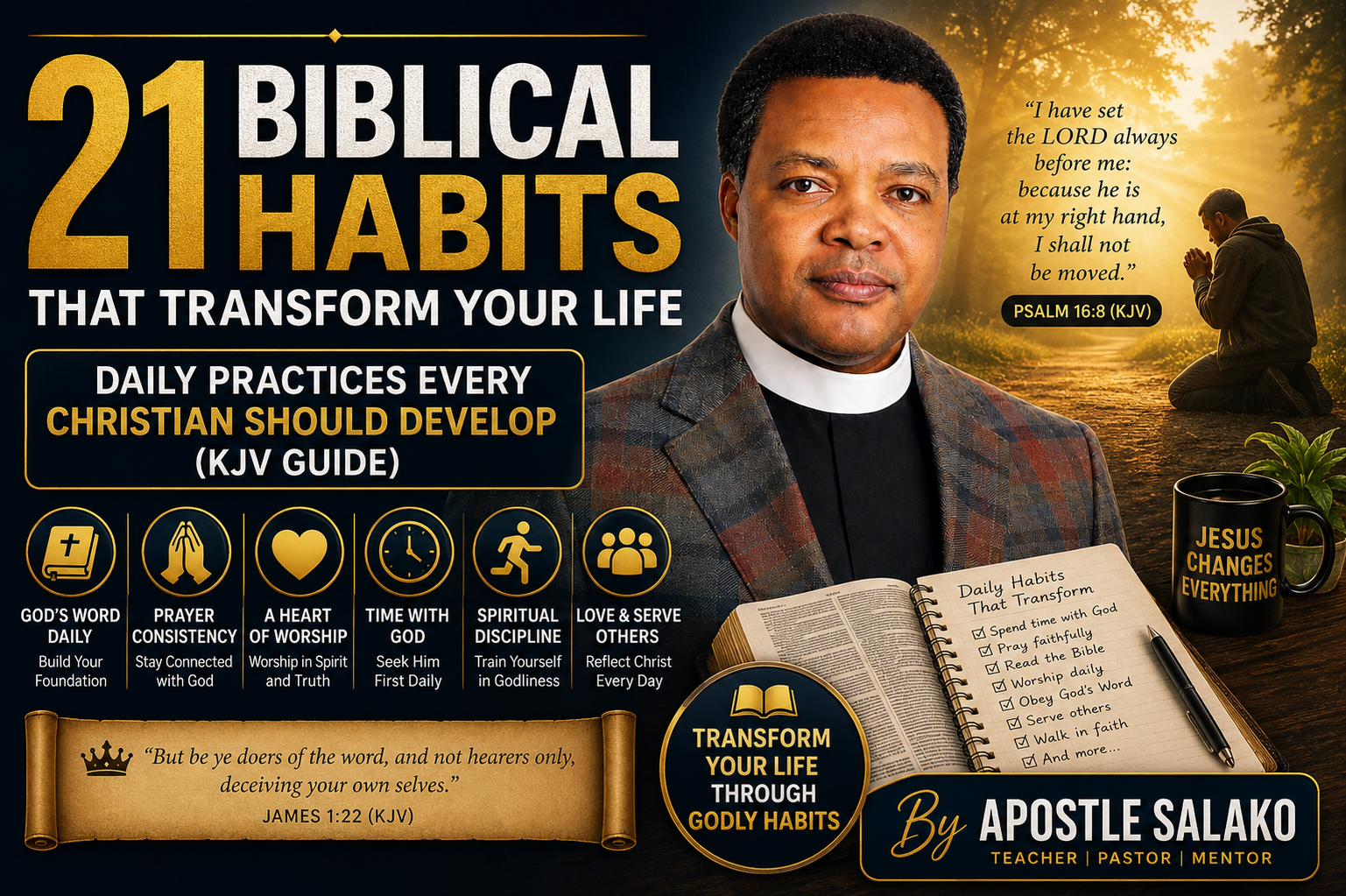
21 Biblical Habits That Transform Your Life: Daily Practices Every Christian Should Develop (KJV Guide)
Discover 21 Scripture-based habits — from prayer and obedience to generosity and perseverance — that shape Christlike character and transform daily life.
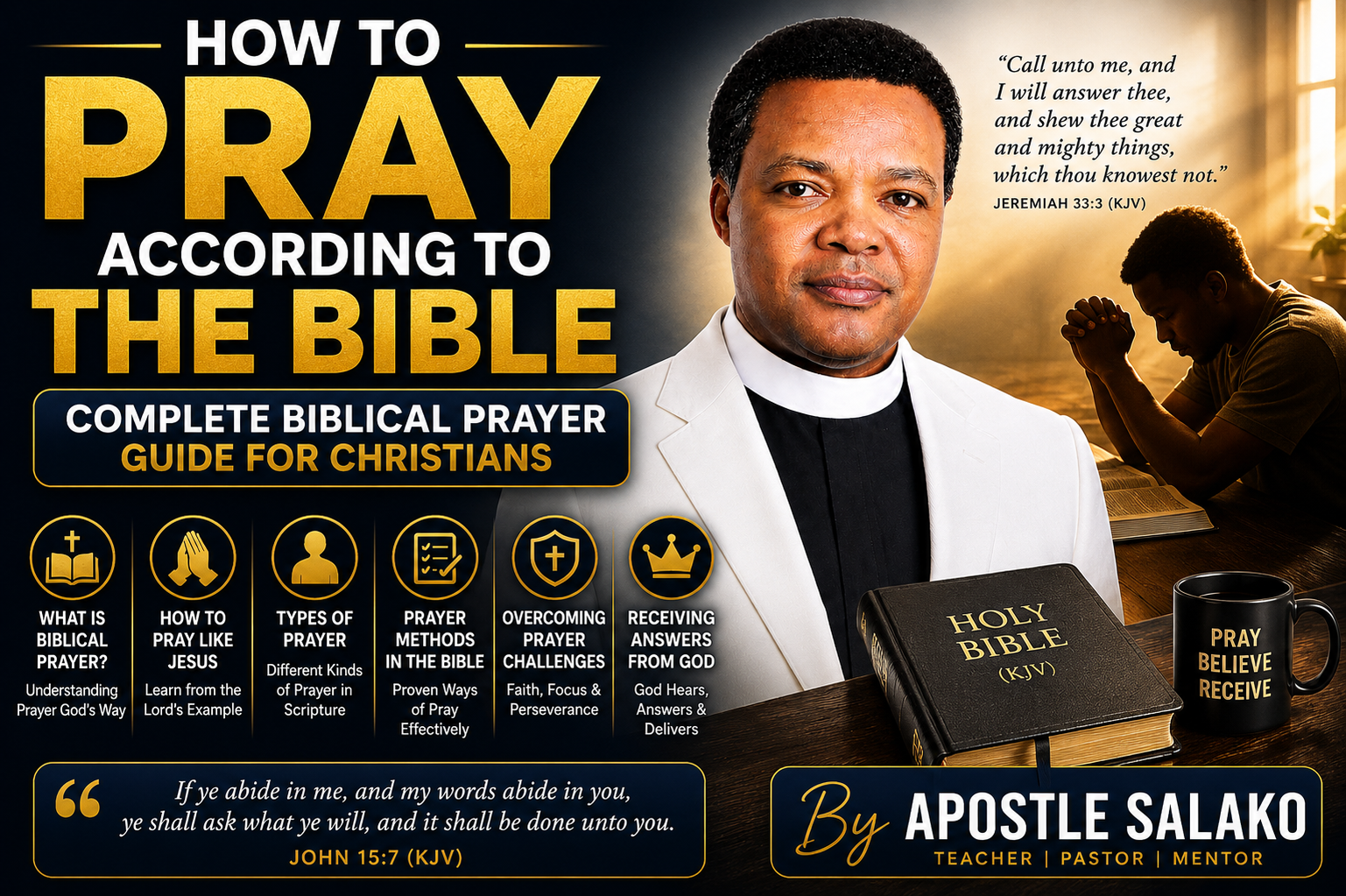
How to Pray According to the Bible (Complete Biblical Prayer Guide for Christians)
Learn how to pray according to the Bible with this complete Christian guide — Jesus' teaching on prayer, biblical principles, powerful examples, and practical steps to deepen your walk with God.
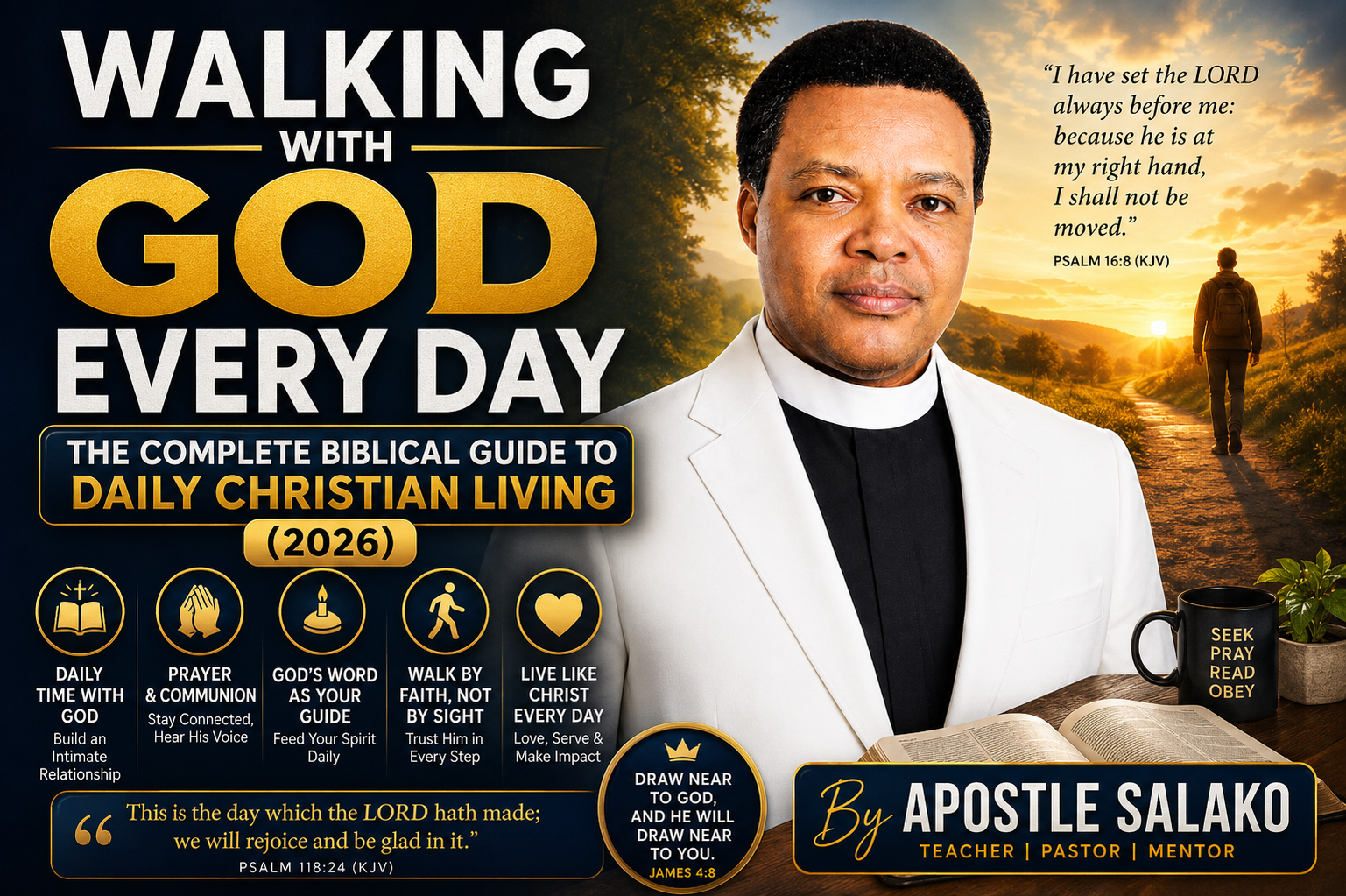
Walking with God Every Day: The Complete Biblical Guide to Daily Christian Living (2026)
Discover how to walk with God every day through prayer, Bible study, obedience, faith, worship, and the Holy Spirit. A complete biblical guide by Apostle Salako Adedamola.