Introduction
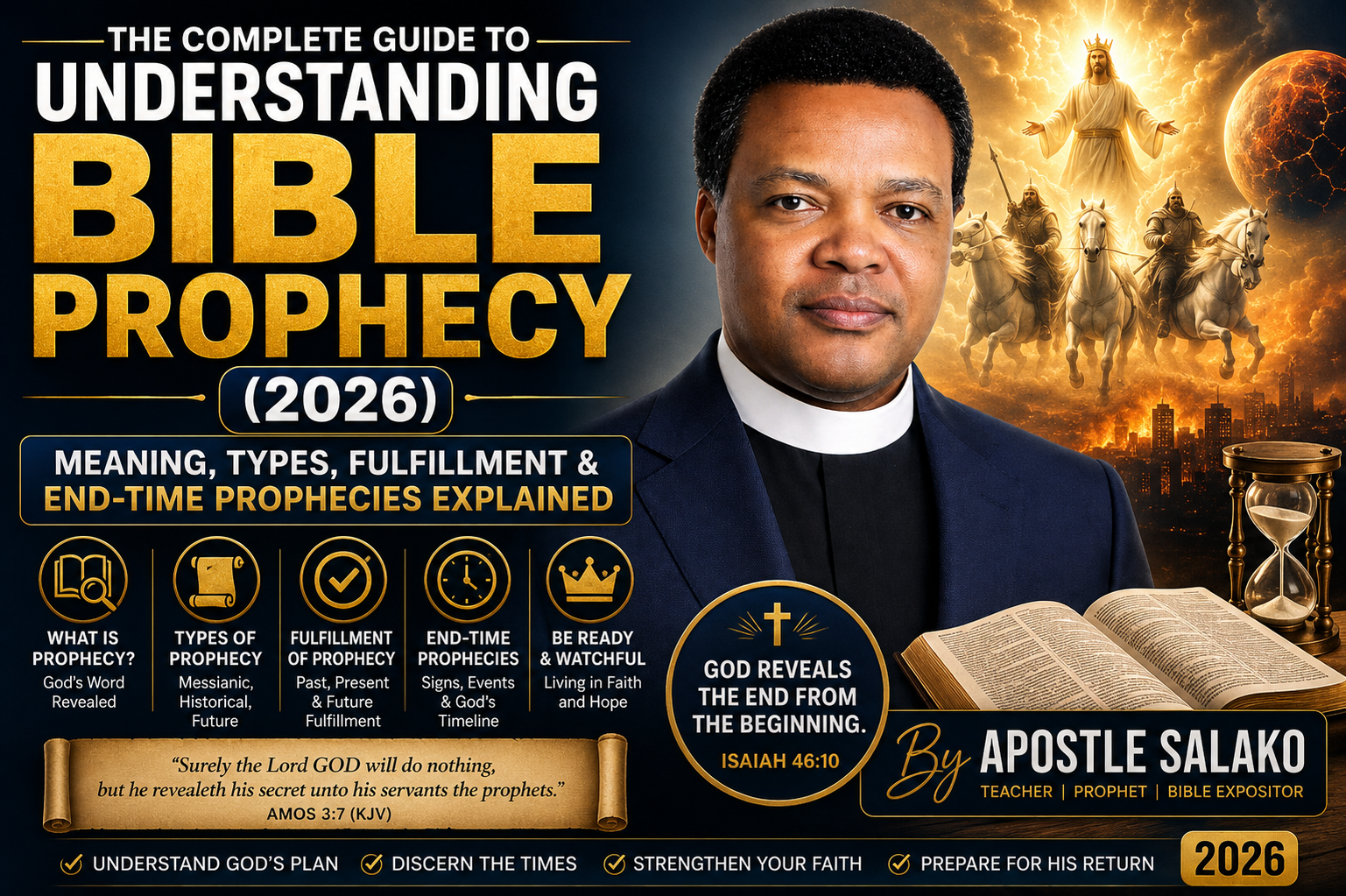
Bible prophecy is one of the most fascinating and faith-building subjects in all of Scripture. From Genesis to Revelation, the Bible reveals a God who knows the end from the beginning. Long before nations rose and fell, before kings ruled, and before Jesus Christ came into the world, God declared His plans through His prophets.
For many believers, however, prophecy can feel mysterious or intimidating. Is Bible prophecy only about the future? Are all prophecies symbolic? What is the purpose of prophecy? How should Christians understand the Book of Revelation? What role does Israel play in God's prophetic plan? How do we distinguish true prophecy from false prophecy? These are important questions, and Scripture provides trustworthy answers.
Bible prophecy is not meant to produce fear or endless speculation. Rather, it is intended to strengthen faith, reveal God's sovereign purposes, encourage holy living, and point every generation toward Jesus Christ.
"We have also a more sure word of prophecy; whereunto ye do well that ye take heed..." — 2 Peter 1:19 (KJV)
Every fulfilled prophecy confirms that God's Word is true, while every unfulfilled prophecy assures believers that God's promises will come to pass in His perfect timing.
What Is Bible Prophecy?
Bible prophecy is God's revelation of His will, purposes, and future plans communicated through individuals chosen by Him. Although prophecy often includes predictions of future events, it is much broader than foretelling. Biblical prophecy also calls people to repentance, exposes sin, reveals God's character, and offers hope through His promises.
The Hebrew word commonly translated 'prophet' is nabi, meaning one who speaks on behalf of another. The New Testament uses the Greek word prophetes, carrying the same idea of someone who declares the message of God under divine inspiration. Prophecy is fundamentally about God speaking — not merely about predicting future events.
"Declaring the end from the beginning, and from ancient times the things that are not yet done..." — Isaiah 46:10 (KJV)
Only the true God can accurately reveal future events centuries before they occur. This distinguishes biblical prophecy from fortune-telling, astrology, divination, or human speculation.
Why God Speaks Through Prophecy
God speaks prophetically because He desires relationship with His people. Prophecy reveals God's character — His faithfulness, holiness, justice, mercy, and sovereignty. It reminds believers that history is not random; God remains firmly in control.
Many Old Testament prophets warned Israel to turn from sin. Isaiah, Jeremiah, Ezekiel, Hosea, Joel, Amos, and Micah repeatedly called God's people back to covenant obedience. These warnings were acts of divine mercy. Nineveh stands as one of Scripture's greatest examples — although Jonah announced coming destruction, the city's repentance resulted in God's mercy.
"And now I have told you before it come to pass, that, when it is come to pass, ye might believe." — John 14:29 (KJV)
The central figure of biblical prophecy is not the Antichrist, political movements, or world events. The central figure is Jesus Christ.
"Search the scriptures...they are they which testify of me." — John 5:39 (KJV)
The Purpose of Biblical Prophecy
Prophecy warns before judgment: Noah before the Flood, Moses before the plagues, Jeremiah before Babylon's invasion, and Jesus before Jerusalem's destruction. Warning is an expression of divine mercy.
Prophecy encourages God's people during difficult seasons. Isaiah encouraged Israel during exile. Daniel encouraged captives in Babylon. Revelation encouraged persecuted Christians under Roman oppression. Even today, prophecy reminds believers that evil will not triumph forever.
Prophecy provides hope — Christ's return, resurrection, a new heaven and new earth, eternal life, and final victory over Satan.
"Comfort one another with these words." — 1 Thessalonians 4:18 (KJV)
Prophecy also calls believers to holy living. Instead of encouraging fear or sensationalism, prophecy motivates purity, faithfulness, and readiness for Christ's return.
"What manner of persons ought ye to be in all holy conversation and godliness?" — 2 Peter 3:11 (KJV)
What Makes Biblical Prophecy Different?
Its source is God. The prophets did not invent their messages — they spoke under divine inspiration.
"Holy men of God spake as they were moved by the Holy Ghost." — 2 Peter 1:21 (KJV)
True prophecy aligns with God's character and is consistent with all of Scripture. Because God does not contradict Himself, genuine prophetic revelation agrees with the whole counsel of Scripture. Every claim of prophecy must be tested against the Bible (Acts 17:11; 1 John 4:1).
"When a prophet speaketh in the name of the LORD, if the thing follow not, nor come to pass...the prophet hath spoken it presumptuously." — Deuteronomy 18:22 (KJV)
The Role of Prophets in Scripture
God raised up prophets in different periods of biblical history to communicate His message to kings, priests, nations, and ordinary people. Their ministry included calling God's people back to covenant faithfulness, exposing idolatry and injustice, warning of coming judgment, declaring God's mercy to the repentant, revealing future events in God's redemptive plan, and pointing to the coming Messiah.
Some prophets — Isaiah, Jeremiah, Ezekiel, and Daniel — left extensive written records. Others, including Elijah, Elisha, Nathan, and Gad, primarily ministered through spoken messages recorded in the historical books. The greatest prophet foretold in the Old Testament is fulfilled in Jesus Christ, who perfectly reveals the Father (Deuteronomy 18:15; Hebrews 1:1–2).
Types of Bible Prophecy
Predictive prophecy announces events before they happen — the birth of Isaac (Genesis 17:19), Israel's captivity in Babylon (Jeremiah 25:11–12), the destruction of Jerusalem (Luke 19:41–44), the birth of Jesus in Bethlehem (Micah 5:2), and Christ's second coming (Matthew 24).
Messianic prophecies point directly to Jesus Christ — His birth, ministry, death, resurrection, ascension, and future reign. Conditional prophecies depend on the response of those receiving them. When Nineveh repented, God withheld the announced judgment.
"If that nation...turn from their evil, I will repent of the evil that I thought to do unto them." — Jeremiah 18:8 (KJV)
Prophecies of judgment reveal God's holiness and justice — the Flood, Sodom and Gomorrah, the fall of Samaria, and the Babylonian exile. Prophecies of restoration emphasize God's covenant faithfulness — Israel's return from Babylon, the New Covenant (Jeremiah 31:31–34), and the outpouring of the Holy Spirit (Joel 2:28–29).
Apocalyptic prophecy uses vivid symbols, visions, numbers, and imagery to reveal God's ultimate victory over evil. Key examples are found in Daniel, sections of Ezekiel, Zechariah, and Revelation.
Major Prophetic Books of the Bible
Isaiah is often called the 'Messianic Prophet' because of its many prophecies concerning Jesus Christ. Its themes include God's holiness, judgment and salvation, the coming Messiah, the suffering Servant, and the future kingdom. Isaiah 53 provides one of the clearest Old Testament portraits of Christ's sacrificial death.
Jeremiah ministered during Judah's final years before the Babylonian exile, proclaiming national repentance, God's righteous judgment, the New Covenant, and future restoration. Lamentations, written after Jerusalem's destruction, expresses grief over sin's consequences while affirming God's compassion and faithfulness.
Ezekiel ministered among the Jewish exiles in Babylon. His visions reveal God's glory, personal responsibility, Israel's restoration, the future temple, and the Shepherd-King. The vision of the valley of dry bones (Ezekiel 37) powerfully illustrates God's ability to restore His people.
Daniel combines historical narrative with apocalyptic prophecy — God's sovereignty over kingdoms, faithfulness under persecution, future world empires, the coming kingdom of God, resurrection, and the Son of Man. Daniel forms an essential foundation for understanding many New Testament prophecies.
The Twelve Minor Prophets — Hosea, Joel, Amos, Obadiah, Jonah, Micah, Nahum, Habakkuk, Zephaniah, Haggai, Zechariah, and Malachi — though shorter, contain profound prophetic messages. Hosea illustrates God's faithful love. Joel promises the outpouring of the Holy Spirit. Micah foretells Christ's birth in Bethlehem. Zechariah contains numerous prophecies concerning the Messiah. Malachi concludes the Old Testament by foretelling the coming forerunner of Christ.
Understanding Messianic Prophecies
One of the strongest evidences for the divine inspiration of Scripture is the fulfillment of Old Testament prophecies in the life of Jesus Christ. These prophecies were written centuries before His birth and fulfilled in remarkable detail.
The Messiah would be born of a woman (Genesis 3:15; Galatians 4:4), born of a virgin (Isaiah 7:14; Matthew 1:22–23), born in Bethlehem (Micah 5:2; Matthew 2:1), and a descendant of David (Jeremiah 23:5; Luke 3:23–38). His ministry would begin in Galilee (Isaiah 9:1–2; Matthew 4:13–16), and He would heal the sick (Isaiah 35:5–6; Matthew 11:4–5).
He would enter Jerusalem on a donkey (Zechariah 9:9; Matthew 21:1–11), be betrayed for thirty pieces of silver (Zechariah 11:12–13; Matthew 26:14–16), remain silent before His accusers (Isaiah 53:7; Matthew 27:12–14), have His hands and feet pierced (Psalm 22:16; John 20:25–27), and be buried in a rich man's tomb (Isaiah 53:9; Matthew 27:57–60).
His resurrection (Psalm 16:10; Acts 2:31) and ascension (Psalm 68:18; Acts 1:9) fulfilled David's prophetic words exactly as foretold.
How to Interpret Bible Prophecy Correctly
Let Scripture interpret Scripture. The clearest explanation of biblical symbols is often found elsewhere in the Bible itself. Revelation frequently draws imagery from Daniel, Ezekiel, Isaiah, and Zechariah. The Bible is its own best interpreter.
Consider historical context. Every prophecy was originally spoken to real people in real historical circumstances. Understanding the audience, culture, and historical setting helps distinguish between immediate and future fulfillments.
Recognize literary genre. Some passages are historical, poetic, symbolic, apocalyptic, or prophetic narrative. Not every vision or image should be interpreted in a strictly literal manner. Certain prophecies have both an immediate fulfillment and a future, greater fulfillment — sometimes called 'prophetic telescoping.'
Keep Christ at the center. Jesus is the focal point of biblical prophecy.
"These are the words which I spake unto you...that all things must be fulfilled...concerning me." — Luke 24:44 (KJV)
Avoid date-setting. Throughout history, many have attempted to predict the exact timing of Christ's return. Scripture warns against this.
"But of that day and hour knoweth no man..." — Matthew 24:36 (KJV)
Depend on the Holy Spirit. The Spirit who inspired Scripture also illuminates believers' understanding.
"Open thou mine eyes, that I may behold wondrous things out of thy law." — Psalm 119:18 (KJV)
Fulfilled Bible Prophecies That Strengthen Faith
Jeremiah declared that Judah would serve Babylon for seventy years because of persistent disobedience. Judah was taken into captivity, and after approximately seventy years, the people returned under the decree of King Cyrus (Ezra 1:1–4). More than a century before Cyrus was born, Isaiah mentioned him by name and foretold that he would permit the Jews to return and rebuild Jerusalem.
"That saith of Cyrus, He is my shepherd..." — Isaiah 44:28 (KJV)
Ezekiel prophesied the downfall of Tyre (Ezekiel 26), fulfilled through successive invasions. Jesus foretold the destruction of Jerusalem — 'There shall not be left here one stone upon another' (Matthew 24:2) — fulfilled in A.D. 70 when the Roman army under Titus destroyed the city and Temple. Jesus also declared that the gospel would be preached in all the world (Matthew 24:14), an ongoing fulfillment demonstrating God's commitment to redemption.
Symbols, Numbers, and Imagery in Bible Prophecy
Common biblical symbols include the Lamb (sacrifice and redemption — 'The Lamb of God, which taketh away the sin of the world,' John 1:29), the Lion (royalty and authority — 'The Lion of the tribe of Juda,' Revelation 5:5), horns (kings or kingdoms — Daniel 7; Revelation 17), beasts (empires opposed to God — Daniel 7; Revelation 13), water (peoples and nations — Revelation 17:15), and light (God's truth and holiness).
Significant numbers include 3 (divine completeness), 7 (perfection or completeness — seven churches, seals, trumpets), 10 (human government), 12 (God's people — twelve tribes, twelve apostles), 40 (testing or preparation), and 70 (completion of a determined period — Jeremiah's seventy years, Daniel's seventy weeks). While numbers often carry symbolic significance, they should not be used to create speculative theories.
Prophecies Concerning Israel
Israel occupies a significant place in biblical prophecy because God chose Abraham's descendants as the nation through whom the Messiah would come (Genesis 12:1–3). The prophets foretold Israel's blessings for obedience, judgment for covenant unfaithfulness, exile among the nations, and eventual restoration.
Many of these prophecies have already been fulfilled, while others are interpreted differently among faithful Christians. Regardless of one's eschatological framework, Scripture consistently affirms God's faithfulness to His promises. The New Testament also emphasizes that, in Christ, believing Jews and Gentiles are united in one body (Ephesians 2:11–22).
Jesus' Olivet Discourse
Matthew 24–25, Mark 13, and Luke 21 record Jesus' teaching on the Mount of Olives concerning future events. The disciples asked, 'What shall be the sign of thy coming, and of the end of the world?' (Matthew 24:3). Jesus described conditions that would characterize the age: false messiahs and false prophets, wars and rumors of wars, famines and earthquakes, persecution of believers, increasing lawlessness, spiritual deception, worldwide proclamation of the gospel, and the certainty of His return.
These signs are not given to encourage fear or date-setting but to call believers to vigilance, faithfulness, and hope.
"Watch therefore: for ye know not what hour your Lord doth come." — Matthew 24:42 (KJV)
Understanding the Book of Revelation
The Book of Revelation is the climax of biblical prophecy. Written by the Apostle John while exiled on Patmos, it reveals the triumph of God over sin, Satan, and death. Revelation is a book of hope — it assures believers that Christ reigns, that evil will be judged, and that God's kingdom will be fully established.
The opening chapter presents Jesus Christ as the risen, glorified Lord who walks among His churches. Revelation 2–3 contains messages addressing faithfulness, repentance, perseverance, and spiritual vigilance. John is granted a vision of heaven where God is worshiped continually. The seals, trumpets, and bowls portray God's righteous judgment against persistent evil. The book concludes with Satan's defeat, the final judgment, and the creation of a new heaven and a new earth where God dwells with His redeemed people forever (Revelation 21–22).
The Return of Christ
The Second Coming of Jesus Christ is one of the central hopes of the Christian faith.
"This same Jesus...shall so come in like manner as ye have seen him go into heaven." — Acts 1:11 (KJV)
The New Testament consistently teaches that Christ will return personally, visibly, and gloriously to consummate His kingdom and judge the living and the dead. While faithful Christians differ on the precise sequence of end-time events, they agree that Jesus Christ will return, evil will be defeated, and God's kingdom will be fully established.
Common Mistakes Christians Make When Studying Bible Prophecy
Making predictions about dates. Throughout history, every attempt to predict the exact date of Christ's return has proven false. Rather than calculating dates, believers are called to live in continual readiness.
Reading current events into every prophecy. While world events remind us that history is moving toward God's appointed conclusion, not every headline fulfills a specific biblical prophecy. Responsible interpretation begins with the biblical text itself, not with speculation based on contemporary news.
Ignoring historical context. Building doctrines on isolated verses.
"Knowing this first, that no prophecy of the scripture is of any private interpretation." — 2 Peter 1:20 (KJV)
Becoming fearful instead of hopeful. The purpose of biblical prophecy is not to produce panic but to strengthen faith. Losing focus on Jesus Christ — every prophetic study should deepen love for Him and strengthen commitment to His mission.
Practical Steps for Studying Bible Prophecy
Pray for wisdom before opening the Scriptures.
"If any of you lack wisdom, let him ask of God..." — James 1:5 (KJV)
Study the entire Bible — prophecy is woven throughout Scripture. Reading Genesis through Revelation provides the broader context necessary for understanding prophetic themes. Compare parallel passages: Daniel complements Revelation, Isaiah illuminates the coming kingdom, and Matthew 24, Mark 13, and Luke 21 record Jesus' Olivet Discourse from complementary perspectives.
Use reliable study resources — study Bibles, commentaries, and reference works that are faithful to Scripture. Avoid sensational claims that cannot be supported by the biblical text. And always keep Christ at the center — the ultimate purpose of prophecy is not simply to increase knowledge but to know Christ more deeply and to live faithfully in anticipation of His return.
Living in Light of Bible Prophecy
Bible prophecy is not merely about understanding future events; it is about shaping present-day discipleship. Prophecy should inspire believers to pursue holiness, persevere through suffering, proclaim the gospel faithfully, encourage one another with the hope of Christ's return, trust God's sovereign control over history, and live with eternal perspective rather than worldly anxiety. When prophecy produces humility, obedience, and hope, it has accomplished one of its primary biblical purposes.
Key Lessons from Bible Prophecy
God rules over history. God's promises never fail. Jesus Christ is the fulfillment of God's redemptive plan. Sin will ultimately be judged. God's kingdom will prevail. Believers are called to faithful endurance. Hope is rooted in Christ's return. Scripture is trustworthy because God's Word is fulfilled. These truths provide confidence, stability, and encouragement for every generation of believers.
Final Thoughts
Bible prophecy is far more than a study of future events. It is a testimony to God's sovereignty, His faithfulness, and His redemptive purpose accomplished through Jesus Christ. Every fulfilled prophecy strengthens our confidence in Scripture. Every unfulfilled promise reminds us that God's plan is still unfolding according to His perfect timing.
As believers, we are called not merely to understand prophecy intellectually but to allow it to shape our character, deepen our worship, strengthen our witness, and sustain our hope.
"Even so, come, Lord Jesus." — Revelation 22:20 (KJV)
Prayer
Heavenly Father, thank You for revealing Yourself through Your Holy Word and for giving us the sure word of prophecy. We praise You because You are the Alpha and the Omega, the One who declares the end from the beginning. Grant us wisdom as we study the Scriptures. Guard us from error, pride, fear, and unhealthy speculation. Help us to interpret Your Word faithfully and to keep our eyes fixed on Jesus Christ, the Author and Finisher of our faith. May the truths of Bible prophecy inspire us to live holy lives, proclaim the gospel with boldness, encourage one another, and remain steadfast until the glorious return of our Lord. In Jesus' mighty name, Amen.
Article by Apostle Salako Adedamola.
Apostle Adedamola Salako
Founder of Apostle Salako Studios — pastor, recording artist, and teacher on faith, music, and stewardship.
Frequently Asked Questions
QIs Bible prophecy still relevant today?
Absolutely. Prophecy strengthens faith, encourages holy living, and reminds believers that God remains sovereign over history.
QHas every prophecy already been fulfilled?
No. Many Old Testament prophecies were fulfilled in Christ's first coming, while others — including His visible return, the final judgment, and the new creation — remain future.
QWhat is the 'Day of the Lord'?
The 'Day of the Lord' is a recurring biblical theme referring to God's decisive intervention in history through judgment and salvation, describing both historical acts of judgment and the ultimate culmination of God's redemptive plan.
QWhy does prophecy use symbols?
Symbols communicate profound spiritual realities and often connect different parts of Scripture. They should be interpreted in light of the Bible's own explanations whenever possible.
QCan believers disagree about end-times details?
Yes. Faithful Christians hold differing views on the sequence and timing of certain prophetic events, but they agree that Christ will return, evil will be judged, and God's kingdom will be fully established.
QHow should prophecy affect my daily life?
Prophecy calls believers to live in holiness, remain faithful during trials, share the gospel, encourage fellow Christians, place hope in Christ rather than earthly systems, and trust God's sovereign purposes.
Enjoyed this article?
Get the next one straight to your inbox. One thoughtful email a week.
Comments (0)
Comments are stored locally in your browser. For published responses, email us via the Contact page.